Kosovo has received a political boost in its bid to join NATO, the military alliance that intervened in 1999 to end the war, after three U.S. congressmen introduced a resolution this week supporting its long-standing aspiration.
The resolution, introduced on April 30 with bipartisan backing by Congressmen Keith Self, Ritchie Torres, and Mike Lawler, also triggered an immediate reaction from Serbia, which consistently opposes Kosovo’s membership in international organizations.
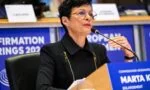
For Ivana Stradner of the Foundation for Defense of Democracies (FDD) in Washington, the resolution represents a “strong political signal, as it brings Kosovo closer to NATO in a strategic sense.”
“On paper, Kosovo may not be significantly closer to membership, given that four NATO allies still do not recognize it, but this is a step in the right direction at a time when the security situation in the region is deteriorating,” Stradner told Radio Free Europe.
Kosovo has not yet formally applied for NATO membership, as it faces major obstacles, including the lack of recognition by four member states: Greece, Romania, Slovakia, and Spain.
It is also currently in the process of transforming its Security Force into a fully-fledged army, a transition expected to continue until 2028.
Moreover, Kosovo is not yet part of NATO’s Partnership for Peace program, which serves as a pathway for countries aspiring to join the alliance.
The admission of a new member requires consensus within NATO, which is why the resolution urges Washington to encourage these four member states to recognize Kosovo.
Stradner notes that initiatives in Congress, such as this resolution, may not be able to force NATO allies to change their positions, but they shape the political environment by signaling that Washington views the Balkans as an unfinished strategic issue and expects greater unity within the alliance.
“They also send a clear message in the domestic U.S. debate that this is not the time to limit or withdraw American military commitments from the alliance in the Balkans, despite occasional calls in that direction. A sustained U.S. military presence in Europe remains essential for deterrence and long-term stability,” she emphasized.
There have been suggestions in recent months that the United States might withdraw its troops from NATO missions, including from the peacekeeping mission in Kosovo, KFOR.
However, the Pentagon previously told Radio Free Europe that there were no announcements regarding changes in troop deployment.
Around 590 U.S. troops currently serve in Kosovo as part of NATO’s peacekeeping mission.
According to Stradner, the resolution also “sends a clear message that the United States continues to invest in NATO’s role and cohesion.”
The Resolution Reflects “Regional Tensions”
Stradner believes the timing of the resolution reflects “both ongoing regional tensions and a broader geopolitical competition, where gray zones are increasingly seen as vulnerabilities.”
Tensions in the region have risen recently, with Serbian President Aleksandar Vučić claiming—without providing evidence—that neighboring countries are “preparing” for an attack against Serbia.
To reinforce this narrative, Vučić recently announced new military investments and further increases in defense capabilities, stating that Serbia must be prepared for any development in a “complex” security situation allegedly caused by the activities of Pristina, Tirana, and Zagreb.
He was referring to a joint declaration on defense cooperation between Kosovo and two NATO members: Albania and Croatia.
All three countries have repeatedly stated that their trilateral declaration is not directed against anyone and aims solely at strengthening defense capabilities.
Meanwhile, Kosovo has in recent years accused Serbia of aggressive behavior, citing military exercises conducted near its borders.
Stradner points out that the Western Balkans have already demonstrated how quickly tensions can escalate, referencing the 2023 protests in the Serb-majority north of Kosovo, during which more than 90 NATO peacekeepers were injured.
These incidents, she says, underline that the alliance “is not facing abstract risks, but real flashpoints.”
“As he struggles in the war in Ukraine, Putin is seeking new ways to challenge the West, and opening a new conflict in the Balkans is always on his ‘military menu,’ with Vučić’s assistance. This is precisely why NATO has an interest in regional stability,” Stradner stressed.
She believes the lesson many policymakers draw from Russia’s invasion of Ukraine, which began in 2022 and continues, is “direct.”
“Countries outside NATO, such as Ukraine, remain exposed, whereas NATO membership provides a level of deterrence that actors like Putin hesitate to challenge directly,” she said.
This also applies to Kosovo, a country that gained its freedom through NATO’s 1999 intervention against the former Serbian regime, as its officials have repeatedly stated that the country would be safer as part of the alliance.
Serbia’s Opposition “Predictable”
Serbia openly opposes Kosovo’s independence and its membership in international organizations, and according to Stradner, Vučić’s reaction to the U.S. resolution is unsurprising.
In a 2023 agreement reached during EU-mediated dialogue, Serbia committed not to block Kosovo’s membership in international organizations.
However, three years later, it has not adhered to that commitment and continues lobbying against its neighbor.
“Vučić’s opposition to this resolution is predictable. He has little interest in welcoming a stronger NATO presence, but Serbia’s occasional participation in NATO exercises should not be mistaken for full alignment, especially given its parallel military cooperation with Russia and China,” Stradner noted.
Serbia is militarily neutral but participates in NATO’s Partnership for Peace program and cooperates with the alliance in that framework.
At the same time, it regularly conducts military exercises with China and has not joined Western sanctions against Russia over the invasion of Ukraine.
“Serbia is expanding its military capabilities with external support, while Vučić continues to balance between Brussels, Moscow, and Beijing in a way that raises legitimate concerns about Serbia’s long-term direction,” Stradner underlined.
She also highlighted that despite benefiting from EU funds, the Serbian government’s rhetoric and positioning “often reflect themes associated with Vladimir Putin, particularly in the context of regional influence and narratives such as a broader ‘Serbian world.’”
“Domestic pressures also matter: as protests and political tensions within Serbia increase, there is a recurring pattern in which Vučić tends to escalate in order to de-escalate the situation in the region,” she concluded.