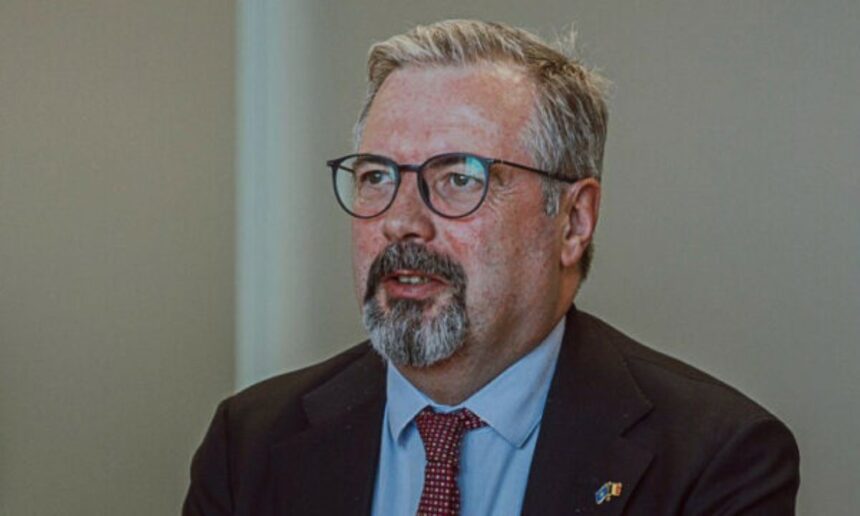
On the anniversary of the assassination of Professor Fehmi Agani, Kosovo’s Chief Negotiator and Ambassador to Brussels, Agron Bajrami, issued a poignant reminder that 27 years later, no one has been held accountable for the crime.
Fehmi Agani, a sociology professor and a key political strategist, was the vice-president of the Democratic League of Kosovo (LDK) and a close associate of Ibrahim Rugova. He was abducted and killed by Serbian forces on May 6, 1999, while attempting to flee Prishtina by train during the NATO bombing campaign.
“The Architect of Resistance”
In a statement shared via social media, Ambassador Bajrami described Agani as the “chief architect of peaceful resistance.” He emphasized that the assassination was not a random act of war but a deliberate hit on the intellectual heart of the Kosovar movement for independence.
“His murder was not accidental, but a deliberate targeting of a key figure who sought freedom and independence,” Bajrami wrote.
The Stagnation of Justice
The core of Bajrami’s message focused on the continued impunity surrounding the case. Despite the decades that have passed, the perpetrators and those who gave the orders within the Serbian state apparatus have never faced trial.
- Delayed Justice: Bajrami highlighted the legal maxim that “justice delayed is justice denied,” urging that the file on Agani’s murder must remain open and active.
- A Symbol of Intellectual Erasure: Agani was known as the “bridge” of Kosovo politics, respected for his ability to unify different political factions and his deep intellectual approach to the struggle for statehood.
Historical Context of the Assassination
Fehmi Agani was a member of the Kosovo delegation at the Rambouillet Conference. His death in May 1999 was seen as a massive blow to the Kosovar leadership. At the time of his killing, Serbian authorities claimed he had been killed by the KLA, a narrative that was quickly debunked by international investigators and witnesses who saw him being taken away by Serbian police.
Bajrami’s call for justice comes at a time when Kosovo is seeking greater international recognition for the war crimes committed during the 1998-1999 conflict, reinforcing the stance that peace in the Balkans cannot be fully realized without legal closure for its most prominent victims.