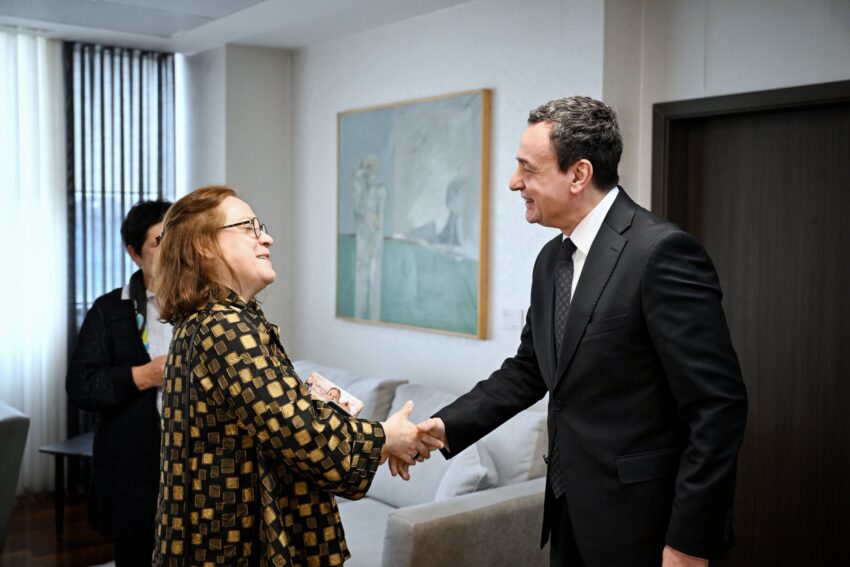
On May 7, 2026, Acting Prime Minister Albin Kurti hosted Nicole Epting, the UNHCR Regional Representative for Central Europe, to discuss the protection of refugees, internally displaced persons (IDPs), and the ongoing crisis of missing persons from the Kosovo War.
The meeting highlighted the institutional responsibilities of the Republic of Kosovo in upholding international human rights standards and ensuring the dignity of vulnerable populations.
Refugee Protection and Social Integration
Prime Minister Kurti provided an overview of the government’s current programs aimed at supporting refugees and stateless persons.
- Public Services: Discussion centered on ensuring these groups have adequate access to housing, social support, and essential public services.
- Human Rights Framework: Both parties agreed that public policies must remain centered on human solidarity and the dignity of the individual, regardless of their legal status.
The Issue of Forced Disappearances
A significant portion of the meeting was dedicated to the 1,565 individuals who remain missing since the 1998–1999 conflict. Kurti emphasized that progress on this humanitarian issue is stalled due to a lack of transparency from Belgrade.
Key points on Missing Persons:
- The Brussels Declaration: Kurti called for the full implementation of the Declaration on Missing Persons agreed upon in Brussels.
- Access to Archives: The Prime Minister underscored the urgent need for Serbia to open its military archives, specifically those of the 38th Motorized Brigade of the Yugoslav Army.
- The 2044 Classification: Kurti noted with concern that key documents regarding the brigade’s activities remain classified by Serbian authorities until 2044, a delay he argued prevents families from achieving closure.
The Role of UNHCR in 2026
Nicole Epting, who oversees UNHCR operations across Central Europe (including Albania, Bosnia and Herzegovina, Croatia, and Serbia), reaffirmed the organization’s commitment to supporting Kosovo’s alignment with European standards for asylum and migration.
The meeting comes as Kosovo continues to manage the long-term integration of displaced persons from regional conflicts and the more recent humanitarian influx following the war in Ukraine.