The global internet is fragments into isolated, state-controlled digital enclaves. According to empirical telemetry analyzed by digital rights organizations, the global internet was deliberately restricted or shut down 313 times across 52 sovereign nations over the past year.
Behind these metrics lies a coordinated matrix of blocked applications, severed mobile networks, and millions of citizens systematically cut off from basic banking, employment, healthcare, and emergency communication.
From the total digital severing of Iran and the permanent censorship walls of Russia to the tribal blocks of Afghanistan, the weaponization of internet infrastructure has transformed from a rare emergency measure into a primary tool of state survival. As a result, citizens under authoritarian regimes are forced to attain high levels of digital literacy simply to access platforms that the free world treats as a basic utility.
The Anatomy of Digital Repression
While authoritarian regimes frequently invoke “national security” or “public safety” to justify shutdowns, international digital watchdogs point to a more calculated agenda.
“In reality, these restrictions violate fundamental rights, allow authorities to conceal gross human rights abuses, and create an information vacuum that amplifies dangerous disinformation,” stated Felicia Anthonio, Campaign Manager for the #KeepItOn coalition at Access Now, an international organization coordinating across 106 countries to end state-mandated blackouts.
According to the latest annual assessment by Freedom House, only 18 countries worldwide maintain a completely free and open internet. Even within these 18 democratic havens, over half experienced a measurable decline in digital freedoms last year, marking 15 consecutive years of global internet freedom erosion.
In the Western Balkans, Serbia highlighted this downward trend, officially being downgraded from an “Internet Free” status to “Partly Free” due to escalating state pressures and structural interference.
[The Autocratic Digital Playbook]
├── Step 1: Fragment Outbound Connections (Slowing external traffic/throttling protocols)
├── Step 2: Total Application Blackouts (Banning end-to-end encryption: WhatsApp, Telegram)
├── Step 3: Economic Deprivation (Severing payment gateways to crush local civic funding)
└── Step 4: Forced Domestic Migration (Funneling citizens to state-monitored sovereign networks)
Iran: The Shift from Temporary Censorship to a “National Internet”
Nowhere is the structural reality of digital isolation more visible than in Iran. Following intense, long-term disruptions, the independent internet monitor NetBlocks recorded a brief, highly fragmented restoration of partial connectivity after an unprecedented 88-day total communication blackout.
The total digital blockade was initiated directly after U.S. and Israeli airstrikes targeted Iranian assets. Throughout the blackout, regular Iranian citizens faced total severance from employment, families, and news, driving an estimated $30 million to $40 million in direct daily economic losses to the country’s private sector.
Digital rights experts stress that Iran’s approach is no longer about temporary crisis management.
“The final result is the systematic throttling of society,” explained Pooyesh Azizeddin, a prominent technology researcher tracking Iranian network infrastructure. “The government’s long-term plan is to build a sovereign domestic infrastructure—a completely controlled ‘National Internet’—where anonymity is replaced by total state surveillance.”
| Access Mechanism | Financial & Operational Viability | Associated State Risk |
| Commercial VPNs | Require technical expertise, paid subscriptions, and continuous protocol updates to bypass state deep-packet inspection (DPI). | High risk of data harvesting; traffic is constantly targeted for state throttling. |
| Starlink Satellite Kits | Highly reliable but technically illegal; hardware must be smuggled across borders at exorbitant prices. | Severe legal, security, and counter-intelligence penalties if discovered by authorities. |
| Tiered State Whitelists | Internet access is granted selectively to politically compliant entrepreneurs, large merchants, and loyalist professors. | Solidifies loyalty structures and forces compliance within the institutional elite. |
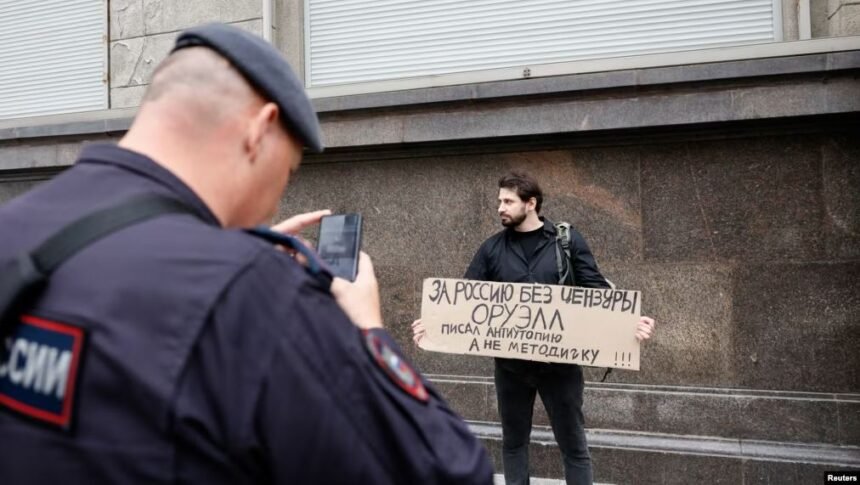
Russia: Four Years of Cumulative Digital Blackouts
For citizens of the Russian Federation, navigating a highly restricted digital reality has become an everyday routine. Telemetry recorded by the Internet Society reveals that since 2018, Russian internet users have spent a cumulative 37,076 hours without full access to global internet services—equivalent to four years and 99 days of structural disconnection.
According to data compiled by the Open Observatory of Network Interference (OONI), Russia currently enforces a hard block on at least 279 independent news domains. Radio Free Europe/Radio Liberty (RFE/RL) has been completely blocked within the Federation; its local bureaus were forced to close after being designated an “undesirable organization,” forcing journalists to operate remotely from secure hubs in Riga and Prague.
To replace Western ecosystems, Moscow is aggressively deploying state-backed alternatives:
- The “Max” Ecosystem: Championed directly by President Vladimir Putin, the “Max” messenger app is designed as a centralized “super-app” to merge all messaging, banking, and public utilities under state oversight.
- Mandatory Pre-installation: All new smartphones purchased commercially within the Russian Federation must come with “Max” pre-installed, a mandate critics label as a direct vector for automated state surveillance and political censorship.
- Targeted Platform Crushing: While conventional infrastructure functions for state utilities, global giants like Meta (Instagram/Facebook), X (formerly Twitter), Telegram, and Viber face absolute blocks, forcing over 60 million Russians (roughly 60% of the country’s online population) to rely on VPN tunnels daily.
“I cannot realistically communicate with my elderly mother anymore,” shared Mikhail Kilmarev, a digital rights activist and Director of the Internet Protection Society, who now coordinates a decentralized network of 10,000 activists providing free, secure VPN access to half a million Russians. “She is too old to constantly toggle a VPN on and off just to bypass state firewalls. It is devastating.”
Regional Dominos: From Afghanistan to the Western Balkans
The playbook of total network manipulation continues to replicate across diverse geographic spheres:
- Afghanistan: The Taliban regime completely disabled regional fiber-optic corridors and broader telecommunications under the vague pretext of combating “immorality.” Today, the country’s small online population (16.1% internet penetration) can only access major communication tools like Facebook and Instagram through heavily encrypted VPN tunnels.
- Central Asia: The authoritarian regimes of Turkmenistan and Uzbekistan maintain near-total blocks on all independent Western platforms, mirroring China’s long-standing “Great Firewall.”
- The Balkan Precedent (Albania): The risk of digital overreach is not confined to autocratic states. In March 2025, the Albanian government executed a controversial one-year ban on TikTok following the tragic murder of a student, an incident amplified online. Users, including commercial digital creators, were forced onto VPNs, which degraded local hardware due to network congestion.
The Albanian ban was ultimately struck down and annulled by the Constitutional Court, which ruled the blanket social media shutdown a direct violation of the Albanian Constitution and the European Convention on Human Rights (ECHR).
“The TikTok ban set a highly dangerous precedent,” stated Isa Myzyraj, President of the Association of Journalists of Albania. “It opened a legal backdoor for the state to eventually clamp down on the broader internet during a political crisis, mimicking the methods used by Tehran.”
The Global Future: A Fractured Web
The foundational premise of a unified, open global internet is collapsing. Data from Freedom House reveals that out of the 5.5 billion people worldwide who currently have internet access, a staggering 81% live in countries where individuals have been arrested, prosecuted, or imprisoned for expressing political, social, or religious views online.
As technological capabilities expand, the battle between state-level blocking mechanisms and civic circumvention tools will only intensify. However, with global digital freedoms marking a decade and a half of consistent decay, international institutions warning that digital authoritarians are successfully transforming the open web into a fragmented, high-risk matrix of surveillance and political submission.