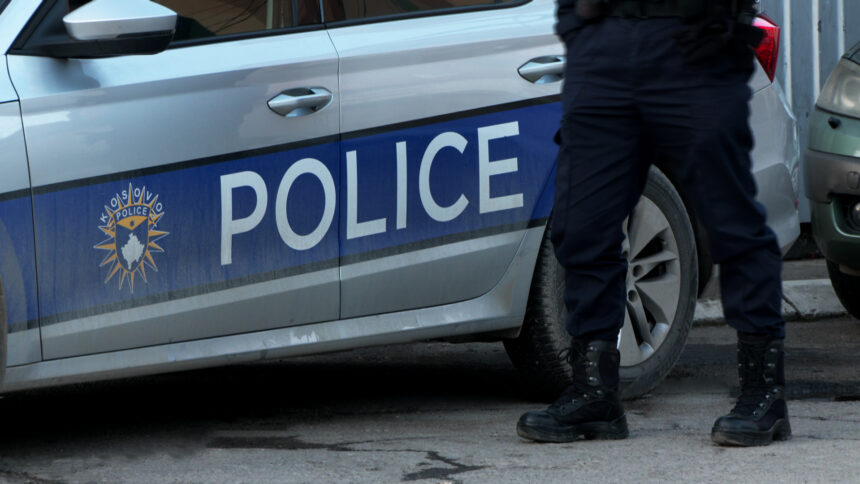
The Kosovo Police (KP) have strongly dismissed claims made by the Serbian Orthodox Church’s Diocese of Raška-Prizren, which accused the law enforcement agency of conducting an institutional policy of pressure, discrimination, and intimidation against the Serb minority and Orthodox institutions.
In an official statement, the KP declared the allegations groundless and unsupported by facts, stating they distort the reality of police operations and misrepresent the multi-ethnic mandate of the institution.
A Multi-Ethnic Institution Governed by Law
The Kosovo Police emphasized its constitutional and professional framework, noting that it operates strictly under democratic principles and the rule of law. To counter claims of ethnic bias, the KP highlighted its diverse composition and structural oversight:
- Multi-Ethnic Personnel: The force includes officers from all communities living in Kosovo, including ethnic Serbs, who operate under the Law on Police and European law enforcement standards.
- Civilian Oversight: The presence of robust institutional and civilian monitoring mechanisms, alongside constant cooperation with international security partners (such as KFOR), rules out racially or politically motivated policing.
- Individual Accountability: Any police action taken is directed at individual conduct and executed exclusively based on legal violations, rather than ethnic or religious identity.
Securing Religious Ceremonies and Gazimestan 2026
The KP reiterated its decade-long commitment to guaranteeing the freedom of belief and securing hundreds of Serbian Orthodox religious events and pilgrimages across Kosovo annually.
Addressing the recent Vidovdan ceremony on June 28, 2026, at Gazimestan, the police clarified that the event proceeded smoothly under a specialized operational plan. The KP detailed that subsequent post-ceremony law enforcement actions—such as fines, deportations, or entry bans—were not directed at regular worshippers or Serbian identity. Instead, they were handled by administrative and judicial bodies against specific individuals suspected of inciting hatred or provoking public disorder.
Cultural Heritage Protection and Incident Statistics
Following the phased transfer of security responsibilities from KFOR, the KP established the Directorate for the Security of Cultural Heritage Objects (DSOTK) to protect sensitive sites.
Structural Fact: The DSOTK is currently headed by a Major from the Kosovo Serb community, and over 16% of its active officers are ethnic Serbs. The unit provides around-the-clock (24/7) security for 24 Serbian cultural and religious heritage sites, while local community police monitor minority cemeteries daily.
To counter the narrative of targeted attacks on Orthodox property, the Kosovo Police released official multi-year statistical data regarding incidents at Cultural Heritage sites, showing that the majority of incidents affect Islamic sites and are predominantly financially motivated (theft):
| Year / Period | Total Incidents | Islamic Sites | Orthodox Sites | Catholic Sites |
| 2024 | 53 cases | 34 cases (64%) | 16 cases (30%) | 3 cases (6%) |
| 2025 | 35 cases | 22 cases (63%) | 10 cases (29%) | 3 cases (8%) |
| Jan – Jun 2026 | 34 cases | 27 cases (79%) | 5 cases (15%) | 2 cases (6%) |
Specific Case Resolution and Decreasing Inter-Ethnic Incidents
Responding to a specific incident highlighted by the Diocese in a village near Podujeva, the police confirmed that a case for “Inciting discord and intolerance” was initiated on May 21, 2025. In coordination with the prosecutor, the suspects were released through regular legal procedures while investigators continue to verify property ownership claims over the local church site.
The KP concluded by highlighting a sharp decline in potentially motivated inter-ethnic incidents over recent years:
- 2023: 31 cases
- 2024: 25 cases
- 2025: 5 cases
The Kosovo Police renewed their call for public cooperation and pledged to continue ensuring safety and equal security services for all communities and religious landmarks across the country.