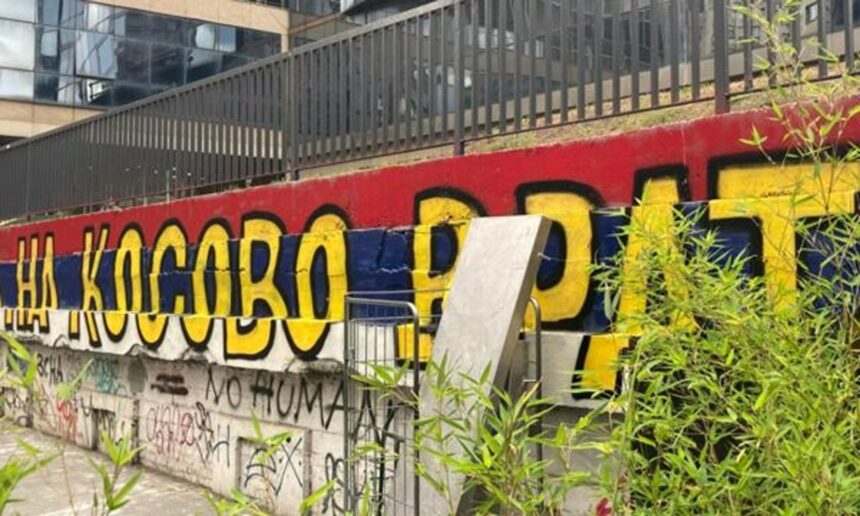
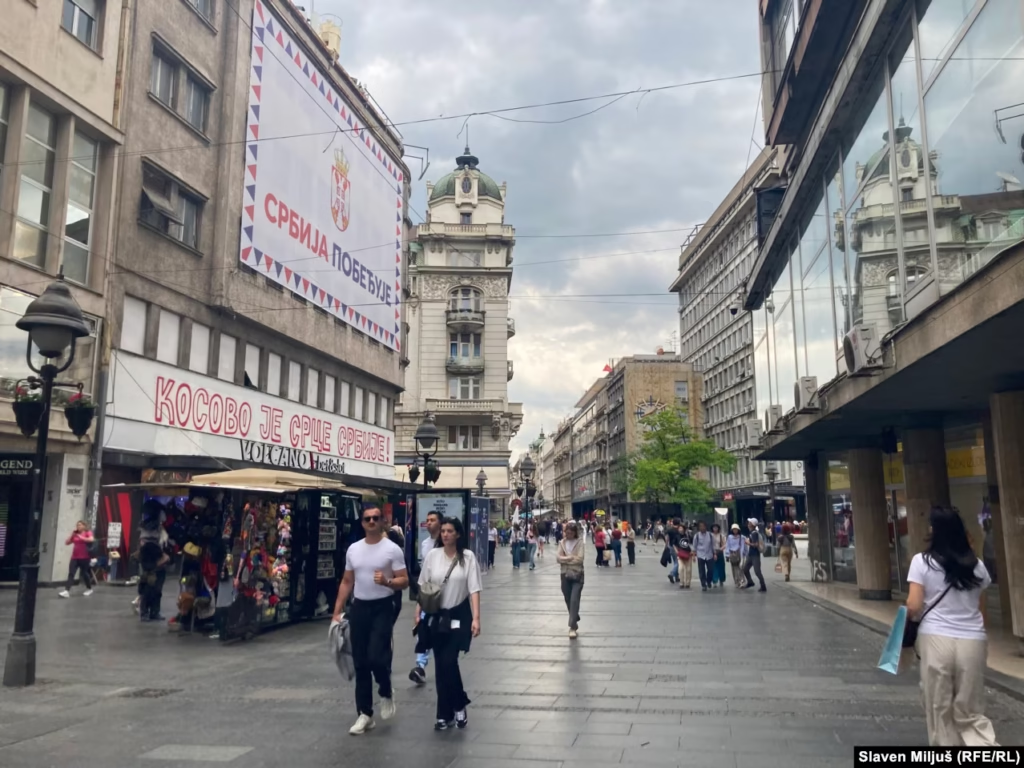
The message “Kosovo is the heart of Serbia” has been written on the façade of a building located in Belgrade’s main pedestrian zone, an area visited daily by thousands of tourists.
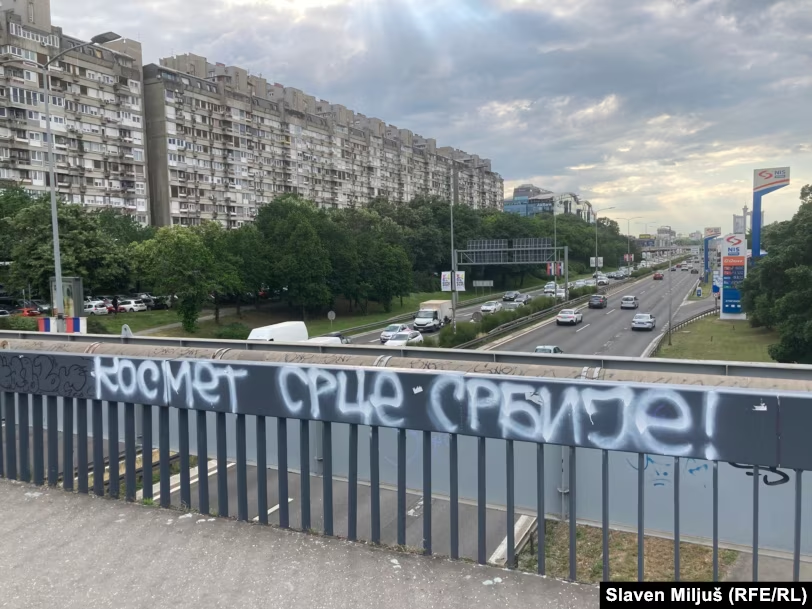
The nationalist slogan, which denies Kosovo’s independence declared in 2008, replaced a previous graffiti message denying the genocide committed against Bosniaks in Srebrenica.
That earlier graffiti had remained on the wall since June 2024 and was signed by the far-right group “People’s Patrol.”
Activists from the non-governmental organization KROKODIL removed the graffiti several times, but nationalist messages have continued to reappear.
“They create these graffiti messages in order to spread propaganda, fear, hatred, nationalism, and similar ideas,” Filip Jovanović, an activist who has participated in around twenty removal actions, told Radio Free Europe.
Following the activists’ latest action, the message about Kosovo appeared on the façade, though this time no organization claimed responsibility.
Radio Free Europe did not receive a response from the City Administration of Belgrade or from the Municipal Inspectorate of the Old Town municipality, where the graffiti was written.
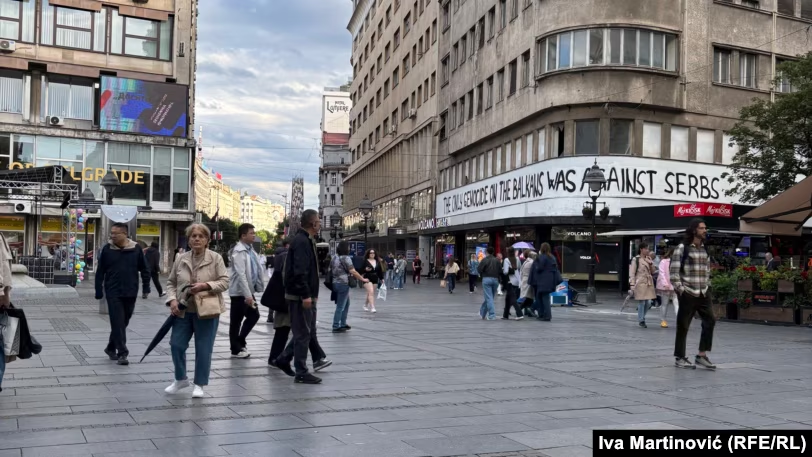
Replacing One Nationalist Message with Another
The graffiti in English reading “The only genocide in the Balkans was against Serbs” had previously been painted over by activists.
What Citizens Say
Marko, a 26-year-old from Belgrade, said he does not find anything disturbing about graffiti such as the one currently displayed on the former “Beograd” department store façade in the city center.
“It is our history, and tourists walking through the city center should see it. I think there should be even more murals like this,” he said.
Ljubiša, 43, also from Belgrade, believes such messages have no place in the city center.
“In the end, this is the city center, and it would be better if there were no graffiti at all. If there had to be something, it would be nicer if it reflected our folklore, such as patterns from the Pirot carpet,” he said.
Another resident, Nenad, admitted he had not even noticed the graffiti until it was pointed out to him.
“I have nothing against state policy, but I think it would look much nicer if it were simply a white wall,” he said.
Authorities from the City Administration and the Municipal Inspectorate did not respond to questions regarding why the graffiti denying Kosovo’s independence has not been removed.
The slogan “Kosovo is the heart of Serbia” spread during the late 1980s amid the rise of Serbian nationalism and was widely used during the 1998–1999 Kosovo war.
It was promoted by politicians, organizations, football fan groups, and parts of the Serbian Orthodox Church.
After Kosovo declared independence, which Serbia still refuses to recognize, the slogan resurfaced once again.
Barbed Wire Against Activists
KROKODIL activists repeatedly removed the façade graffiti carrying the English-language message: “The only genocide in the Balkans was against Serbs.”
The message first appeared in early June 2024 and was signed by the unregistered far-right group “People’s Patrol,” known for ties to pro-Russian groups and anti-migrant activities.
The graffiti appeared only days after the United Nations adopted a resolution declaring July 11 as the International Day of Reflection and Commemoration of the 1995 Srebrenica Genocide.
During the Bosnian war in 1995, Bosnian Serb forces under the command of Ratko Mladić killed more than 8,000 Bosniak men and boys.
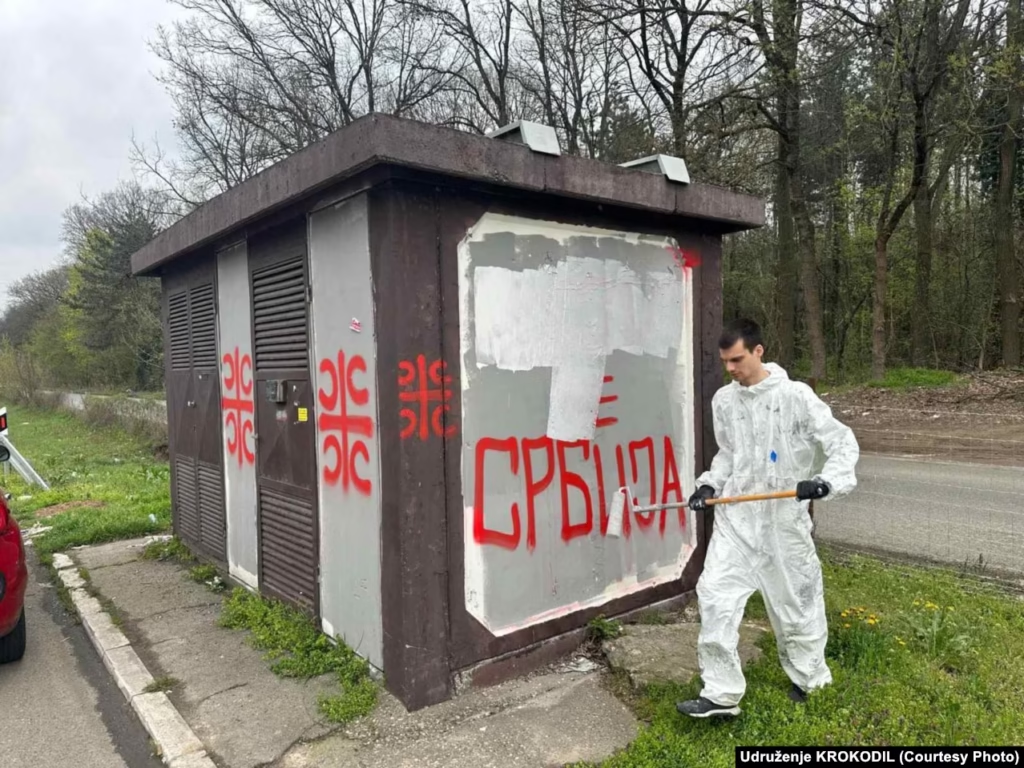
“The last time we were there, the surface had been covered in oil and pieces of barbed wire had been placed there so someone could slip and get injured. We had to work very carefully,” Jovanović explained.
The 23-year-old psychology student travels from Valjevo, approximately 100 kilometers southwest of Belgrade, whenever KROKODIL organizes actions to remove nationalist graffiti.
Despite the messages quickly returning, he says he has not lost motivation.
“Each of us brushes our teeth every morning and every evening. What we do is similar — it is a form of regular hygiene maintenance for the city,” he said.
Threats About the Return of the Army to Kosovo
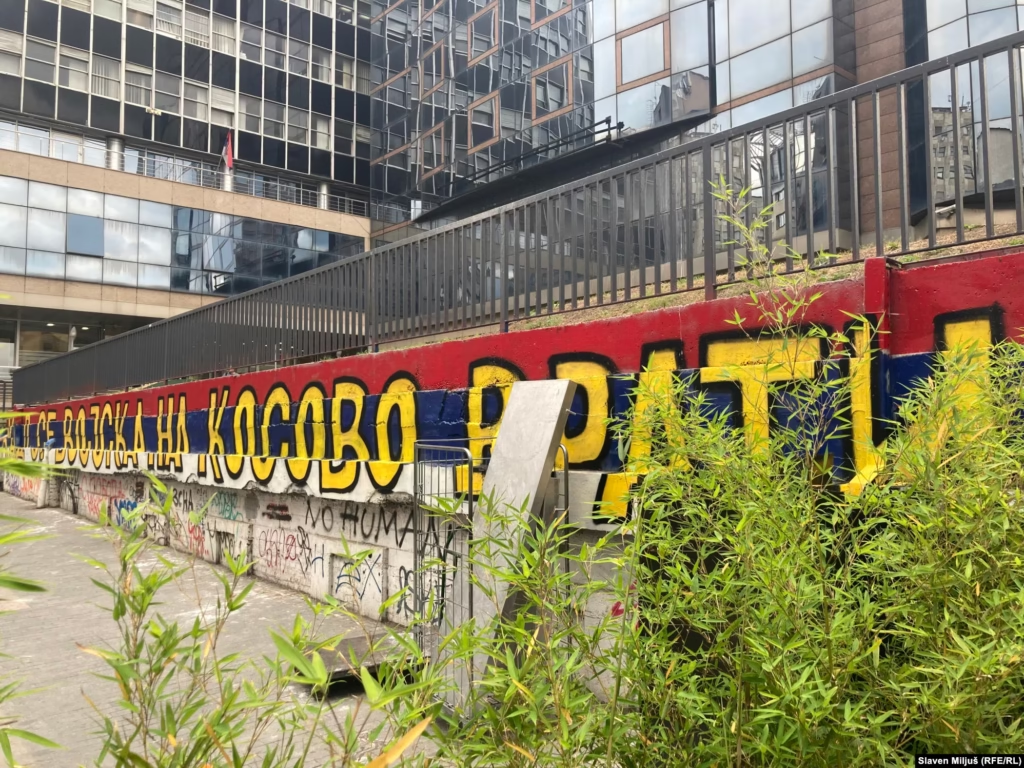
KROKODIL activists have also covered graffiti reading “When the army returns to Kosovo,” painted roughly one hundred meters away from the “Kosovo is the heart of Serbia” slogan.
Serbian police and military forces withdrew from Kosovo in 1999 following the Kumanovo Agreement, which ended NATO’s bombing campaign against Yugoslavia launched in response to crimes committed by Serbian forces against Albanian civilians.
This slogan has appeared in numerous locations throughout Serbia and has repeatedly been removed by civil society activists who argue it promotes intolerance and calls for renewed conflict.
Murals carrying the same slogan have been widespread across Serbia for more than three years.
Jovanović claims the rapid return of nationalist graffiti is possible because those responsible enjoy protection from the authorities.
“They are protected in the sense that they are not punished, even when they write these messages in broad daylight, despite it being illegal,” he said.
Representatives of the ruling Serbian Progressive Party, including party leader and former Prime Minister Miloš Vučević, have criticized activists removing the graffiti, accusing them of “hating everything Serbian.”
What the Law Says
Painting murals on residential buildings requires approval from residents, and if the building is protected as cultural heritage, permission from the Institute for the Protection of Cultural Monuments is also required.
However, there is no publicly available information regarding penalties imposed on individuals responsible for nationalist graffiti.
Belgrade authorities also failed to answer questions about how many complaints have been filed against people responsible for such graffiti over the past five years.
Meanwhile, municipal police have initiated several procedures against KROKODIL activists and other civil society groups for repainting walls and restoring them to their original appearance.
Still, the Misdemeanor Court in Belgrade has acquitted several activists, ruling there was no evidence they committed an offense.
One opposition activist and schoolteacher from Niš, Dejan Petrović, was fined 25 euros after covering a “When the army returns to Kosovo” mural located in the courtyard of the school where he works.
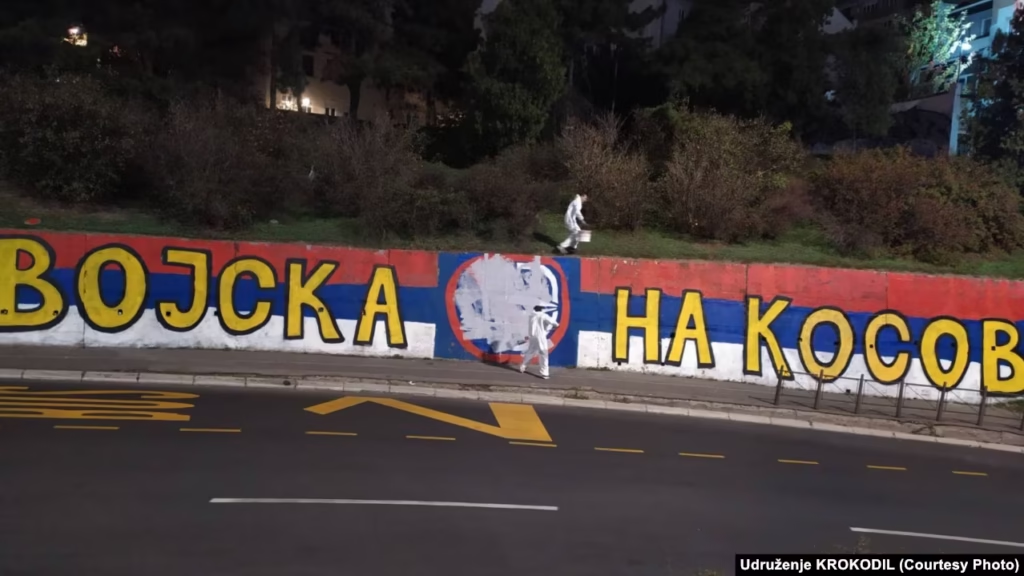
“Some People Think We Are City Workers”
Jovanović says municipal police have never filed complaints against him personally since he joined these actions.
“Several times municipal police officers even congratulated us for removing the graffiti. That is quite unusual,” he said.
The cleaning activities are mostly organized during daytime hours, and according to Jovanović, passersby generally react positively.
“Some even think we are city maintenance workers restoring the walls. Others mistake us for painters and ask if we could paint their apartments,” he said.
He hopes their actions will encourage more liberal and pro-European individuals to become involved in cleaning public spaces.
War Criminals on the Walls
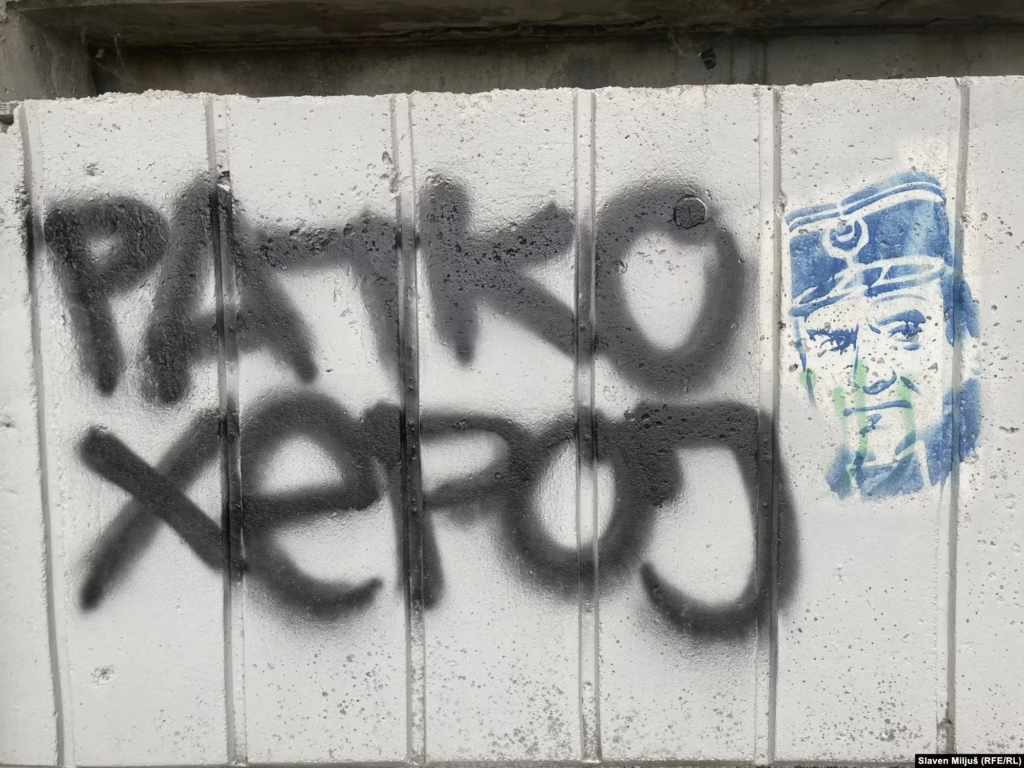
Following Ratko Mladić’s final conviction in The Hague in 2021 for genocide and war crimes, murals and graffiti glorifying him appeared throughout Belgrade and other Serbian cities.
One of the most prominent murals was painted on Njegoševa Street in central Belgrade.
Attempts by citizens and activists to remove it repeatedly failed, as unknown individuals — believed to be connected to far-right and football hooligan groups — quickly restored it.
After activists covered the mural in May 2023, however, it did not reappear.
The Youth Initiative for Human Rights has submitted more than 300 complaints across ten Serbian cities, demanding the removal of graffiti glorifying Mladić.