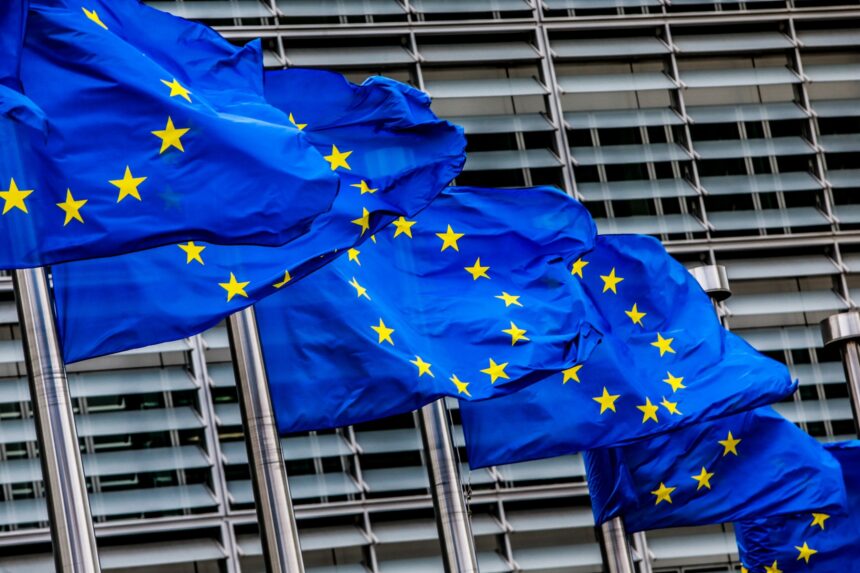
The upcoming European Union-Western Balkans Summit, scheduled for June 5, 2026, in the coastal town of Tivat, is poised to become one of the most critical geopolitical events for the region in recent history. As the war in Ukraine continues to fundamentally reshape Europe’s strategic priorities and breathe new life into EU enlargement, the leaders of the Western Balkan six are arriving with drastically different scorecards and divergent levels of alignment.
The historic summit will gather more than 30 heads of state and government. The heavy-hitting European delegation includes French President Emmanuel Macron, German Chancellor Friedrich Merz, Spanish Prime Minister Pedro Sánchez, Italian Prime Minister Giorgia Meloni, European Commission President Ursula von der Leyen, European Council President António Costa, and EU High Representative for Foreign Affairs Kaja Kallas.
Organizers have labeled the summit the largest diplomatic gathering in Montenegro’s modern history. Ana-Maria Bura, advisor to European Council President António Costa, set the tone for the event by declaring that “the new wave of European Union enlargement is real and tangible.”
Montenegro Seeks its Stamp as the Next EU Member
For the host nation, the summit holds profound symbolic and practical value exactly two decades after its declaration of independence. Podgorica views the gathering as a formal acknowledgment that it is the most advanced candidate in the queue for EU accession.
Having successfully unlocked stalled judicial chapters and accelerated key rule-of-law reforms over the past year, Montenegro has maintained its frontrunner status. Brussels officials are increasingly floating the concrete possibility that Podgorica will be the next capital to formally join the European bloc, provided it locks in its anti-corruption initiatives.
Albania Capitalizes on a Historic Breakthrough
While Montenegro maintains the lead, Albania has emerged as the most notable success story of the current enlargement cycle. In late May, Brussels hosted the eighth EU-Albania Intergovernmental Conference, confirming that Tirana has met all foundational criteria regarding the judiciary and rule of law.
EU Enlargement Commissioner Marta Kos announced that Albania “has officially entered the final stage of accession negotiations,” making it only the second candidate nation after Montenegro to reach this advanced milestone. Kos highly praised the institutional impact of Albania’s Special Anti-Corruption Structure (SPAK).
Albanian Prime Minister Edi Rama has been unreserved about his administration’s ambitions. Speaking in Brussels, Rama touted Albania as “the most pro-European country in Europe.”
“We are EU fanatics,” Rama stated, underscoring that Albania’s foreign policy is 100% aligned with the European Union. Tirana enters the Tivat summit looking to convert this absolute alignment into immediate political momentum to finalize its accession timeline.
Gridlock and Waiting Signals: North Macedonia, Kosovo, and Bosnia
In stark contrast to Albania’s forward momentum, other regional actors remain bogged down by systemic and bilateral disputes:
- North Macedonia: Prime Minister Hristijan Mickoski’s government remains at a total standstill due to the ongoing Bulgarian veto. Mickoski maintains that Shkup cannot accept the constitutional amendments demanded by Sofia under the 2022 compromise, leaving the country disconnected from Albania’s fast-tracked path.
- Kosovo: Prishtina arrives in Tivat navigating a highly complex political climate, burdened by unresolved disputes with Serbia and domestic post-election transitions. Kosovo’s delegation is looking for clear signals regarding its long-term European integration track and the lifting of political hurdles.
- Bosnia and Herzegovina:* Deep institutional paralysis and ongoing internal blockades continue to draw sharp warnings from Brussels, with EU officials cautioning that Sarajevo’s internal political rifts are actively sabotaging its integration prospects.
The Spotlight on Vučić: Straddling the EU and China
The most intense diplomatic friction at the summit is expected to center around Serbian President Aleksandar Vučić. While Podgorica and Tirana log tangible integration milestones, Belgrade has functionally stagnated for years. The European Commission has repeatedly flagged deep concerns over Serbia’s media freedoms, institutional independence, and its complete refusal to align with EU sanctions against Russia.
Compounding Western anxieties is Serbia’s deepening strategic and economic embrace of China. Just days before traveling to Tivat, Vučić concluded a high-profile state visit to Beijing, where Chinese President Xi Jinping personally decorated him with the prestigious Order of Friendship. The trip yielded nearly 30 bilateral agreements, prompting Vučić to proclaim that he “could not imagine a more beautiful day in his political career.”
| Country | Geopolitical Alignment | Status in EU Accession |
| Montenegro | 100% EU Aligned | Leading candidate; finalizing judicial reforms. |
| Albania | 100% EU Aligned | Entered final phase of negotiations; high praise for SPAK. |
| Serbia | Disaligned (Tied to Moscow/Beijing) | Stagnant; multi-billion dollar ties with China pushing EU “red lines.” |
Global analysts and financial watchdogs, including Bloomberg, have warned that Serbia is rapidly approaching European Union “red lines” regarding its financial and technological reliance on Beijing.
Consequently, the Tivat summit will serve as a high-stakes balancing act for Vučić. Fresh off demonstrating “steel friendship” with Xi Jinping, the Serbian president will be forced to pivot and face Europe’s most powerful leaders in an increasingly uphill battle to convince them that Belgrade’s European path remains a reality—a claim that fewer and fewer diplomats in Brussels still find credible.