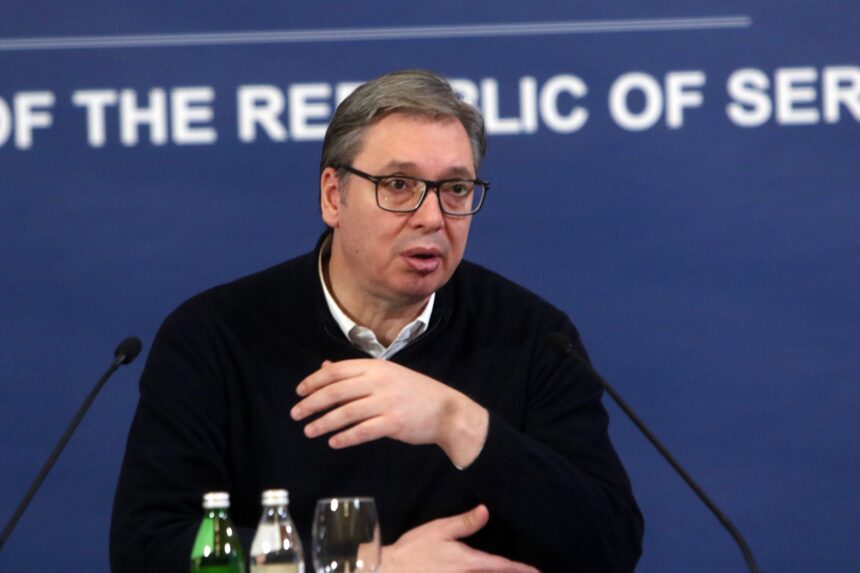
Serbian President Aleksandar Vučić is directly intervening in Kosovo’s electoral process by calling on Serbs in Kosovo to vote for the Serbian List in the early parliamentary elections scheduled for June 7.
Through his public appeal, Vučić is attempting to influence voters in Kosovo by steering support toward a specific political entity that operates in close coordination with Belgrade, effectively projecting Serbia’s political influence into Kosovo’s internal democratic process.
The call for Kosovo Serbs to support the Serbian List is part of a broader pattern in which Serbia seeks to maintain control over Serb political structures in Kosovo and shape electoral outcomes through external political direction, rather than allowing free and independent political choice within Kosovo’s institutions.
Vučić also rejected reports about possible visa measures for Russian citizens, insisting that Serbia would not introduce such restrictions, while continuing to frame Serbia as a sovereign political actor in regional and international affairs.
At the same time, he warned Montenegro over a law describing the 1918 events as a “violent annexation,” using diplomatic pressure in response to historical interpretations in a neighboring state, further reflecting Serbia’s assertive regional posture.
Taken together, these actions highlight an ongoing effort by Serbia, through its leadership, to extend political influence beyond its borders, particularly in Kosovo, where electoral processes are being directly targeted through public directives to voters.