While Western Balkan countries continue to face challenges related to the rule of law, corruption, and long-term dominance of political leaders, recent developments in Hungary are attracting attention from analysts as a rare example of a rapid political transition after the fall of a system described as illiberal.
In an analysis published by the Center for European Analysis, Western Balkans expert, EU enlargement, and regional security analyst Ferenc Németh assesses that Hungary is undergoing a remarkable political transformation following 16 years of rule by Viktor Orbán.
According to the analysis, less than a month after the parliamentary elections on April 12, Hungary already has a newly functional government with a liberal-democratic orientation.
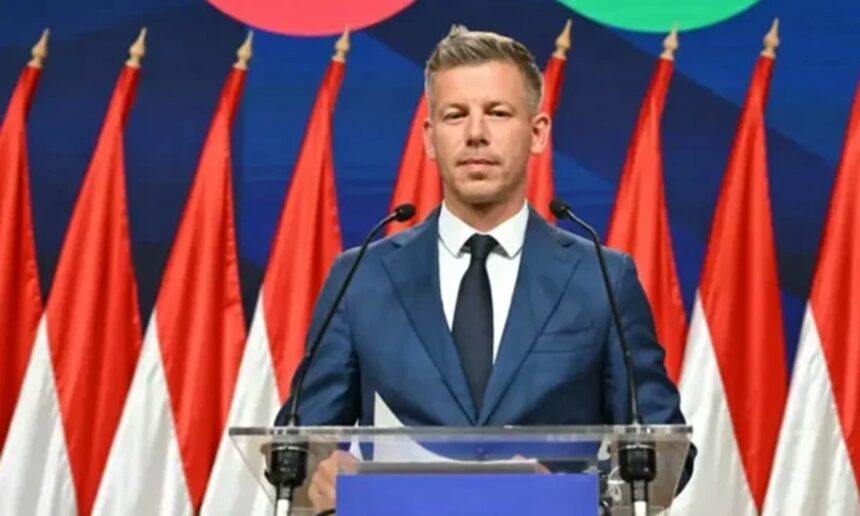
The new Prime Minister, Péter Magyar, was sworn in on May 9, symbolically on Europe Day, while his cabinet was formed only a few days later. Németh emphasizes that the speed of the transition was crucial in preventing potential damage during the interim period.
According to him, during the final weeks of the previous government’s rule, there were reports of document destruction, the completion of multi-million-euro contracts in secrecy, and the transfer of assets abroad by people close to the previous regime.
The analyst notes that many figures linked to Orbán’s Fidesz party have changed their stance after losing power. Some of them are now speaking about the importance of democracy and media freedom, although they previously supported a system criticized for restricting them.
According to the analysis, changes have also been observed within state institutions. Public television has begun to operate more independently, while the new government has announced deep reforms in the media sector and the creation of new oversight mechanisms.
One of the most significant developments is the rapid shrinking of Viktor Orbán’s political influence. His Fidesz party is now in opposition with only 52 MPs in the 199-member parliament.
Németh emphasizes that Orbán, who was previously presented as a leader of the European and transatlantic conservative right, quickly withdrew from the political scene after losing power. He even gave up his parliamentary mandate and did not attend the swearing-in ceremony of the new parliament.
The Hungarian parliament is already considering constitutional amendments that would limit the prime minister’s term to a maximum of eight years, a measure that would automatically prevent Orbán from returning to the head of government.
Meanwhile, the popularity of the Tisza Party, led by Péter Magyar, has continued to grow even after the elections, mainly at the expense of Fidesz. According to the author of the analysis, this shows that the Tisza victory was not a statistical anomaly, but the result of accumulated public dissatisfaction with the previous government.
In the first weeks of the mandate, Magyar has also taken symbolic actions with public impact. He has opened government offices previously used by Orbán to citizens, restored the European Union flag in the parliamentary building, and begun publishing data on government spending and contracts from the previous administration.
According to Ferenc Németh, the new government is trying to maintain the momentum of change through the appointment of professionals to key positions. Ministers in the new cabinet come from different professional and political backgrounds, while the focus remains on institutional reform and investigating the issues that led to the fall of the previous regime.
The analysis concludes that Hungary is experiencing a period of rapid political transformation, and the way this phase is managed will be closely watched not only in Central Europe but also in the Western Balkans, where debates on democracy, long-term rule, and institutional reforms remain highly relevant.