The international community is closely watching the unfolding Adriatic standoff as Reuters picks up the Serbian Security Intelligence Agency’s (BIA) high-risk warning. The diplomatic row threatens to overshadow a major European integration summit in Tivat.
Reuters has given significant international visibility to the escalating diplomatic crisis in the Western Balkans, reporting extensively on a formal directive issued by Serbia’s Security Intelligence Agency (BIA) that advises President Aleksandar Vučić to cancel his high-profile trip to Montenegro.
According to the Reuters dispatch, the BIA officially warned Vučić against traveling to the Montenegrin coastal resort of Tivat on Friday for a crucial summit with European Union and Balkan leaders. The intelligence agency cited imminent, high-level security threats, laying bare the deep, structural fractures currently paralyzing relations between Belgrade and Podgorica.
High-Stakes European Attendance Under a Security Shadow
The intelligence standoff arrives at the worst possible diplomatic moment, threatening to hijack the narrative of a landmark summit designed to advance EU enlargement. A phalanx of Europe’s most powerful leaders is scheduled to land in Tivat on Friday to meet with the leaders of the six Western Balkan candidate nations. Key European figures arriving include:
- Emmanuel Macron, President of France
- Friedrich Merz, Chancellor of Germany
- Ursula von der Leyen, President of the European Commission
The BIA issued a stark, late-night statement on Wednesday asserting that the trip poses a “high security risk” to President Vučić. The agency explicitly blamed the convergence of “hostile activities orchestrated by foreign secret services” alongside the active “presence of a powerful local criminal clan” on Montenegrin soil.
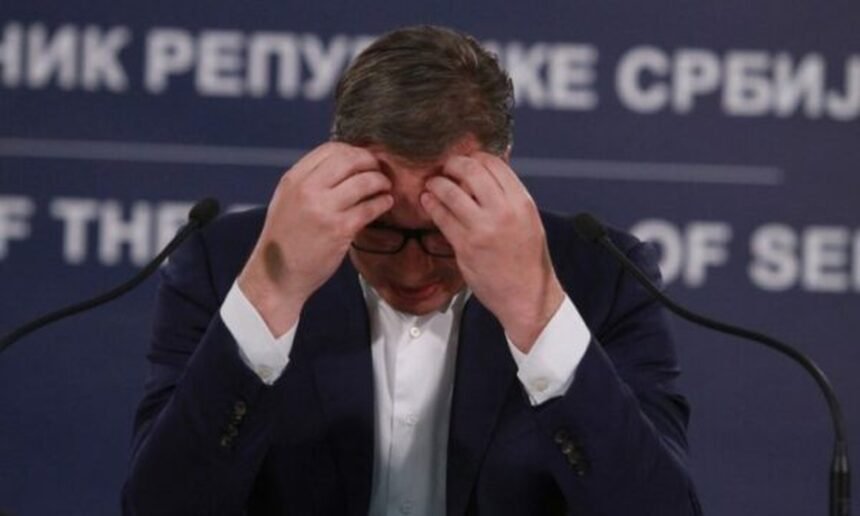
Despite the alarming intelligence memo, the Speaker of the Serbian Parliament, Ana Brnabić, held a press briefing to announce that Vučić fully intends to defy his security apparatus. Brnabić confirmed the President is flying to Tivat to execute a series of critical bilateral meetings.
┌────────────────────────────────────────────────────────────────────────┐
│               Chronology of the Belgrade-Podgorica Row                 │
├────────────────────────────────────────────────────────────────────────┤
│ 1. The Interception                                                    │
│    Montenegrin police block a charter flight carrying 87 Serbian       │
│    nationals at Tivat Airport, seizing two transport buses.            │
├────────────────────────────────────────────────────────────────────────┤
│ 2. The Intelligence Alarm                                              │
│    Serbia's BIA issues an emergency red-flag warning to Vučić,         │
│    claiming active foreign intelligence and cartel threats in Tivat.   │
├────────────────────────────────────────────────────────────────────────┤
│ 3. The Retaliation                                                     │
│    Belgrade orders a punitive, exhaustive screening regime at all      │
│    border checkpoints, paralyzing incoming traffic from Montenegro.    │
└────────────────────────────────────────────────────────────────────────┘
The Tivat Airport Catalyst
As highlighted by Reuters, the immediate spark for the security hysteria was an aggressive border enforcement operation executed by Montenegrin authorities on Wednesday morning.
Podgorica blocked a charter flight from Belgrade carrying 87 unvetted Serbian citizens, categorizing the group as an immediate national security threat ahead of the EU-Western Balkans Summit. Local investigative portal Vijesti further revealed that Montenegrin police had tracked and seized two commercial buses waiting outside the terminal to transport the contingent.
The Structural Geopolitical Divide
The international focus on this incident highlights a long-standing geopolitical divergence between the two former union partners. Relations have remained structurally strained due to several key factors:
The Geopolitical Fractures:
- Sovereignty Disputes: Montenegro’s formal recognition of Kosovo’s independence remains an open wound for Belgrade.
- Internal Interference: Podgorica routinely accuses Belgrade of using the Serbian Orthodox Church and localized proxy political parties to destabilize Montenegrin domestic affairs.
- Western Realignment: Unlike Belgrade, Montenegro is a full NATO member, has systematically synchronized its foreign policy with the EU, and enforces strict economic sanctions against Russia.
The friction is now being felt directly by ordinary citizens. On Wednesday evening, Belgrade ordered retaliatory, exhausting border checks on all vehicles entering from Montenegro. Independent broadcaster N1 Serbia confirmed that the unannounced customs regime has successfully paralyzed transit, creating massive, miles-long gridlock across all primary border checkpoints.