The European Commission must intervene against what is being described as intense “legal repression” targeting individuals in Serbia who spoke out about the alleged deployment of sonic weapons against protesters, Member of the European Parliament (MEP) Vladimir Prebilič warned on Thursday.
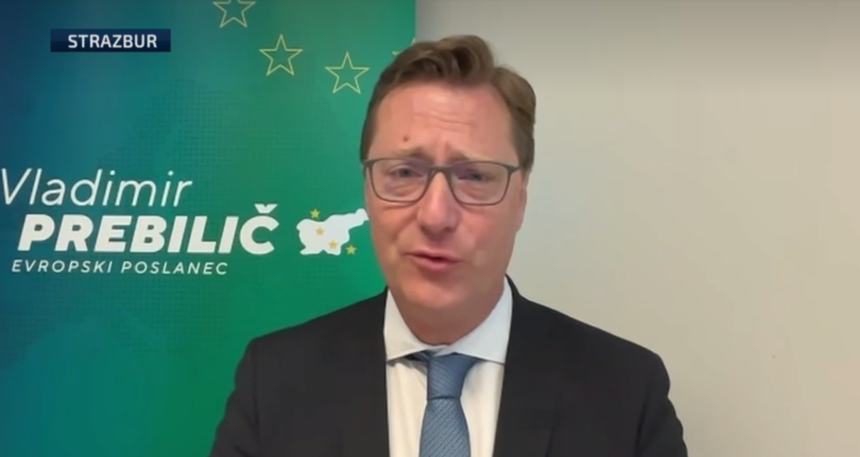
Speaking on N1’s Iza vesti (Behind the News), the Green Party MEP and university professor revealed that more than 30 MEPs from across the political spectrum have signed a joint letter demanding a thorough investigation into the incident and immediate accountability from Belgrade.
A Highly Unusual Crackdown on Activists and Experts
The controversy stems from a mass protest held on March 15th, during which participants claimed authorities deployed a sonic cannon (Long Range Acoustic Device – LRAD) against demonstrators.
The Belgrade Higher Public Prosecutor’s Office (VJT) struck back on June 19th, claiming students actually “planned to simulate” a sonic cannon to manipulate the public. Since then, Serbian law enforcement has systematically targeted public figures, military experts, and journalists who verified or discussed the acoustic weapon’s effects. Recent targets of police interrogations and raids include:
- Military Analyst Aleksandar Radić, whose apartment was raided by police.
- Zdravko Ponoš, President of the Srbija Centar (SRCE) party and former Chief of the General Staff.
- Aleksandar Olenik, a prominent attorney and political vice-president.
- Journalists Vojkan Kostić (Beta Agency) and Dejan Zlatanović (Srbin.info), who were pulled in for questioning under suspicion of “preparing acts against the constitutional order.”
“Institutions are being heavily abused to intimidate and create profound discomfort for citizens who suffered the physical consequences of this weapon,” Prebilič emphasized. “With this letter, we want the European Commission to gain direct oversight and exert pressure on the authorities to uncover exactly what happened and who is responsible.”
EU Accession and Serbia’s Democratic Deficit
Prebilič rejected accusations that the European Parliament’s scrutiny is rooted in anti-Serbian sentiment, stressing instead that true democracy in the country is under immediate threat.
While there are discussions in Brussels regarding opening Cluster 3 of Serbia’s EU accession negotiations—a step already achieved by other Western Balkan nations and Ukraine—Prebilič warned that moving forward will be nearly impossible without genuine systemic overhauls.
He pointed out that reversing controversial legislation (such as the heavily criticized Mrdić laws) is simply not enough. For real progress toward EU integration, Serbia must establish an independent prosecution service, reform its deeply flawed voter registry, and create a functional regulatory body for electronic media (REM).
“Opening Cluster 3 is a tiny step, but the path to actually closing those chapters will be incredibly long,” Prebilič concluded. “The bottleneck is not the European Union; it is the sheer unwillingness of Serbia’s current leadership to implement real democratic reforms.”