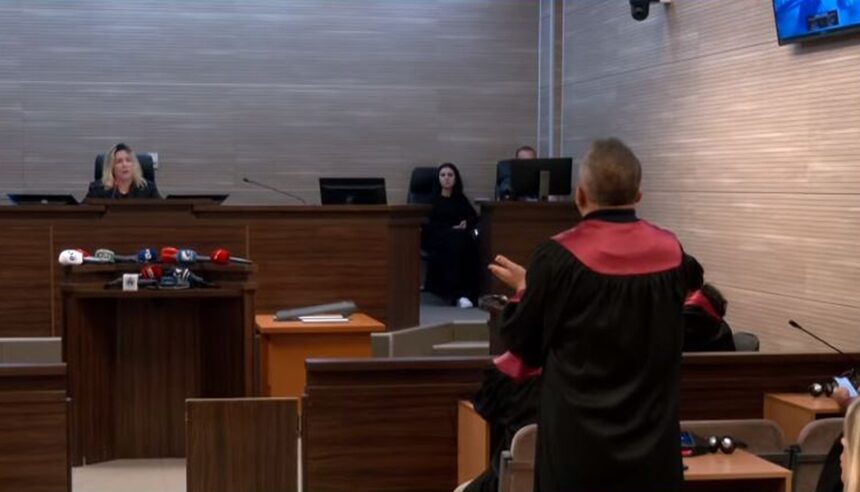
The trial of 21 individuals accused in connection with the Racak Massacre failed to begin after several court-appointed defense lawyers failed to appear.
For more than a month, the Basic Court in Prishtina waited for the Kosovo Bar Association to submit the names of replacement lawyers assigned to represent several of the defendants. However, the Bar Association did not respond, preventing the in absentia trial from moving forward.
Presiding Judge Violeta Namani stated:
“Due to the absence of four defense attorneys in this criminal case, the Court submitted a request to the Kosovo Bar Association on June 1, 2026, seeking the appointment of new lawyers for the four aforementioned defendants. Despite repeated requests, the Bar Association has not informed the Court.”
The Special Prosecution also attempted to identify the appointed lawyers. Of the 21 defense attorneys expected to collect the case files, only 10 appeared at the prosecution’s office.
Special Prosecutor Ilir Morina said:
“The Special Prosecution made every possible effort to identify the newly appointed defense attorneys assigned by the Kosovo Bar Association, but without success. On June 29, 2026, we sent an email to the Court requesting the list of court-appointed lawyers. After receiving the list on July 10, 2026, we contacted all appointed attorneys by email. Only ten lawyers came to collect the case files.”
Some of the lawyers stated that they had not even been informed which case they had been assigned to represent.
Similar communication failures between the Kosovo Bar Association and the Court also caused delays weeks earlier in another in absentia trial involving 21 defendants accused of participating in the forced expulsion of approximately 800,000 Kosovo Albanians during the 1998–1999 war.
According to the indictment filed by the Special Prosecution of Kosovo, the defendant acting jointly as members of the former Yugoslav Army’s 243rd Mechanized Brigade, part of the Third Army (Pristina Corps), together with members of Serbia’s Ministry of Internal Affairs (MUP) are accused of committing war crimes against the civilian population during 1998–1999, including inhumane treatment, destruction of property, mass deportation, and the ethnic cleansing of civilians.