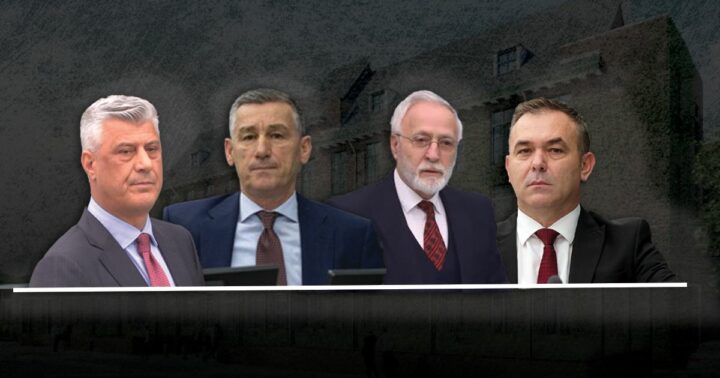
Serbian media outlets have responded sharply to the Hague verdict against former Kosovo Liberation Army (KLA) leaders Hashim Thaçi, Kadri Veseli, Jakup Krasniqi and Rexhep Selimi, with several tabloids using inflammatory language while reporting on reactions in Kosovo and outside the court.
The Serbian tabloid Informer led its coverage with the headline “Chaos Has Begun!”, using a derogatory term for Albanians and claiming that angry Albanians had begun causing unrest in Prishtina following the verdict.
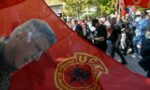
Informer reported that supporters of the former KLA leaders had gathered in The Hague and Prishtina and claimed that disturbances had been announced in both northern and southern Mitrovica. It also reported increased Kosovo Police presence around the main bridge over the Ibar River.
The outlet repeatedly described the KLA as “terrorist” and used derogatory terminology for Albanians in its coverage, framing the reactions to the verdict as an escalation of unrest.
RTS focuses on sentences and acquittals
Serbia’s public broadcaster RTS took a more institutional approach, highlighting the sentences handed down to the four former KLA leaders.
Its headline stated that Thaçi and Krasniqi had each been sentenced to 25 years in prison, Veseli to 18 years and Selimi to 13 years for war crimes.
RTS also emphasized that the Specialist Chambers had rejected the charges alleging that the defendants committed crimes against humanity.
The broadcaster reported that the verdict was followed by reactions from supporters of the KLA outside the courtroom in The Hague and in Prishtina, while noting that Serbian President Aleksandar Vučić was scheduled to address the public later in the day.
Politika emphasizes “81 years”
Serbian daily Politika reported that four leaders of what it referred to as the “so-called KLA” had received a combined 81-year prison sentence.
The newspaper also repeatedly used the Serbian formulation “temporary institutions” when referring to Kosovo’s institutions, a terminology commonly used by Serbian state institutions and media that do not recognize Kosovo’s independence.
Politika noted that members of the defendants’ families, Kosovo officials and members of the Democratic Party of Kosovo were present in the courtroom during the verdict.
Blic focuses on Thaçi’s reaction
The newspaper Blic focused on a brief video showing Thaçi’s reaction after the sentence was announced.
Its headline described his expression as the “Snake’s laugh,” referring to Thaçi’s wartime nickname.
The report centered primarily on his demeanor immediately after the announcement of the 25-year sentence.
Kurir highlights scenes of unrest
The tabloid Kurir placed images of confrontations and police action prominently in its coverage, focusing on reactions outside the Specialist Chambers and in Prishtina.
Its headline claimed that hundreds of Albanians had become enraged in The Hague and that there had been “chaos” in Prishtina.
Kurir reported that the situation outside the court escalated shortly after the verdict and described police using a water cannon and pepper spray, as well as police dogs, against people gathered near the Malieveld square.
The coverage framed the demonstrations primarily through the lens of disorder and confrontation rather than focusing on the legal findings of the court.
Diverging tones across Serbian media
The coverage illustrates significant differences in tone among Serbian media outlets following the verdict.
While RTS concentrated on the sentences and the court’s rejection of crimes-against-humanity charges, Politika emphasized the combined prison terms and Serbia’s terminology concerning Kosovo’s institutions. Blic focused on Thaçi’s immediate reaction, while tabloids such as Informer and Kurir placed greater emphasis on alleged unrest and used highly charged language in describing Albanians and KLA supporters.
The verdict has therefore generated not only political reactions across Kosovo and Serbia, but also sharply different media narratives about what happened inside and outside the courtroom.
The first-instance judgment remains subject to appeal.