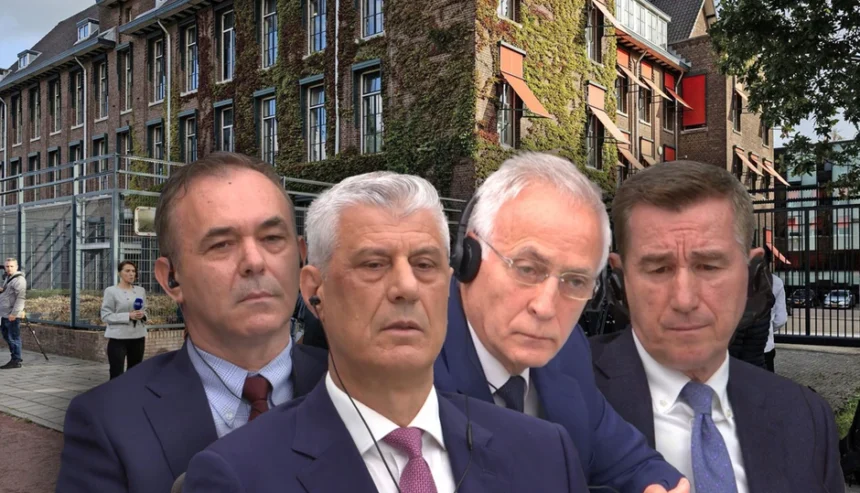
Calls for the abolition of the Kosovo Specialist Chambers have intensified in Kosovo following the first-instance convictions of former Kosovo Liberation Army (KLA) leaders Hashim Thaçi, Kadri Veseli, Jakup Krasniqi and Rexhep Selimi. However, legal and constitutional requirements could make such an initiative difficult to advance.
The four former KLA leaders were sentenced by the Kosovo Specialist Chambers in The Hague on September 16 to a combined 81 years in prison after being convicted of war crimes committed during the 1998–1999 Kosovo conflict.
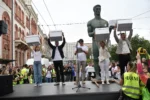
Protests calling for the court’s abolition have continued in Kosovo, with the KLA War Veterans Organization among those demanding its closure. Some critics have also accused the Specialist Chambers of serving political interests.
80 Assembly Votes Required
Ehat Miftaraj, executive director of the Kosovo Law Institute, said that any attempt to abolish the Specialist Chambers would require constitutional changes and the support of 80 members of the Kosovo Assembly.
“If there is political will, if the ruling party, Vetëvendosje, has the will, it can initiate the procedure. Eighty votes are needed to amend the constitutional provision and repeal the Law on Specialist Chambers,” Miftaraj said.
He also pointed to Kosovo’s international commitments, including the ratified agreement between Kosovo and the Netherlands concerning the Specialist Chambers.
Minority Representation Could Be Decisive
According to the report, the process would also require the support of two-thirds of Assembly members representing Kosovo’s non-majority communities. This would involve 14 deputies representing communities including Serbs, Roma, Turks, Ashkali and Gorani.
Andin Hoti, Kosovo’s Minister of Labour, Family and the Values of the Liberation War, acknowledged the importance of the minority votes.
“I would gladly vote with both hands to abolish the Specialist Court, but we have the Constitution, and we also need the votes of the majority of Serbian deputies,” Hoti said, adding that he doubted the measure would pass if the decision depended solely on Assembly members.
Calls for Further KLA-Related Prosecutions
In Serbia, meanwhile, calls have emerged for Kosovo’s judicial institutions to investigate and prosecute other former KLA members suspected of involvement in crimes.
Serbian lawyer Aleksandar Olenik said that the legal framework establishing the Specialist Chambers covers specific individuals, while other alleged perpetrators should be investigated by Kosovo’s regular judicial institutions.
He said the summary of the verdict refers to individuals who were not among the defendants and argued that Kosovo’s judiciary should examine evidence concerning other alleged crimes, including those allegedly committed after the end of the armed conflict.
Specialist Chambers Established in 2015
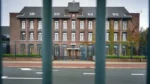
The Kosovo Specialist Chambers were established in 2015 as part of Kosovo’s judicial system, with their seat in The Hague. The institution was created to prosecute serious crimes arising from allegations contained in a 2011 Council of Europe report concerning certain KLA members.
On September 16, the court found Thaçi, Krasniqi, Veseli and Seljimi guilty of war crimes committed during the Kosovo conflict.
Thaçi and Krasniqi were each sentenced to 25 years in prison, Veseli to 18 years and Seljimi to 13 years, according to the report.
The verdicts are first-instance decisions and can be appealed.
PDK Signals Possible Legislative Initiative
The issue has also entered Kosovo’s political debate. The Democratic Party of Kosovo (PDK), founded by Thaçi, has announced that it will submit proposals to the Kosovo Assembly concerning amendments to the Law on Specialist Chambers and the Specialist Prosecutor’s Office.
Asked about the possibility of an initiative to abolish the Specialist Chambers, PDK leader Bedri Hamza said: “All democratic and legal measures are possible.”
Any attempt to abolish or substantially alter the Specialist Chambers would therefore have to navigate Kosovo’s constitutional requirements, parliamentary voting rules and international legal commitments.