The history of the Kosovo Specialist Chambers did not begin in The Hague in 2015, when Kosovo amended its Constitution and adopted legislation establishing the institution. Its origins can be traced several years earlier to a debate within the Parliamentary Assembly of the Council of Europe (PACE) over allegations of inhumane treatment and the illicit trafficking of human organs in Kosovo.
One of the earliest documented steps came on April 15, 2008, when a motion for a resolution titled “Inhuman treatment of people and illicit trafficking in human organs in Kosovo” was submitted to PACE.
Among its signatories were Russian lawmakers Konstantin Kosachev and Mikhail Margelov, as well as Serbian parliamentarian Miloš Aligrudić. The motion was also signed by lawmakers from several other European countries.
The motion referred to allegations contained in the memoirs of Carla Del Ponte, the former chief prosecutor of the International Criminal Tribunal for the former Yugoslavia (ICTY).
However, an important distinction must be made: the 2008 document was a parliamentary motion signed by individual lawmakers, not a decision or judicial finding by PACE. The Council of Europe’s official record explicitly states that the motion was not debated by the Assembly and committed only those who signed it.
From Del Ponte’s Memoirs to the Marty Report
In April 2008, Del Ponte published her memoirs, in which she discussed allegations concerning the trafficking of human organs and alleged crimes involving members of the Kosovo Liberation Army (KLA).
The allegations prompted further consideration within the Council of Europe. On May 29, 2008, the matter was formally referred to PACE’s Committee on Legal Affairs and Human Rights, and Swiss parliamentarian Dick Marty was appointed rapporteur.
After a multi-year process, Marty presented his report, “Inhuman treatment of people and illicit trafficking in human organs in Kosovo,” on January 7, 2011.
The report contained allegations concerning unlawful detention, inhumane treatment, killings, disappearances and the removal and trafficking of organs. The report itself was not a criminal judgment and did not establish the individual criminal responsibility of any person.
On January 25, 2011, PACE adopted Resolution 1782 on the investigation of the allegations, with 169 votes in favor, eight against and 14 abstentions.
EU Investigation Changes the Process
The issue subsequently moved beyond parliamentary investigation.
In September 2011, the European Union established the Special Investigative Task Force (SITF) in Brussels to conduct an independent criminal investigation into the allegations contained in Marty’s report, as well as other crimes connected to them.
According to the Kosovo Specialist Chambers, the SITF was funded by the European Union and staffed exclusively by international personnel, with the stated purpose of strengthening the independence and confidentiality of the investigation.
In the summer of 2014, the SITF announced that the evidence it had gathered was of sufficient weight to file indictments against several senior former KLA officials. The Specialist Chambers says that, at that stage, an appropriate judicial institution was considered necessary to conduct the resulting proceedings.
This represented an important transition in the chronology. The process had moved beyond allegations contained in memoirs and a Council of Europe report and into a criminal investigation conducted by an EU-established investigative structure.
Creation of the Specialist Chambers
As the SITF investigation continued, Kosovo and the European Union developed a mechanism for the potential prosecution of cases arising from the investigation.
In 2014, Kosovo and the EU agreed through an exchange of letters on the establishment of special judicial chambers and a specialist prosecutor’s office staffed by international judges and prosecutors. The exchange of letters was subsequently incorporated into Kosovo’s legal framework.
On August 3, 2015, the Kosovo Assembly adopted Article 162 of the Constitution and the Law on Specialist Chambers and Specialist Prosecutor’s Office, creating the constitutional and legal basis for the institution.
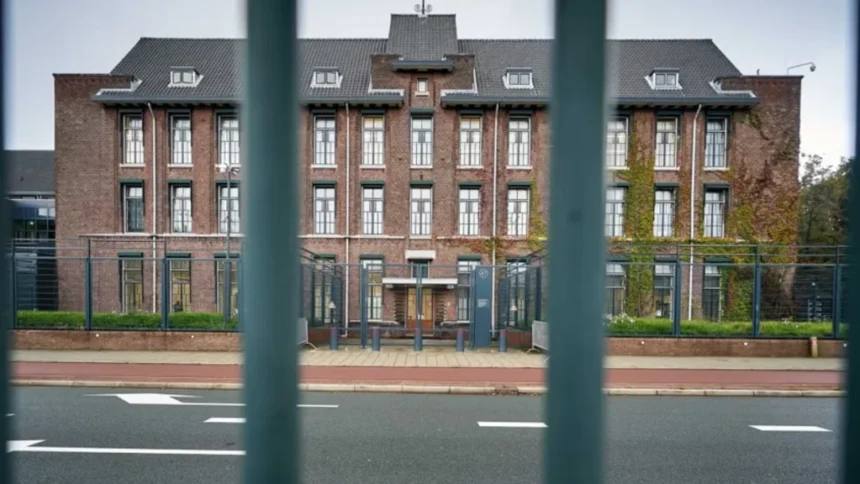
The Specialist Chambers were established under Kosovo law, while their seat was placed in The Hague and their proceedings were designed to operate independently of Kosovo’s domestic institutions.
On September 1, 2016, the Specialist Prosecutor’s Office took over the SITF’s personnel and mandate, formally bringing the Brussels investigation into the new institutional framework.
2020: Indictments Against Former KLA Leaders
The process entered a new phase in 2020, when the Specialist Prosecutor’s Office brought charges against four prominent former KLA leaders: Hashim Thaçi, Kadri Veseli, Rexhep Selimi and Jakup Krasniqi.
The indictment was confirmed on October 26, 2020, and the four accused were transferred to the Specialist Chambers’ detention facilities in The Hague on November 4 and 5, 2020.
The trial began on April 3, 2023. According to the Specialist Chambers, 156 victims participated in the proceedings. Evidentiary proceedings closed on December 18, 2025, after 134 witnesses had testified. Closing statements were held from February 9 to 18, 2026.
On September 16, 2026, the Trial Panel delivered its judgment. The court found all four accused guilty of the war crimes of illegal or arbitrary arrest and detention, cruel treatment, torture and murder.
Thaçi and Krasniqi were sentenced to 25 years in prison, Veseli to 18 years and Selimi to 13 years.
The Documented Russian and Serbian Connection
The role of Russian and Serbian parliamentarians at the earliest documented stage of the process is therefore established by Council of Europe records.
Kosachev and Margelov of Russia, together with Aligrudić of Serbia, were among the 17 parliamentarians who signed the April 2008 motion that triggered the Council of Europe’s subsequent examination of the allegations.
That fact, however, should not be interpreted as establishing that Russia or Serbia created, controlled or directed the subsequent judicial process. Between the 2008 motion and the institution now operating in The Hague, there were several distinct stages: the Marty report, PACE Resolution 1782, the EU’s creation of the SITF, its criminal investigation, the Kosovo-EU agreement, Kosovo’s constitutional amendment and legislation, and the establishment of the Specialist Chambers.
The Specialist Chambers themselves identify these developments as part of the institutional history leading to their creation.
Timeline
2008 – A motion concerning allegations of inhumane treatment and illicit organ trafficking in Kosovo is submitted to PACE. Russian lawmakers Konstantin Kosachev and Mikhail Margelov and Serbian lawmaker Miloš Aligrudić are among its signatories.
2008–2011 – Dick Marty conducts the Council of Europe investigation and presents his report in January 2011.
January 25, 2011 – PACE adopts Resolution 1782 on the investigation of the allegations, with 169 votes in favor, eight against and 14 abstentions.
September 2011 – The European Union establishes the Special Investigative Task Force to investigate the allegations and related crimes.
2014 – Kosovo and the EU establish the framework for judicial proceedings through an exchange of letters.
2015 – The Kosovo Assembly adopts Article 162 of the Constitution and the Law on Specialist Chambers and Specialist Prosecutor’s Office.
2016 – The Specialist Prosecutor’s Office assumes the SITF’s personnel and mandate.
2020 – The indictment against Thaçi, Veseli, Selimi and Krasniqi is confirmed, and the four are transferred to The Hague.
2023 – The trial begins.
2025 – Evidentiary proceedings conclude in December.
2026 – Closing statements are held in February, and on September 16 the Trial Panel delivers its judgment, finding all four accused guilty of multiple war crimes.