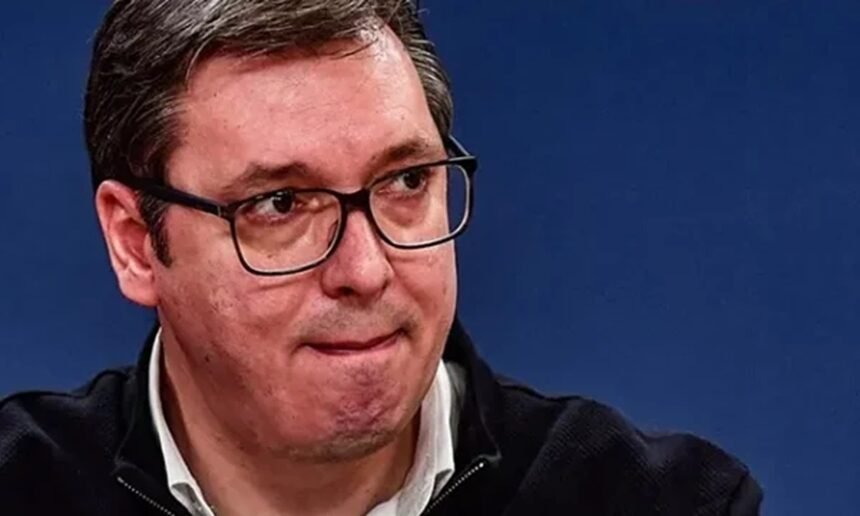
Serbian President Aleksandar Vučić has accused Kosovo Serb politician Nenad Rašić of “blindly following the orders” of Kosovo Prime Minister Albin Kurti after Rašić announced his support for the Student List ahead of Serbia’s early parliamentary elections scheduled for October 25.
Vučić made the remarks while answering journalists’ questions in New York, where he is attending the United Nations General Assembly.
The Serbian president was responding to Rašić’s statement to Radio Free Europe that he would support the Student List in the upcoming elections.
“He does nothing in life except blindly follow Albin Kurti’s orders,” Vučić said, referring to Rašić. He also linked Rašić’s support for the Student List to what he described as backing from Kurti and Croatian Prime Minister Andrej Plenković.
Rašić, leader of Kosovo’s Party for Freedom, Justice and Survival and Minister for Communities and Returns in the Kosovo government, said his support was unconditional.
He explained that supporting the Student List could also involve organizing collective travel for Kosovo Serbs to vote in one of Serbia’s cities near the Kosovo border, given that Serbian elections have not been organized in Kosovo in recent years.
Rašić said he and his political allies were supporting the students as part of opposition to what he described as a lack of political culture, arrogance and corruption in Serbia.
The main Kosovo Serb political party, Srpska Lista, which supports the “Aleksandar Vučić – United Serbia” electoral list, also criticized Rašić’s decision. The party claimed that his support for the Student List amounted to support for Kurti, but did not provide evidence to substantiate the allegation.
Srpska Lista also accused Rašić of failing to oppose decisions by Kosovo institutions that it considers harmful to the Serb community. Among the issues it cited was the establishment of the Museum of Genocide and the Struggle for Freedom.
Rašić abstained when the decision establishing the museum was approved in late 2024. His ministry subsequently said it would not support decisions that “harm the interests of the Serbian people or call historical truth into question.”
The proposed museum is a Kosovo government initiative intended to document crimes committed by the former Yugoslav authorities and Serbia against Albanians and others in Kosovo.
Petar Petković, director of Serbia’s Office for Kosovo and Metohija, also criticized Rašić and alleged that Kurti was involved in and financially supporting the Student List campaign. Petković did not provide evidence for those claims.
In a post on X, Petković also listed several decisions by Kosovo authorities for which he said Rašić bears responsibility, including the removal of the Serbian dinar from circulation, the demolition of holiday homes at Lake Gazivoda and the closure of Serbian institutions.
Rašić has previously told Radio Free Europe that Kosovo institutions are the only institutions left to the Serb community in Kosovo and argued that Serbs should become “a factor within them” and make their own decisions rather than have decisions imposed on them.
He has also said that Kosovo Serbs understand both Serbia’s and Kosovo’s constitutional frameworks and that authorities in Belgrade cannot know the situation on the ground better than the people living there.
Belgrade has again asked the Organization for Security and Co-operation in Europe (OSCE) to assist with organizing the Serbian elections and collecting ballots. The OSCE Mission in Kosovo told Radio Free Europe that such an arrangement would require the consent of Kosovo institutions.
The Kosovo government has not yet commented on the issue.
Besides Rašić, the Student List has received support from several other Kosovo Serb opposition groups, including the Serbian People’s Movement, Serbian Democracy, the Alliance of Kosovo, the Citizens’ Initiative “Roots” and the Citizens’ Initiative “North for All.”
These groups have generally criticized Serbia’s current authorities over what they describe as exclusion from decision-making, a lack of transparency in managing Serbian budget funds allocated for Kosovo, political control through employment and the deteriorating position of the Serb community in Kosovo.