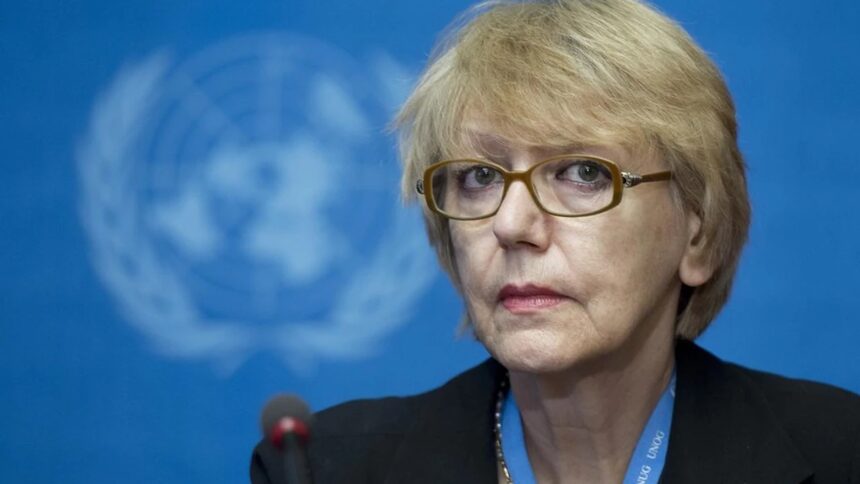
Sonja Biserko of the Helsinki Committee for Human Rights in Serbia does not expect a change of government in Belgrade to quickly bring about changes in Serbia’s position on the status of Kosovo.
In a statement to Radio Free Europe, Biserko said that even if Aleksandar Vučić leaves power, Kosovo could continue to be used as a tool for emotional mobilization in Serbia.
“It is certain that, in various crisis situations, everyone will try to use Kosovo for emotional mobilization, to rally people around themselves. I think that, essentially, there will be no change regarding the status of Kosovo. That is ruled out,” Biserko said.
However, she believes there could be changes in the way Belgrade exercises its influence over the Serb community in Kosovo, particularly in political and institutional terms.
According to her, a change of government in Serbia could call into question the political infrastructure built during Vučić’s years in power, including the role of the Serbian List.
Biserko stressed that a new government in Belgrade could create an opportunity for a more realistic approach toward Kosovo Serbs.
“For Kosovo Serbs, it would be important for a new government in Serbia to take a realistic approach toward them, help them strengthen their position in Kosovo, and encourage them toward dialogue with Pristina. That would be the best solution for them,” she said.
Biserko warned that Serbia could enter a prolonged period of political uncertainty following 14 years of Vučić’s rule and continued protests against him.
“Serbia itself will go through a phase during which it will have to ask itself several fundamental questions and provide answers. First and foremost: Where are our borders, what is our identity, and where do we belong? Within all of this, the relationship toward Kosovo will also take shape,” Biserko said.
She added that this process is not expected to be quick.
“Serbia is entering a very turbulent phase, which will last for years,” Biserko said.