Bojana Selaković, coordinator of the National Convention on the European Union, argues that Serbia’s political crisis is sustained not only by those in power, but also by networks of privilege, political opportunism and a society struggling to believe that change is possible.
As Serbia prepares for the 2026 elections, Bojana Selaković, coordinator of the National Convention on the European Union, has offered a critical assessment of the country’s political system, using the seven deadly sins described in Dante’s Purgatorio to examine the practices and attitudes she believes are undermining Serbian society.
In an opinion article published by Vreme on October 22, Selaković argues that the elections are about more than deciding who will govern the country. They will also reveal what citizens are willing to tolerate, whether they are prepared to challenge injustice and whether Serbian society can take responsibility for its own future.
Her analysis presents a picture of a political system in which power is concentrated around those who govern, public resources are treated as instruments of private benefit, and institutions struggle to operate independently. Although she does not focus exclusively on President Aleksandar Vučić, her criticism directly addresses the political culture and networks that have sustained his rule.
Concentration of power and the weakening of institutions
Selaković identifies political arrogance as the first major problem, describing a governing mentality in which those in power equate themselves with the state and treat institutions as extensions of their own authority.
In this environment, she argues, criticism of the government can be portrayed as an attack on the country itself, while citizens are treated more like subjects than independent participants in public life.
She links this attitude to a lack of accountability and the belief that those who hold power can govern without facing consequences for their actions.
The article also highlights what Selaković describes as the commercialisation of the public interest. She argues that the system is sustained not only by ideological supporters, but also by individuals whose jobs, financial benefits, contracts and privileges depend on its continued existence.
According to her analysis, political loyalty becomes a means of securing material advantages, while public institutions and resources risk being used to reward those close to the authorities rather than serve the wider population.
Political opportunism and the problem of false alternatives
Another central theme is hypocrisy among political actors who present themselves as alternatives to the existing system after previously helping to sustain it.
Selaković warns that some individuals who now speak the language of reform have, in earlier periods, legitimised the system or remained silent while benefiting from it.
She argues that political change cannot be judged solely by new promises or public declarations. The record of those seeking to present themselves as alternatives must also be examined.
Her criticism extends beyond the ruling party to political actors who allow personal rivalries, competition for influence and the desire to claim credit to undermine common objectives.
She describes this behaviour as a form of political envy, arguing that competition among those who share similar goals can prevent the emergence of a broader movement capable of bringing about meaningful change.
Anger alone cannot deliver political change
Selaković acknowledges that public anger over injustice is legitimate and can be an important catalyst for mobilisation. However, she cautions that anger without a coherent strategy may fail to produce results.
She criticises political and civic actors who repeatedly rely on the same methods while expecting different outcomes, instead of reassessing their approach when circumstances change.
In her view, the struggle against injustice can become counterproductive when proving that one was right takes precedence over finding practical ways to achieve reform.
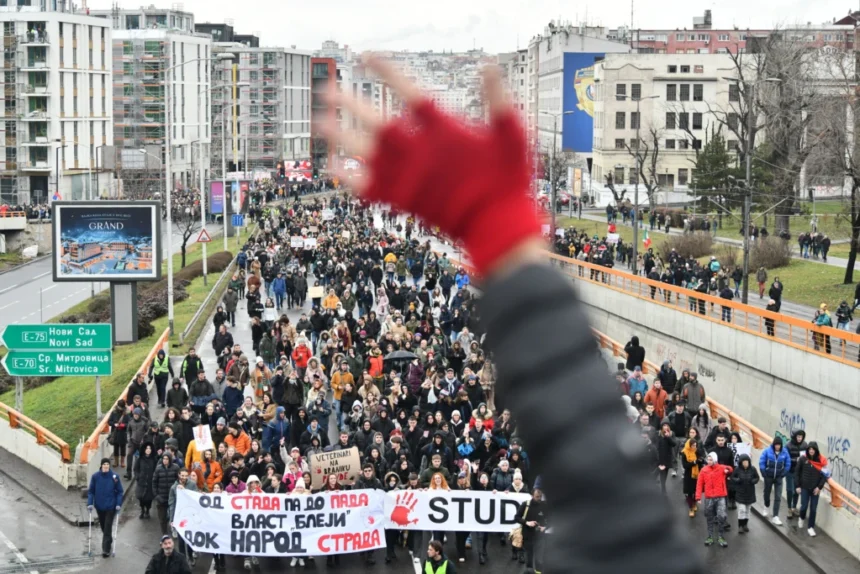
The argument is particularly relevant to Serbia’s prolonged political tensions, where public protests and opposition to the government have not automatically translated into institutional change.
Public apathy and the belief that change is impossible
The article identifies public indifference and political resignation as further obstacles to democratic transformation.
Selaković argues that some citizens distance themselves from politics because they view it as a source of noise and conflict that does not directly affect their everyday lives. Others understand the problems facing the country but do not translate that awareness into action.
She also examines a deeper sense of political helplessness: the belief that the government is too powerful, institutions are too firmly controlled and ordinary citizens cannot change the situation.
According to Selaković, this mindset benefits an entrenched political system by encouraging people to accept the existing order as permanent.
However, she stresses that citizens should not be judged without considering their circumstances. Poverty, illness, limited access to information and a lack of social support can restrict people’s ability to make genuinely independent choices.
She argues that democratic participation requires more than the formal right to vote. Citizens must also know their rights, be able to imagine a credible alternative and feel that exercising their freedom will not put their livelihoods at risk.
Elections as a test of Serbian society
Selaković concludes that elections alone will not resolve Serbia’s political problems or automatically dismantle established networks of power and privilege.
Instead, she presents the vote as a test of whether society has learned from years of political conflict and whether citizens are willing to confront their own role in sustaining the status quo.
Her central argument is that responsibility for Serbia’s democratic future cannot rest exclusively with political leaders. It also involves the conduct of political allies and opponents, the independence of institutions, the willingness of citizens to participate and the capacity of society to distinguish genuine reform from political opportunism.
Using Dante’s image of the seven sins, Selaković calls for greater vigilance, reason and personal responsibility. Her message is that Serbia’s path towards democratic change depends not only on who wins the elections, but also on whether society is prepared to challenge the practices that have allowed the current political order to endure.