
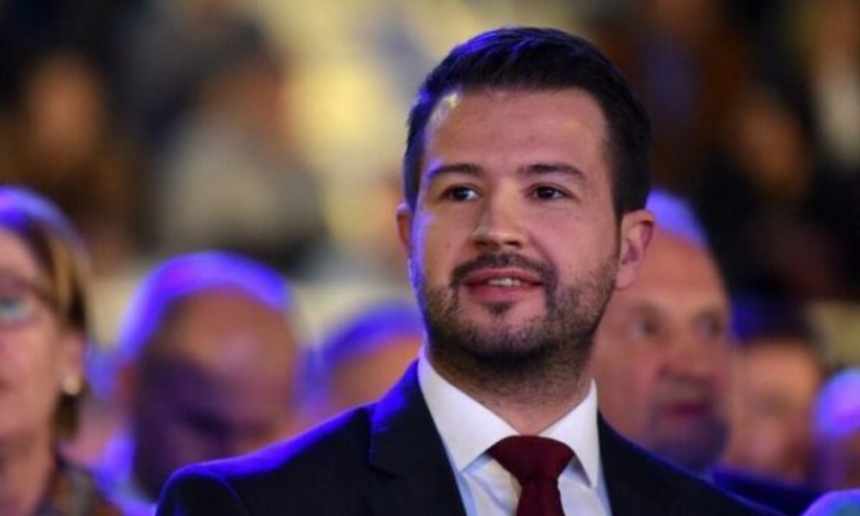
Montenegrin President Jakov Milatović has criticised Croatia’s position on Montenegro’s European Union accession process, saying it is unfair for Zagreb to insist that outstanding bilateral issues be resolved exclusively on terms set by the Croatian side.
Milatović was responding to Croatian Prime Minister Andrej Plenković, who warned that Montenegro would not be able to close its EU accession negotiations without meeting Croatia’s demands.
Speaking in an interview with Montenegro’s public broadcaster RTCG, Milatović stressed that both he and the Montenegrin government remain committed to maintaining the best possible relations with Croatia. However, he argued that the current approach to resolving outstanding disputes was not based on equal treatment.
“We are being asked to resolve these issues in the way the Croatian side wants, and that is, to put it mildly, unfair,” Milatović said.
He pointed to the border dispute between Croatia and Slovenia during Croatia’s own EU accession process, questioning why Zagreb was now demanding concessions from Montenegro that it had previously been unwilling to make itself.
Milatović said Montenegro wanted both sides to present their arguments and, if a solution could not be reached through bilateral dialogue, to consider international arbitration as a way forward.
He added that Montenegro’s position had received a positive response from the European Council and said he had discussed the matter with almost all European leaders during meetings in Dublin.
The Montenegrin president also warned against insisting on maximalist demands within a short timeframe, arguing that Croatia itself has a national interest in seeing Montenegro become an EU member.
Plenković, speaking in Dublin during the European Political Community summit, rejected the suggestion that Croatia’s demands were merely bilateral disputes. He maintained that they concerned fundamental European values and obligations under the EU acquis.
“These are not bilateral issues; they concern the very values of the European Union,” Plenković said, according to Hina.
He argued that Montenegro would not have started EU accession negotiations in 2012 if the issues now raised by Croatia had been considered purely bilateral.
Among Zagreb’s demands, Plenković highlighted good-neighbourly relations, succession issues, missing persons from the wars of the 1990s and accountability for war crimes.
A day earlier, addressing the Croatian Parliament, Plenković said Montenegro would not be able to conclude its accession negotiations as planned unless it accepted the Badinter Commission’s principles regarding land border demarcation.
He also criticised Milatović for describing the memorial plaque at the former Morinj detention camp as illegal, adding another point of tension between the two neighbouring countries.
The dispute comes at a sensitive stage of Montenegro’s EU integration process, with relations between Podgorica and Zagreb emerging as an important issue in the country’s efforts to advance towards membership.