Serbia’s political transition following Aleksandar Vučić’s departure from the presidency and the defeat of the ruling Serbian Progressive Party (SNS) has reopened a long-standing question: will the country’s new leadership finally reconsider its constitutional claim over Kosovo?
Nearly two decades after adopting its 2006 Constitution, Serbia continues to define Kosovo as an integral part of its territory, despite having lost control over it in 1999. The contradiction between Belgrade’s constitutional position and the political reality on the ground remains a major obstacle to normalising relations between the two countries.
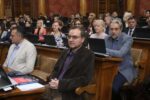
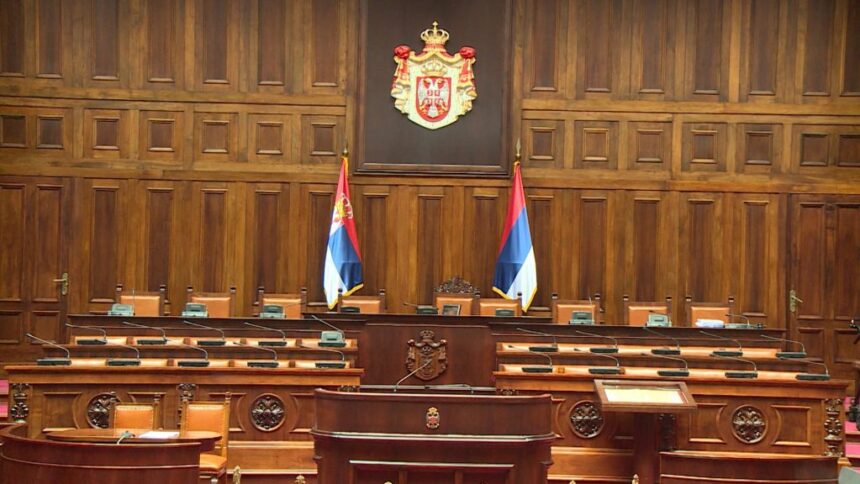
The recent parliamentary victory of the Student List, which secured 140 of the 250 seats in the Serbian Parliament, has created an opportunity for a potential shift in state policy. However, there is little indication so far that the incoming political leadership intends to make Kosovo’s status a priority.
The student movement campaigned primarily on anti-corruption, institutional accountability and democratic reforms. Its position on Kosovo, however, remains largely undefined, leaving uncertainty over whether the political transition will also bring a departure from Serbia’s long-standing nationalist approach.
A constitutional claim dating back to 2006
Serbia’s current constitutional position on Kosovo was established in 2006, before Kosovo declared independence on February 17, 2008.
The Constitution’s preamble explicitly describes Kosovo as an integral part of Serbia, while Article 182 refers to substantial autonomy for the territory. It also obliges Serbian institutions to protect the country’s interests in Kosovo.
The document was adopted through a referendum on October 28 and 29, 2006, without the participation of Kosovo’s Albanian majority.
Despite the constitutional reference to substantial autonomy, Serbia has never adopted the special legislation envisaged to define its practical implementation.
This has created a fundamental contradiction: Belgrade continues to claim sovereignty over Kosovo while lacking both effective control over the territory and a functioning legal framework for the autonomy stipulated in its Constitution.
Vučić maintained the status quo
Although Aleksandar Vučić did not introduce the constitutional provision concerning Kosovo, he maintained it throughout his years in power.
His government pursued negotiations with Prishtina under EU mediation while continuing to reject formal recognition of Kosovo’s independence. Domestically, the Kosovo issue remained central to Serbia’s political discourse, frequently serving as a subject of nationalist mobilisation.
This dual approach allowed Belgrade to engage with international partners on normalisation while avoiding a fundamental reconsideration of its constitutional position.
Vučić’s departure therefore does not automatically resolve the issue. The constitutional claim predates his presidency and remains embedded in Serbia’s political and institutional structures.
The responsibility for addressing it now falls to the new parliamentary majority.
Brussels agreements expose the contradiction
Serbia’s constitutional position has also come into tension with commitments made during the EU-facilitated dialogue with Kosovo.
The 2013 Brussels Agreement provided for the integration of police and judicial structures in northern Kosovo into the country’s institutional system, alongside the establishment of the Association of Serb-majority Municipalities.
A decade later, the 2023 Agreement on the Path to Normalisation introduced further commitments. Under Article 2, the parties agreed to respect the principles of independence, sovereignty and territorial integrity, while Article 4 states that Serbia will not oppose Kosovo’s membership in international organisations.
However, Belgrade has continued to reject the interpretation that these commitments amount to formal recognition.
The result is a persistent gap between Serbia’s international obligations and its domestic constitutional framework. While participating in negotiations based on normalisation, Belgrade continues to maintain a constitutional claim over territory it does not govern.
Can the new majority change the Constitution?
Changing Serbia’s constitutional position is legally possible, but the process requires a substantial parliamentary consensus.
Under Article 203 of the Constitution, amendments can be proposed by at least one-third of MPs, the president, the government or 150,000 citizens. Constitutional changes require approval by two-thirds of the total number of parliamentarians.
Because the proposed change would affect the preamble, a referendum would also be required.
With 140 seats, the Student List falls short of the 167 votes needed in the 250-member parliament. It would therefore have to secure support from other political groups to initiate and approve the amendment.
Even if the constitutional provision were removed, this would not automatically constitute formal diplomatic recognition of Kosovo. Nevertheless, it would represent a significant departure from Serbia’s existing territorial claims and could create a different foundation for relations between the two countries.
Kosovo policy will test Serbia’s political transition
The new leadership in Belgrade faces a decision that goes beyond constitutional wording. Its approach to Kosovo will help determine whether the political transition represents a broader change in Serbia’s state policy or primarily a change in domestic governance.
For the European Union, the issue is equally important. Serbia’s commitments under the normalisation dialogue cannot be separated from its continued constitutional position towards Kosovo.
The incoming government will therefore face pressure to clarify whether it intends to maintain the existing framework or consider changes that would bring Serbia’s domestic legal position closer to its international commitments.
Vučić’s departure and the SNS’s electoral defeat have changed Serbia’s political landscape. But one of the central elements of its state policy remains untouched.
The real question for post-Vučić Serbia is whether its new leadership is prepared not only to change the way the country is governed, but also to reconsider its long-standing claim over Kosovo.