Kosovo’s ammunition factory in Gjakova is expected to carry out its first test production by the end of December this year, while the remaining parts of the industrial complex, including laboratories and warehouses, are scheduled for completion during 2027.
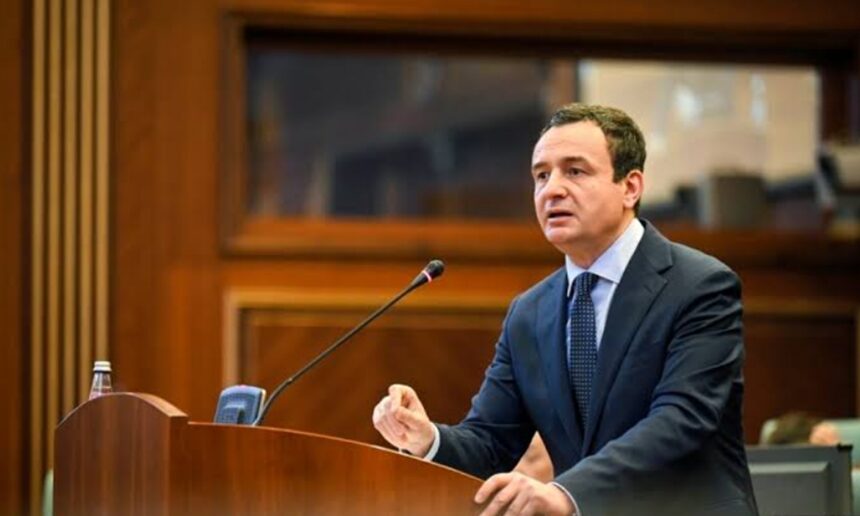
Prime Minister Albin Kurti announced the timeline during a parliamentary session, responding to questions from Democratic Party of Kosovo (PDK) MP Besa Kabashi-Ramaj regarding the factory’s financing, financial obligations and operational deadlines.
Highlighting the importance of the project, Kurti described it as a strategic investment aimed at strengthening Kosovo’s defence capabilities and establishing domestic ammunition production.
“We will continue to focus on developing this industry during this mandate. In this context, the industrial complex for ammunition production in Gjakova is a strategic project for the country and for strengthening our defence capabilities. Domestic production will strengthen Kosovo’s resilience by ensuring ammunition supplies for the army, police and other security institutions. Given global shortages caused by wars and increased demand, this capacity will improve supply security and reduce our dependence on foreign manufacturers. As you know, we have purchased significant quantities of ammunition and weapons, but they are not our own production. We want that to change in the coming years,” Kurti said.
Regarding the timeline, the prime minister said the production section of the factory is expected to be completed by the end of December 2026, with the first test production scheduled for the same period.
“This is a separate phase from the construction and operationalisation of the ammunition production complex. The state-owned complex will also have its own perimeter wall, which will be built by MKE. By the end of December 2026, the production section of the factory is expected to be completed and the first test production of ammunition carried out. The laboratories, warehouses and other facilities within the complex are scheduled for completion during 2027. The Ministry of Defence has already recruited the staff who will work at the factory. Before test production begins, employees will undergo specialised training in Türkiye. In the initial phase, they have been engaged through a three-year project that includes their salaries and related expenses,” Kurti said.
During the session, Kurti also revealed that two feasibility studies had been conducted by companies from two NATO member states before the contract was signed.
Addressing the €1 million allocated in the draft 2027 budget for the project titled “Security Perimeter, Defence Industrial Park”, Kurti clarified that the funds are intended for fencing the wider industrial zone, which covers 144 hectares, and are not directly related to the construction of the ammunition factory.
Meanwhile, MP Besa Kabashi-Ramaj requested specific details about the programme, subprogramme and budget code through which the factory’s financing had been planned for 2027. She also sought clarification on the total financial obligations under the agreement with the Turkish company, the amount paid so far and the project’s current operational deadline.
Asked about the companies involved in the project, Kurti said publicly identifying their names and countries of origin would not be in Kosovo’s interest.
“I do not think it would be useful to publicly disclose which companies they are or which countries they come from, only for opponents and enemies of the Republic of Kosovo to approach them. That would be a mistake,” Kurti stated.
The end of 2026 had previously been mentioned by government officials as the deadline for putting the factory into operation and beginning ammunition production in Kosovo.