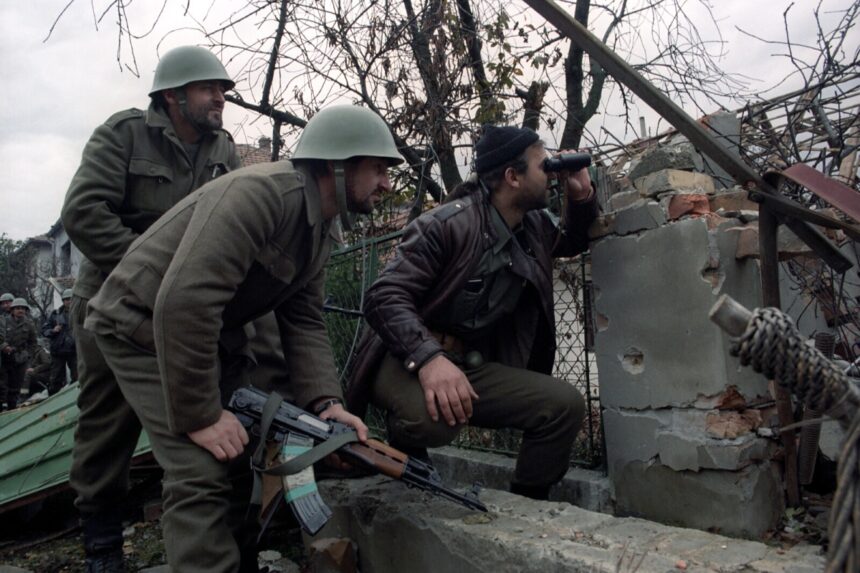
The European Parliament has adopted a resolution marking the 35th anniversary of the fall and destruction of Vukovar, calling on Serbia to open its archives to help establish the fate of missing persons from the 1991 war.
The resolution, adopted in Strasbourg, is the first European Parliament document specifically dedicated to the suffering of Vukovar. It was initiated by Croatian MEP Karlo Ressler of the European People’s Party (EPP), with the support of all Croatian members of the European Parliament and five other lawmakers from Sweden, Germany, Spain, Austria and Belgium.
“Remembering Vukovar belongs not only to Croatia but to Europe as a whole,” the resolution states.
War crimes and remembrance
The document pays tribute to those killed in Vukovar and victims from all sides, while referring to crimes committed at Ovčara, prisoner-of-war camps operated by the Yugoslav People’s Army (JNA), and the Velepromet detention facility.
It also references Slobodan Milošević’s 1989 Gazimestan speech, the concept of Greater Serbia, and former Serbian President Boris Tadić’s apology at Ovčara in 2010.
The European Parliament strongly condemns all forms of denial, minimisation or glorification of war crimes. The resolution also refers to tributes paid to former Bosnian Serb military commander Ratko Mladić at his funeral in Belgrade in September 2026.
Serbia urged to disclose wartime archives
A central demand of the resolution is for Serbia to open its archives to help clarify the fate of those who disappeared during the war.
Croatia is still searching for 1,725 missing persons. Following amendments to the text, the resolution also explicitly acknowledges the families of missing people of all nationalities who are still waiting for answers.
European Parliament President Roberta Metsola has been tasked with forwarding the resolution to the Council of the EU, the European Commission, and the governments and parliaments of EU member states and Western Balkan countries.
Alternative proposal withdrawn
The resolution was preceded by a separate proposal from liberal MEP Helmut Brandstätter of Austria, which received support from several Croatian and regional civil society organisations, including Documenta, REKOM and UDIK.
These organisations backed the alternative text because, as they explained, it called on all countries in the region rather than singling out one state.
Following amendments to the joint resolution, the liberals withdrew their separate proposal, while Brandstätter became a signatory to the adopted document.
The vote was followed from the visitors’ gallery by residents of Vukovar, families of missing and killed people, and former prisoners of wartime detention camps who had travelled to Strasbourg at Ressler’s invitation.
Ljiljana Alvir, president of the Association of Families of Detained and Missing Croatian Defenders, had previously described the resolution as offering “a new small hope” for establishing the fate of those who disappeared.
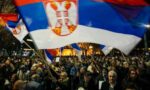
The resolution had already sparked strong reactions in Serbia ahead of the vote, where students involved in blockades opposed it, arguing that it overlooked Serbian victims.