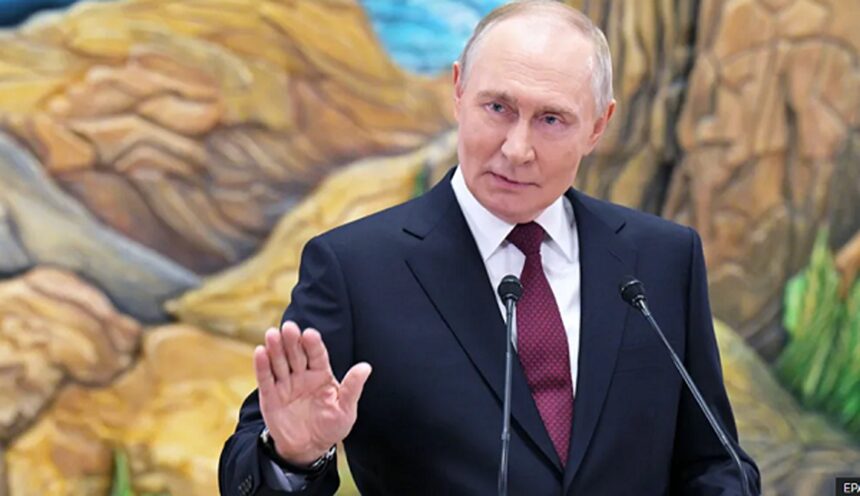
Despite optimistic statements from some international actors, the path toward peace in Ukraine remains fraught with major obstacles. Russian President Vladimir Putin has rejected any compromise over Donbas and has categorically ruled out a Christmas ceasefire. The Kremlin has made it clear that it will not accept any presence of NATO troops in Ukraine, including multinational European forces.
“We want peace; we do not want a ceasefire that would give Ukraine a pause to prepare for the continuation of the war,” Kremlin spokesperson Dmitry Peskov said.
On the other hand, former U.S. President Donald Trump has stated that peace is “closer than ever,” while Ukrainian President Volodymyr Zelensky has spoken of the most intensive negotiations since the start of the war. Nevertheless, the differences remain profound.
Moscow insists on maintaining control over the regions of Donetsk, Luhansk, Zaporizhzhia, Kherson, and Crimea, while Kyiv refuses to recognize them as Russian territory, either de facto or de jure.
“We absolutely cannot compromise” on the regions of Donetsk, Luhansk, Zaporizhzhia, Kherson, and Crimea, Russian Deputy Foreign Minister Sergei Ryabkov declared.
Meanwhile, the Ukrainian leader stated that Kyiv “will not recognize” Donbas—namely the Donetsk and Luhansk regions—as Russian territory, “neither de jure nor de facto.”
Following meetings in Berlin, Zelensky announced that proposals would soon be conveyed to Moscow, while further U.S.–Ukraine meetings on territorial issues are expected. Another point of tension is the use of frozen Russian assets for Ukraine’s reconstruction, which Russia has described as “theft.” In this climate, European sources are questioning whether Moscow is genuinely prepared to reach a peace agreement.