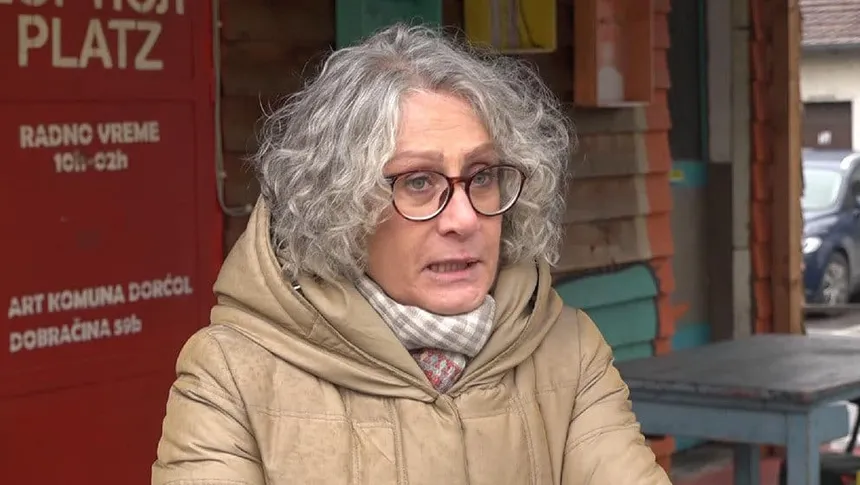
Serbian activist Aida Ćorović has said she expects a serious political crisis in Serbia following the country’s October 25 parliamentary elections, while arguing that a change of government could lead to significant shifts in Belgrade’s approach to Kosovo, Republika Srpska and the legacy of the 1990s wars.
Speaking on TV Sarajevo, Ćorović said she did not expect the election results to be immediately known during the night of October 25–26 and predicted that large numbers of people could take to the streets in the aftermath.
“I am completely certain that on the night between October 25 and 26 we will not immediately get the results, that a large number of citizens will certainly be on the streets, and my prediction — or more of a feeling — is that a serious crisis will follow in the next few days,” Ćorović said.
She also said she expected political changes to take place by the end of the year. Ćorović argued that the student-backed movement had already initiated a process of political change and said Serbia could have a new government within weeks or months of the election.
Kosovo, Republika Srpska and War Crimes
Ćorović said a potential change of government could bring difficult political decisions concerning Kosovo, Republika Srpska and the legacy of the wars of the 1990s.
“I am afraid that a large number of citizens will have to swallow very bitter pills regarding Kosovo, Republika Srpska and war crimes, but that is a matter for later,” she said.
She did not specify which particular policies or decisions she was referring to.
Ćorović also said Serbia should confront the legacy of the 1990s and praised expressions of remorse over the Srebrenica genocide. She suggested that a future Serbian leadership could make a symbolic gesture in Sarajevo similar to former German Chancellor Willy Brandt’s well-known gesture of reconciliation.
Calls for Regional Support
During the interview, Ćorović called on people in Bosnia and Herzegovina, Montenegro and Croatia to support political change in Serbia.
She also described President Aleksandar Vučić and the Serbian Progressive Party (SNS) as destabilizing factors in the region — a political assessment expressed by Ćorović rather than an independently established fact.
The comments come ahead of Serbia’s October 25 early parliamentary elections, in which the student-backed Student List – Students Win is competing against the governing bloc and other political formations.
Ćorović’s statements about possible street demonstrations and a post-election crisis are predictions about future events, not evidence that an organized plan to overturn the election results outside the electoral process has been established.