Despite efforts to move closer to the European Union and the West, Belgrade’s policy continues to maintain strong ties with Moscow and shows no clear intention of distancing itself from Russian President Vladimir Putin.
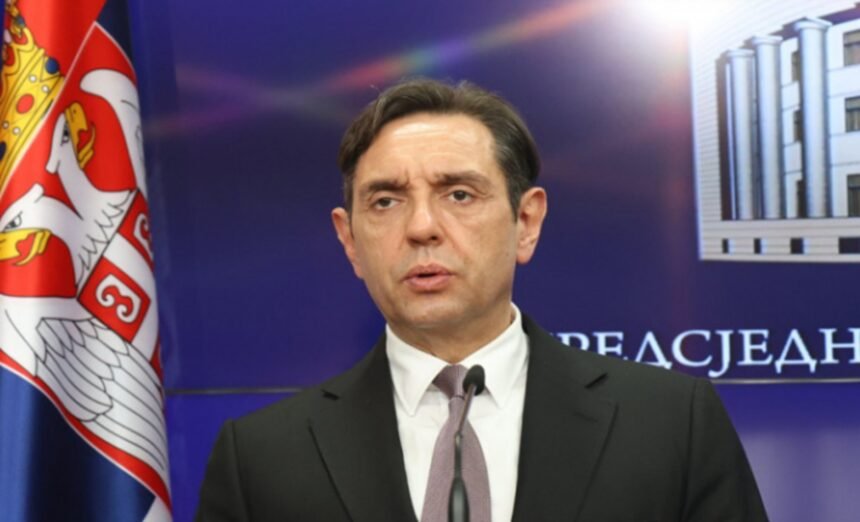
The latest statements by former Serbian Deputy Prime Minister Aleksandar Vulin, one of the figures most closely associated with the Kremlin’s policy in Serbia, have once again highlighted this orientation.
In a statement to the Russian news agency RIA Novosti, Vulin described Ukrainian President Volodymyr Zelenskyy’s visit to Serbia as the result of pressure and “retaliation by the EU” against Belgrade. According to him, the visit does not represent the interests of Serbian citizens or the needs of the Serbian leadership, but is a consequence of pressure from Brussels.
But Vulin’s most direct message concerned Russia.
He stated that Serbia would not impose sanctions on Moscow, would not join “anti-Russian coalitions,” and would not allow Serbian ammunition to end up in Ukrainian hands.
“Serbia will not become part of any anti-Russian coalition or hysteria and will not impose sanctions against the Russian Federation,” Vulin said.
He even called on Belgrade to make it clear to Kyiv that Serbia would not sell “a single bullet” to Ukraine or to other countries through which Serbian ammunition could eventually reach Ukrainian forces.
Zelenskyy in Belgrade, but Moscow remains a red line
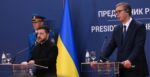
Vulin’s statements are particularly significant on the day Ukrainian President Volodymyr Zelenskyy is in Serbia for his first official visit.
Serbian President Aleksandar Vučić has presented the visit as an opportunity to strengthen relations between Belgrade and Kyiv and expand cooperation in areas of mutual interest.
Politically, however, Serbia continues to reject distancing itself from Russia on key foreign-policy issues.
Belgrade has not joined European Union sanctions against Moscow following Russia’s invasion of Ukraine and continues to maintain close political, economic, and energy ties with Russia.
This policy places Serbia in a unique position in the region: while it seeks membership in the European Union, it continues to pursue a foreign policy that, on major issues, aligns with Moscow’s interests.
Vulin: Serbia is not “on Ukraine’s side”
Vulin made it clear that Belgrade does not consider Ukraine’s non-recognition of Kosovo sufficient reason to side with Kyiv.
According to him, Serbia should continue to stay away from sanctions against Russia and should not allow Western pressure to alter its course.
This approach reflects one of the main paradoxes of Serbia’s foreign policy: Belgrade seeks to advance toward the European Union while simultaneously refusing to take one of the key steps expected by Brussels in relation to Russia — aligning its foreign policy with the EU and imposing sanctions on Moscow.
Relations with Putin remain a political factor
For years, Vučić has maintained close relations with Vladimir Putin, while Russia continues to be one of Serbia’s main supporters on the Kosovo issue, particularly at the United Nations Security Council.
In this context, Vulin’s statements do not appear to be merely an individual political position. They reflect a powerful current within Serbia’s political establishment that seeks to preserve the traditional alliance with Moscow and opposes any complete shift by Belgrade toward the West.
Zelenskyy’s visit could bring new messages regarding Serbia-Ukraine cooperation, but statements coming from Belgrade indicate that as long as Serbia refuses to impose sanctions on Russia and continues to regard Moscow as a strategic partner, political distancing from Putin remains a long way off.
Amid European pressure, the war in Ukraine, and its ambition to join the EU, Belgrade continues to move in two directions: one toward Brussels, the other toward Moscow.