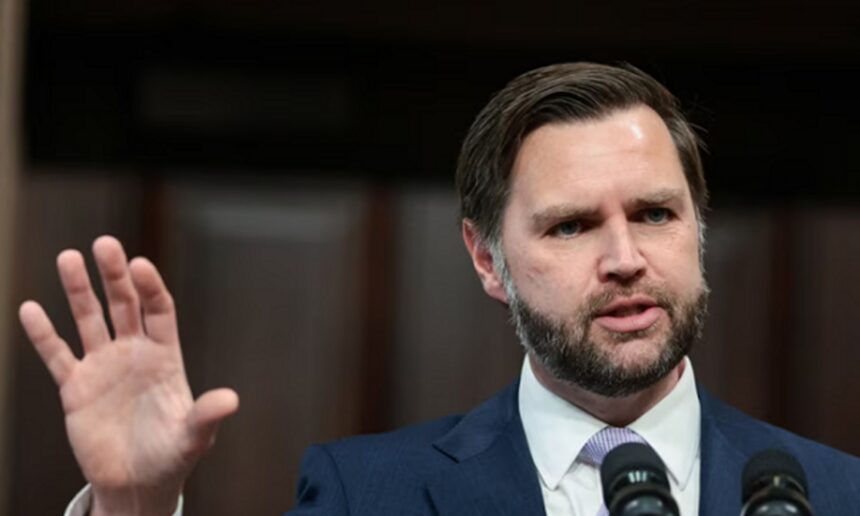
US Vice President JD Vance is seriously considering the possibility of not running for president in 2028, amid growing political uncertainty and divisions within the Republican Party.
Republican losses in the latest congressional elections, the unpopular war with Iran and internal divisions within the MAGA movement have raised questions about Vance’s political future.
According to CNN, citing approximately a dozen of Vance’s allies and advisers, the vice president is facing significant uncertainty over his presidential ambitions. While he remains committed to rebuilding the movement that brought Donald Trump to power in 2024, he is no longer certain that he should be the person to lead it into the next election.
“I would be surprised by any decision he makes. He is only 42. He is young enough to make a comeback if the current political environment makes success impossible. Maybe it simply isn’t his time,” one person close to Vance told CNN.
Until recently regarded as the leading Republican contender for 2028, Vance has yet to set a deadline for making his decision. However, a presidential run remains a serious possibility, and some of his supporters believe he is more likely to enter the race than withdraw from it.
One of the main factors behind Vance’s uncertainty is the war with Iran, which has generated considerable dissatisfaction among American voters and weakened support for the Trump administration.
Some of the vice president’s allies consider the conflict the biggest obstacle to a potential 2028 presidential campaign.
“The question isn’t whether JD can do it. The question is: If the Iran war is still going on, can any Republican win? If they don’t end the war in Iran, no Republican has a chance in 2028,” one of his allies told CNN.
Discontent became particularly evident after the November 3 elections, when Republicans suffered significant losses.
“The reason we lost is the war. The president himself said that last night,” Vance wrote on X.
He added that any honest discussion about the future of the Republican Party must begin with the war, questioning whether the political cost of the conflict had been worth it.
His remarks reportedly angered Trump. According to two people familiar with discussions inside the administration, the president was upset that Vance had not publicly defended the decision to launch military action against Iran. Trump, however, sought to downplay the disagreement in his public comments.
“He was right, except for one thing. He should have added one other statement: ‘If you had to do it again, would you do it?’ The answer is yes,” the president said on Sunday.
While Vance’s political future remains uncertain, several other Republican figures are already positioning themselves for the 2028 presidential race.
Those being mentioned include Florida Governor Ron DeSantis, Texas Senator Ted Cruz and Georgia Governor Brian Kemp.
Conservative commentator Tucker Carlson has also left open the possibility of an independent presidential run, a scenario that could significantly reshape the 2028 contest.
Meanwhile, Rich Baris, a pollster close to the MAGA movement, believes Republicans are facing a deep crisis of credibility among their own supporters.
“MAGA is dead. The problem the vice president will face is that he has to motivate these voters and make them believe again, because the Republican Party brand has completely lost credibility with them,” Baris said.
According to polling cited by CNN, Republicans have lost support among younger voters, men, Latino voters and white Americans without a college degree.
Another factor that could influence Vance’s decision is Donald Trump’s position. The US president has yet to confirm whether he will endorse Vance as his political successor.
Behind the scenes, Trump has reportedly told associates that he wants to wait and see how potential candidates position themselves before deciding whom to support.
Asked on 60 Minutes whether he would endorse Vance, Trump replied: “Maybe, but not necessarily.”
Vance could, however, count on a powerful network of donors, including billionaire Elon Musk and investor Peter Thiel.