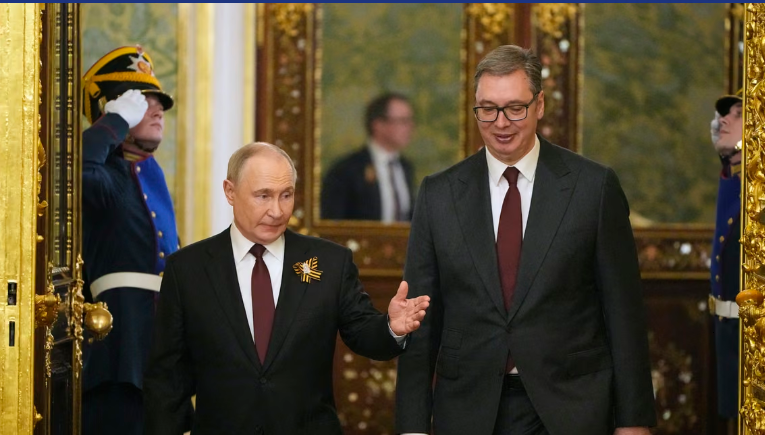
Political scientist Aleksandar Dokić says Russia’s support for Serbian President Aleksandar Vučić should be viewed as part of a broader strategy to maintain political influence in Serbia, rather than as a personal attachment to the Serbian leader.
Speaking to N1, Dokić argued that Moscow establishes relationships with political leaders in countries where it seeks influence but can quickly shift its focus to new political figures if those leaders lose control of state institutions.
“If Aleksandar Vučić shows weakness and fails to remain in power, they will let him go, wait for a new government to be formed in Serbia and then begin putting pressure on it, for example through a new gas agreement. They will not mention Vučić at all and will not remember him,” Dokić said.
He argued that Vučić is important to Moscow primarily while he controls the levers of political power.
“If he gives up those levers, whoever succeeds him will become important, and Russia will begin building similar relationships with the next group of leaders,” Dokić said.
Claims About Russian Diplomats and Intelligence Links
Dokić also discussed Russia’s diplomatic and intelligence presence in Serbia.
According to research by the independent Russian outlet Agentstvo and data from the open-source RUPEP.org database, 29 of 72 Russian diplomats in Serbia are linked to intelligence services. The figure is cited in the N1 report and was also highlighted by The Geopost.
Dokić said the relatively high number could partly be explained by the expulsion of Russian diplomats suspected of intelligence ties from other European countries, while Serbia has continued to host them.
He argued that Serbian political structures have not sought to sever their links with Moscow, adding that reducing Russian influence could facilitate closer relations with European partners and strengthen Serbia’s position regarding Kosovo.
Embassy, Russian House and Media
Asked about the activities of Russian diplomats suspected of intelligence connections, Dokić described what he sees as a broader network of Russian influence operating through diplomatic, religious, political, media and economic channels.
He cited the Russian Embassy and Russian House, ties between the Russian and Serbian Orthodox Churches, nationalist organizations and Russian media operating in Serbia.
Dokić specifically mentioned RT Balkan and Sputnik, as well as analysts who appear on those outlets.
He also argued that Russian influence is reinforced by Serbia’s energy dependence, particularly in the oil and gas sectors, as well as by financial ties.
According to Dokić, the network predates the current Serbian government and Russian intelligence personnel can operate in Serbia through contacts with local authorities.
He said that changing Serbia’s relationship with Moscow could have a significant impact on the country’s broader political and strategic orientation.