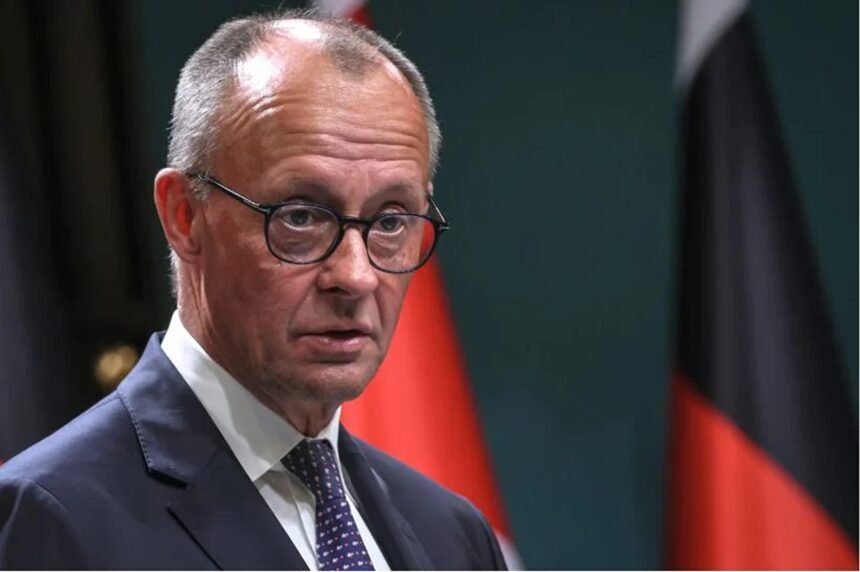
German Chancellor Friedrich Merz faced a difficult meeting with lawmakers from his CDU/CSU parliamentary group following the governing conservatives’ poor results in regional elections in Berlin and Mecklenburg-Western Pomerania. While there was no revolt against the chancellor, lawmakers reportedly made clear that they expect the government to deliver results.
Merz had been scheduled to travel to New York for the United Nations General Assembly but cancelled the trip to focus on the political fallout from the elections. The CDU suffered a particularly serious setback in Mecklenburg-Western Pomerania, where it failed to clear the five-percent threshold for entry into the state parliament for the first time in its history. In Berlin, the party also suffered substantial losses.
The results intensified speculation about Merz’s political future, with German media discussing possible tensions within the CDU/CSU parliamentary group. However, Tuesday’s meeting did not produce an open challenge to his leadership.
According to DW, lawmakers largely offered Merz support and encouragement while also stressing the need for political and policy adjustments.
Daniela Ludwig, a former federal government commissioner for drug policy and a member of the CSU, questioned what an internal “revolution” would achieve, arguing that such a move would not necessarily improve the situation.
The message from other lawmakers was similarly focused on continuing the government’s work rather than changing leadership.
One CDU lawmaker from Lower Saxony responded directly when asked about the chancellor: “The chancellor remains.” He added that Merz had understood that some things needed to change and that the government should now focus on the future.
Parliamentary group leader Thorsten Frei also called for the party to look ahead. He argued that the election results were not simply protest votes, but also demonstrated gaps in how the governing parties had addressed certain political issues.
“We have to deal with this, accept it and draw the right lessons from it,” Frei said, according to DW.
CDU lawmaker Serap Güler said social justice was among the issues requiring greater attention. She argued that many people felt left behind or excluded from political processes and said the government needed to reach and involve them more effectively.
At the same time, she defended the government’s reform agenda, saying reforms were intended to ensure Germany remained capable of meeting future challenges and maintaining fairness between generations.
The challenge for the CDU/CSU and its coalition partner, the Social Democratic Party (SPD), is to combine the government’s planned reforms with greater emphasis on social issues.
Mathias Middelberg, deputy chairman of the CDU/CSU parliamentary group, said this could be achieved if the coalition remained united.
“If we now allow ourselves to become divided, it will not only be this government that fails, but ultimately the country as well,” he said.
Merz has repeatedly said he intends to continue with the government’s reform program despite the election setbacks. Following the results, he acknowledged that the outcome represented a serious blow to the CDU but argued that reforms remained necessary.
The latest meeting therefore ended without an immediate leadership challenge. Instead, CDU/CSU lawmakers publicly emphasized unity while signaling that the government would need to respond to the concerns reflected in the recent regional election results.