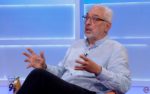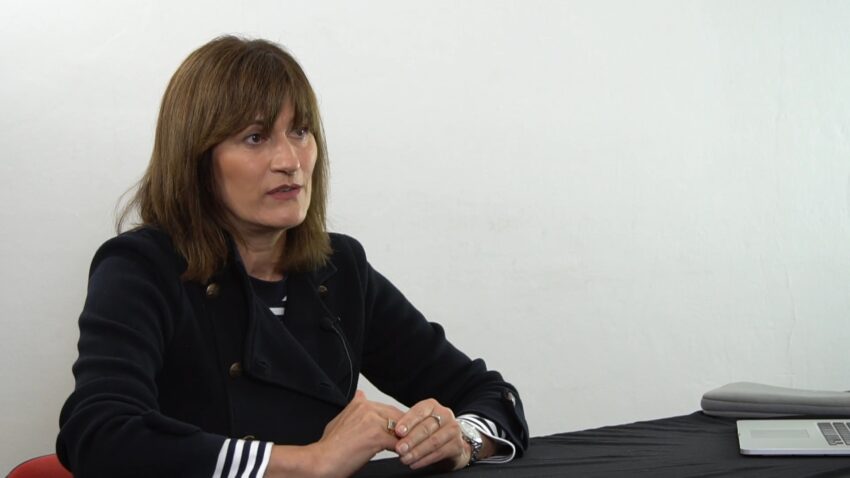
Nevenka Tromp, former researcher at the Hague Tribunal, has sharply criticized the Kosovo Specialist Chambers, stating that the court should never have been established.
Tromp, who worked at the Hague Tribunal from 2000 to 2012 and witnessed the region’s most significant war crimes cases, argued in an interview with Televizioni 1 that the court’s creation was driven by political pressure rather than the gravity of alleged crimes. According to her, the Special Court was a concession to Serbia by the international community, particularly the U.S. and the EU, aimed at keeping Belgrade engaged in the Brussels Dialogue.
“The Special Court should never have become a reality. It was created under immense political pressure, not because of the supposed importance of the crimes, but as a concession to Serbia,” Tromp stated. She noted that despite Kosovo’s cooperation, Serbia withdrew from the dialogue, highlighting the political manipulation behind the court’s formation.
Commenting on the potential verdicts against former UÇK leaders, Tromp identified two possible scenarios:
- Acquittal of all defendants would signify a waste of time and resources, suggesting that these individuals should never have been charged.
- Convictions could spark a new debate over the legality and legitimacy of prosecuting a liberation movement, potentially affecting how Kosovo’s history and the UÇK’s role in the independence struggle are memorialized and impacting the country’s international integration.
Tromp praised the high level of defense witness testimonies, emphasizing that their accounts raise critical questions: if the UÇK were truly a terrorist organization, how could the U.S. and NATO have intervened militarily to protect Kosovo? Witnesses consistently described the UÇK as a self-organized resistance movement, comparable to other liberation formations such as FARK, acting in defense against Serbian aggression.
Tromp also highlighted concerns about the court’s efficiency and cost, noting that the annual budget of approximately €100 million, largely funded by the European Commission, has already exceeded €1 billion since 2015 for prosecutions of only six individuals. If at least three defendants are acquitted, as is entirely possible, the process would stand as one of the most expensive and least productive judicial experiments in modern history.
She further criticized the court’s potential redefinition of UÇK’s character, pointing out that none of the accused in the Hague Tribunal were ever designated as part of a Joint Criminal Enterprise, and raising alarm if the Specialist Chambers were to reach a contrary conclusion.
Tromp’s remarks underscore the deep concerns about the politicization, cost, and legitimacy of the Kosovo Specialist Chambers, while raising broader questions about historical narrative, justice, and international oversight.