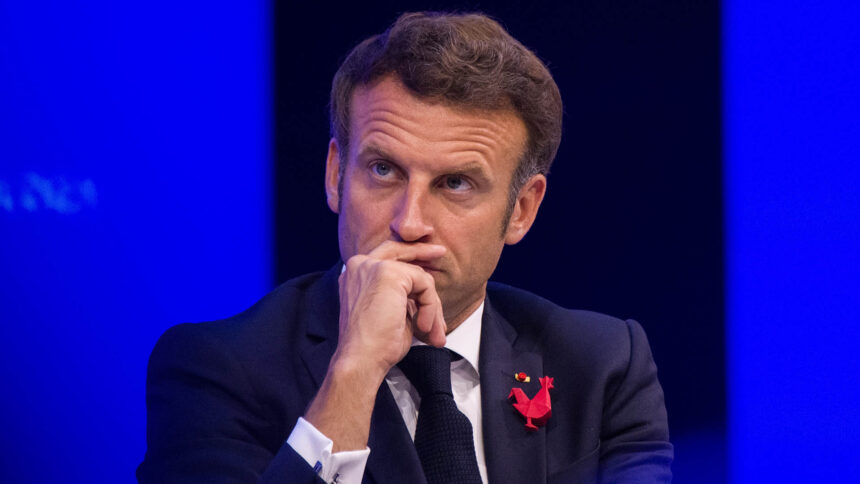
France is staring down a potentially chaotic political transition as the race to succeed President Emmanuel Macron heats up. With nearly 35 candidates already declared, preparing to run, or actively exploring bids for the Élysée Palace, high-ranking officials are warning that the sheer volume of contenders risks alienating an already disillusioned electorate.
“The real danger,” Prime Minister Sébastien Lecornu reportedly warned, “is that this clutter of ambitions reflects such a lack of engagement with reality by all these candidates that voters find the whole thing grotesque.”
With President Macron constitutionally barred from seeking a third consecutive term, his decade-long tenure at the Élysée Palace will officially come to a close by this time next year. However, the scramble to fill the impending vacuum has triggered deep anxieties within the political establishment and across the European Union.
The Fragmented Center and the Far-Right Threat
Political analysts note that the crowded field of contenders from the moderate left, center, and center-right poses a severe structural risk. By splitting the mainstream vote, this fragmentation could pave a smooth path for the far-right National Rally (RN), which currently commands comfortable leads in all first-round polling.
For the European Union, the stakes could not be higher. A nationalist leader in Paris could paralyze Brussels’ decision-making, challenge the supremacy of EU law, and push a protectionist “France First” agenda capable of undermining both the single market and the Schengen free-travel zone.
Yet, despite these warnings, mainstream parties remain deeply divided.
A Traffic Jam of Centrist Successors
The center and center-right factions are currently defined by fierce internal rivalries rather than unity:
- Gabriel Attal: The former Prime Minister—who became France’s youngest-ever premier in 2024—recently launched his bid, declaring a “passion” for France and a desire to move past “50 shades of managing decline.” However, Attal faces a dual burden: his close alignment with Macron, whose disapproval rating currently sits at 75%, and stiff competition from within his own camp.
- Édouard Philippe: Another former Prime Minister under Macron and the popular center-right mayor of Le Havre, Philippe leads the Horizons party. Current polling suggests he is the only candidate projected to be capable of defeating a far-right challenger in a second-round runoff.
- Gérald Darmanin: The current Minister of Justice has also positioned himself as a key player, indicating he will either run directly or back whichever centrist candidate is best positioned to win.
While Attal and Philippe have reportedly established a “mechanism” to evaluate by early next year which of them should step aside for the sake of unity, no definitive agreement has been reached.
Chaos on the Left and Right
The political gridlock worsens moving further across the spectrum. On the fragmented center-right, figures like Les Républicains’ Bruno Retailleau face challenges from regional presidents and local mayors, while veteran former Prime Minister Dominique de Villepin is also mulling a return to the political stage.
The situation on the left is even more fractured, with roughly 17 potential or declared candidates, including former presidents, premiers, and ministers.
| Political Faction | Key Candidates / Figures | Main Dilemma |
| The Center | Gabriel Attal, Édouard Philippe, Gérald Darmanin | Splitting the moderate vote; closely tied to Macron’s low approval ratings. |
| The Center-Right | Bruno Retailleau, Dominique de Villepin | Fractured party lines; lack of mechanism to select a single unity candidate. |
| The Left | Jean-Luc Mélenchon, Raphaël Glucksmann, Socialists, Greens | Bitterly divided over whether to align with the radical left or run independently. |
| The Far-Right | Marine Le Pen, Jordan Bardella | Pending legal decisions regarding Le Pen; poised to capitalize on mainstream division. |
The left remains intensely divided over whether to unite behind Jean-Luc Mélenchon, the radical left veteran making his fourth bid for the presidency. While some moderates argue a coalition is mathematically necessary to survive, others view Mélenchon as entirely toxic to mainstream voters.
Meanwhile, the far-right faces its own brief moment of suspense. The National Rally will learn by July 7 whether ongoing legal issues will disqualify Marine Le Pen from running. If she is barred, her chosen protégé, Jordan Bardella, is fully prepared to take her place.
A Recipe for Disaster?
If mainstream factions fail to consolidate, France could witness a repeat of past political nightmares, potentially forcing a highly polarizing second-round runoff between the far-right (Le Pen or Bardella) and the radical left (Mélenchon).
Data from polling agency Ipsos indicates that 74% of French voters are demanding either a “radical transformation” or “profound changes.” However, Brice Teinturier, an analyst at Ipsos, notes that the prevailing public sentiment is one of deep cynicism. “Politicians are giving the strong impression that they are only interested in themselves and their candidacies,” Teinturier warned.
While seasoned analysts expect the field to naturally narrow by the autumn, the margin for error is razor-thin. Mainstream parties are running out of time to convince an exhausted electorate that they can offer stability rather than self-interest.