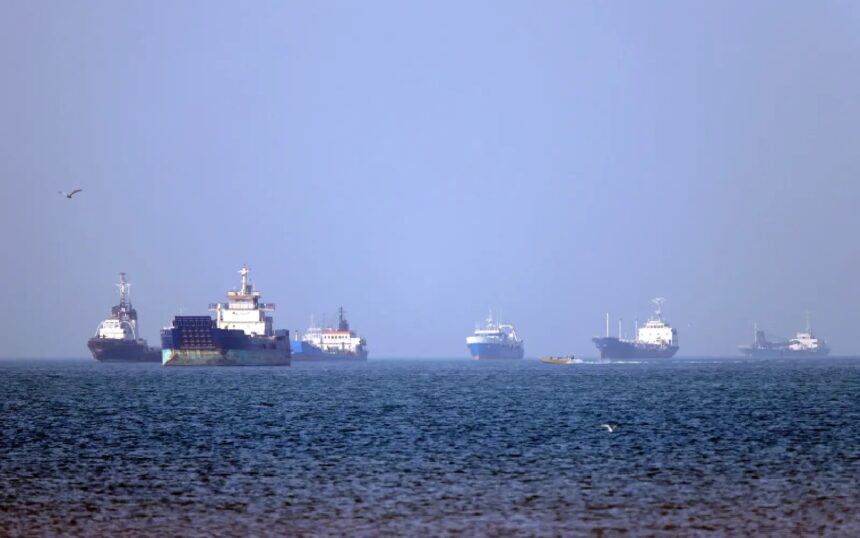
In a major geopolitical breakthrough, Iran has announced a 60-day complete waiver of transit application fees for maritime vessels navigating the Strait of Hormuz. This sudden, stabilizing policy takes effect immediately, following a landmark diplomatic agreement concluded between the United States and Iran aimed at de-escalating severe tensions in the world’s most critical oil transit chokepoint.
Under the new directive, the Iranian government will fully absorb all transit costs for the next two months to actively encourage a swift return to normalized commercial shipping traffic.
1. New Maritime Regulatory Authority Takeover
According to official declarations carried by Iranian state media and reported by CNN, the newly empowered Persian Gulf Shipping Authority (PGSA) has been officially handed full operational management over traffic flow moving through the strategic bottleneck.
Operational Mandate for the PGSA

 [ STREAMLINED PROCESSING ] ──► RAPID APPROVALS
 • Iran's Supreme National Security Council has explicitly instructed the PGSA
   to review and fast-track all international transit applications.

 [ DE-MINING INITIATIVE ]    ──► ACTIVE HAZARD REMOVAL
 • In strict accordance with the US-Iran accord, Iranian naval units have
   commenced sweeping operations to clear maritime mines from the shipping lanes.

 [ CONDITIONAL TRANSIT ]    ──► ESCORTED CONVOYS
 • Commercial vessels are strictly required to adhere to state-issued schedules
   and specific channels to mitigate lingering security risks.
2. Gradual Traffic Restoration Amid Security Challenges
Despite the economic relief offered by the 60-day fee waiver, Iranian authorities caution that the maritime corridor is not yet operating under normal peacetime conditions. The region carries residual risks stemming from recent naval standoffs and military posture changes.
“Given the special conditions and the presence of certain security risks along the transit route, and to ensure safe passage and prevent maritime incidents, vessels must transit according to the routes and schedules communicated to them so that traffic capacity can be increased gradually.”
… Persian Gulf Shipping Authority (PGSA) Statement
              ┌────────────────────────────────────────┐
              │      STRAIT OF HORMUZ TRANSIT PHASE    │
              └───────────────────┬────────────────────┘
                                  │
         ┌────────────────────────┴────────────────────────┐
         ▼                                                 ▼
   [ PHASE I: COMPLIANCE ]                          [ PHASE II: EXPANSION ]
 Ships must maintain strict lane synchronization  As maritime minefields are verified cleared,
 to avoid remaining dynamic hazards.             daily vessel capacity limits will slowly increase.
3. Global Energy Market Relief
The Strait of Hormuz serves as the arterial throat for roughly one-fifth of the world’s petroleum consumption, making any disruption an instant catalyst for global inflation. International shipping consortiums have expressed cautious optimism regarding the financial incentive, though insurance underwriters are monitoring the de-mining efforts closely before lowering high-risk war premiums.
| Policy Metric | Operational Standard / Context | Projected Strategic Goal |
| Waiver Duration | 60 Days (Effective June 18, 2026) | Re-establishing immediate shipping volume after prolonged regional blockades. |
| Financial Carrier | Government of Iran (Tehran covers all standard application fees) | Signaling good faith implementation of the broader bilateral pact with Washington. |
| Navigation Rule | Strict Scheduled Windows Only | Preventing chaotic crowding or accidental military engagements during mine sweeps. |
With the PGSA taking absolute control over the scheduling grid, Western defense monitors are carefully verifying whether Tehran’s domestic de-mining timeline aligns with the terms negotiated under the US-brokered stabilization framework.