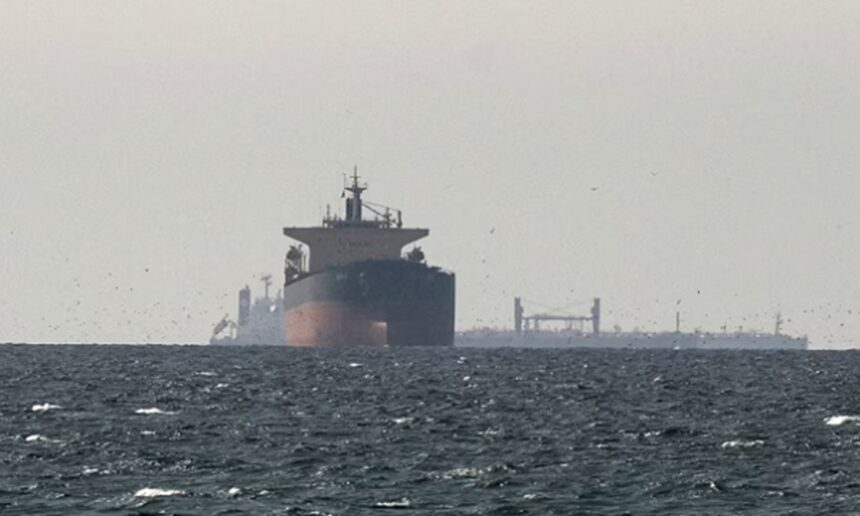
Iran’s Deputy Foreign Minister, Kazem Gharibabadi, has warned that safe passage through the Strait of Hormuz cannot be guaranteed without coordination with Tehran, as tensions remain high over control of one of the world’s most strategically important maritime routes.
“Safe passage through the Strait of Hormuz cannot be guaranteed based on ambiguous agreements, parallel routes, or decisions that disregard Iran’s considerations as a coastal state,” Gharibabadi wrote on the social media platform X on June 26.
He added that “any credible framework must be based on coordination with Iran and the provisions of Article 5 of the Islamabad Memorandum of Understanding,” warning that otherwise “the designated parallel route will be suspended.”
The United States and Iran reached a framework agreement on June 17. Article 5 calls for Iran and Oman to discuss the future management and maritime services of the Strait of Hormuz in coordination with other Persian Gulf states.
Tehran argues that this provision requires coordination with Iran before any alternative shipping arrangements can be implemented.
Gharibabadi’s comments came after Oman announced on June 24 the establishment of a temporary maritime route through the Strait of Hormuz in coordination with the International Maritime Organization, the United Nations’ maritime agency.
On June 25, Iran’s Islamic Revolutionary Guard Corps stated that safe navigation would only be possible through routes approved by Tehran.
Iran had effectively closed the Strait of Hormuz following the outbreak of U.S. and Israeli military strikes against the country on February 28. The strategic waterway normally carries around one-fifth of the world’s global oil supply, making its security vital for international energy markets.