Kosovo has launched its annual “Pink October” campaign to raise awareness about breast cancer, with state leaders calling for regular check-ups and early diagnosis as key measures in improving treatment outcomes.
The campaign, which began on October 1, highlighted the continued prevalence of breast cancer in Kosovo and the importance of detecting the disease at an early stage. According to figures presented during the campaign, 601 new cases of breast cancer were reported in Kosovo in 2025.
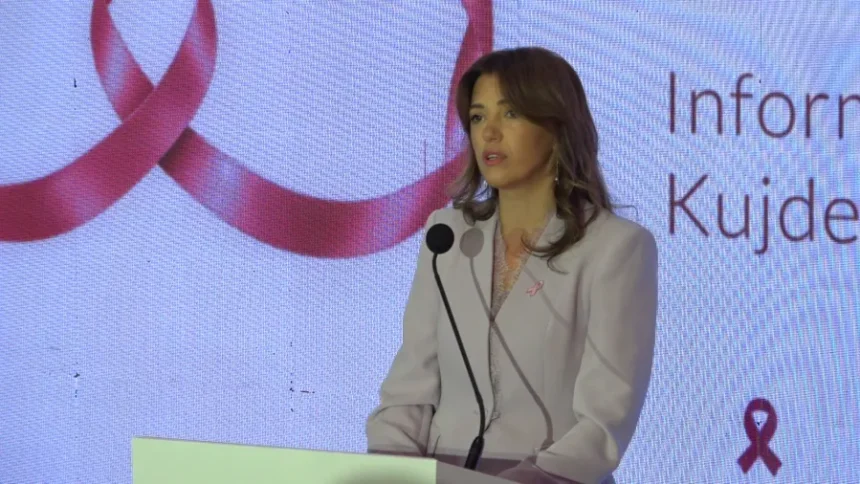
Acting President Albulena Haxhiu spoke about the challenges faced by patients and their families, emphasizing the importance of prevention, early diagnosis and access to treatment.
“Cancer remains one of the greatest challenges in healthcare and one of the most difficult trials in a person’s life,” Haxhiu said, noting that a cancer diagnosis affects not only patients but also their families and wider communities.
She said the 601 new breast cancer cases reported in Kosovo last year represented hundreds of people whose lives were suddenly changed by the disease.
Prime Minister Albin Kurti also highlighted the latest figures, saying that of the 601 cases recorded in 2025, 592 involved women and nine involved men.
According to Kurti, Kosovo has made progress in diagnosing breast cancer at earlier stages in recent years.
“Until 2022, most breast cancer cases diagnosed were either in the third or fourth stage. Thanks to the expansion of diagnostic equipment and awareness campaigns led by the Ministry of Health in cooperation with non-governmental organizations, in 2023 and 2024 most cases were diagnosed in the second or third stage,” Kurti said.
He added that the same trend continued in 2025, when more than 53.4 percent of cases were diagnosed at earlier stages.
Kurti stressed the importance of regular medical examinations and early diagnosis, noting that mammography has been available free of charge in Kosovo’s public healthcare system since 2023.
“For these cases, the chances of treatment and recovery are significantly better. Early detection is so important that it saves lives. Concerns should not be ignored, and check-ups should not be postponed,” Kurti said.
Breast cancer survivor calls for further improvements
Nafije Latifi, an activist and breast cancer survivor, said Kosovo had made significant progress in treating the disease but still needed further improvements in its healthcare system.
Latifi recalled that patients in the past often had to travel to countries across the region and beyond because of shortages of medical specialists, diagnostic equipment and oncology facilities.
“Today we have many more opportunities, but still not as many as our patients deserve,” she said.
She called for greater care and expanded treatment options for women living with breast cancer, as well as greater support for patients with advanced-stage disease.
“I speak on behalf of women who every day expect more from our healthcare system — more care, more treatment opportunities, more dedication and consideration from medical staff on their journey toward recovery and survival,” Latifi said.
The “Pink October” campaign will continue throughout the month, with awareness activities focused on prevention, regular screening and encouraging people to seek medical advice when they notice potential symptoms.