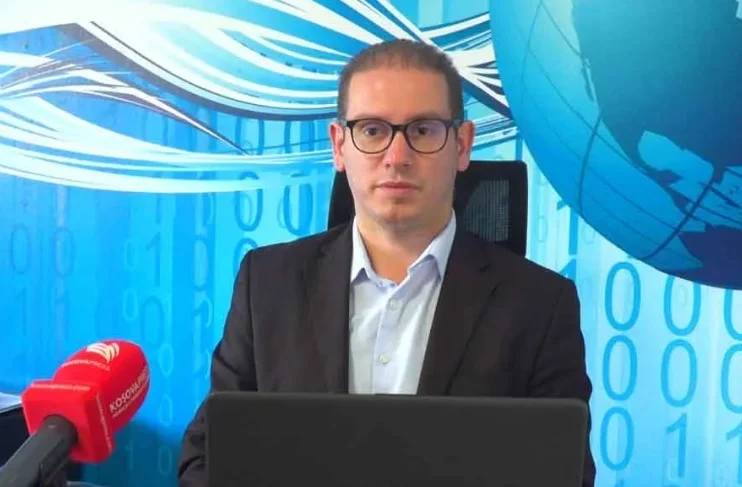
The change in Serbia’s political leadership has not brought any fundamental shift in the country’s geopolitical orientation, researcher Gurakuç Kuçi of the Octopus Institute has warned, urging the European Union not to repeat the policies it pursued under Aleksandar Vučić.
Commenting on the EU–Western Balkans Summit in Brussels, Kuçi noted that Serbia is once again refusing to participate, this time under the new political leadership that emerged from the Student List.
He contrasted Serbia’s absence with Kosovo’s active engagement in European security and integration initiatives, arguing that Belgrade continues to avoid its European obligations.
Kuçi stressed that Serbia’s absence comes at a particularly important moment, as the summit’s draft declaration calls on Western Balkan countries to align with EU sanctions against Russia, condemns genocide denial, the glorification of war criminals and historical revisionism, and demands compliance with obligations arising from the succession of the former Yugoslavia.
The document also links financial support to concrete progress in normalising relations with Kosovo.
“The EU must not continue the stabilitocracy under Serbia’s new leadership that it cultivated during Vučić’s rule, tolerating destabilising policies in the name of maintaining regional stability,” Kuçi wrote on X.
He argued that Kosovo is demonstrating its strategic orientation through alignment with European foreign policy and its contribution to regional security, while Serbia continues to generate geopolitical uncertainty through its approach towards Kosovo and its relations with Russia.
“Brussels must distinguish between countries that contribute to stability and those that instrumentalise instability for diplomatic gains,” Kuçi concluded.
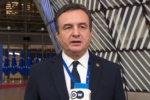
Meanwhile, Kosovo Prime Minister Albin Kurti reiterated that Prishtina expects to obtain EU candidate country status, arguing that the process has already been delayed for far too long.
Speaking to reporters ahead of the EU–Western Balkans leaders’ summit in Brussels, Kurti stressed Kosovo’s expectations for progress on its European integration path.