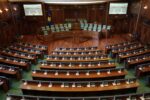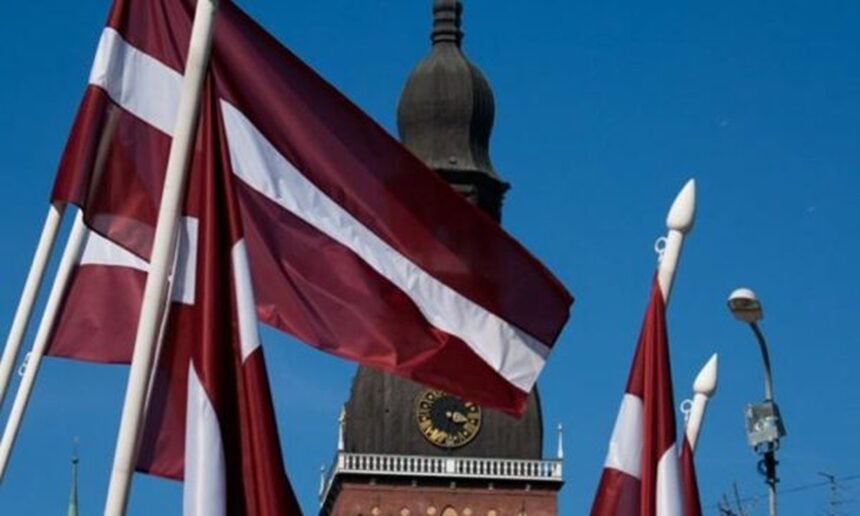
The Parliament of Latvia, also known as the Saeima, has given the green light to form a new government on May 28.
Opposition centre-right lawmaker Andris Kullbergs was appointed acting prime minister ahead of parliamentary elections scheduled for October.
The political shift follows the collapse of the previous governing coalition, which was triggered by recent violations of the country’s airspace involving Ukrainian drones.
In the Saeima vote, the new four-party centre-right coalition secured the support of 66 out of 96 voting MPs.
The government is composed of Andris Kullbergs’ United List, outgoing Prime Minister Evika Siliņa’s New Unity, the National Alliance, and the Union of Greens and Farmers.
Speaking in parliament ahead of the vote, Kullbergs emphasized that security, border protection, the economy, and energy are at the top of the government’s agenda. Referring to the upcoming elections, he said:
“The world will soon show us whether we did well or poorly, on October 3… the verdict will be given on this government.”
In a joint statement, the four coalition parties pledged full continued support for Ukraine—following the line of the previous leadership—while focusing on national defense and “implementing measures to weaken and isolate Russia.” In addition, “the safe conduct of elections” was defined as a key concern.
In the new government, Baiba Braže takes over as Minister of Foreign Affairs, Māris Kučinskis becomes Minister of Finance, while Colonel Raivis Melnis assumes the position of Minister of Defence.
Notably, the Progressive Party, which was part of the previous coalition led by Evika Siliņa, has been excluded from the new cabinet, shifting the government further to the right.
Tensions on NATO’s northern border with Russia have escalated, as the appearance of armed Ukrainian drones in Baltic airspace has raised fears of a wider conflict. The incidents have forced residents into shelters, while schools and kindergartens were temporarily closed due to alerts.
The government crisis in Latvia began on May 7, when a Ukrainian drone struck an empty oil storage tank inside Latvian territory. Then-Prime Minister Evika Siliņa dismissed the defence minister, accusing him of insufficient military protection measures, a decision that ultimately led to the collapse of her coalition government.
The Baltic states accuse Russia of disrupting drone operations through electronic interference (jamming). Moscow, in turn, accuses the Baltic countries of allowing Ukrainian drones to be launched from their territory—claims they firmly reject.