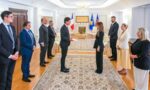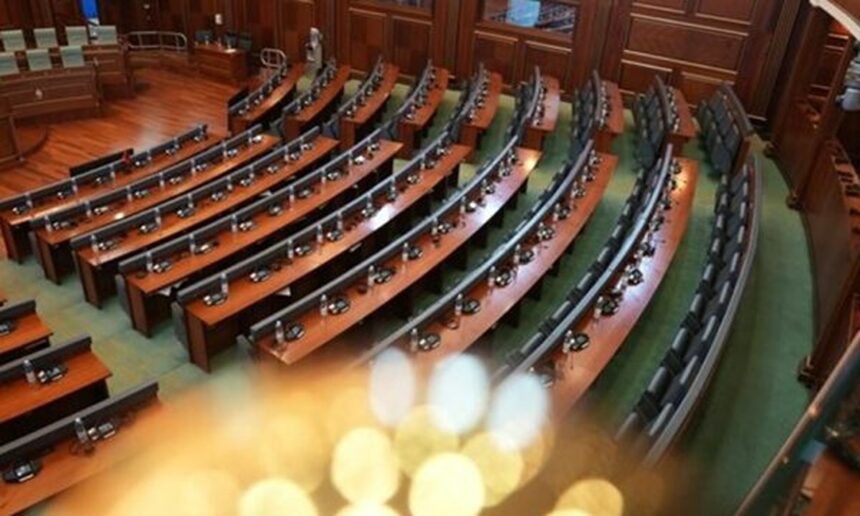
Acting President Albulena Haxhiu has announced that the constitutive session of the assembly, born from the snap elections in June, will not be convened during July.
Instead, the constitutional session is scheduled for early August, as the absolute deadline looms on August 7. Haxhiu stated that exact scheduling details will be made public next week, stressing that the extra time is a deliberate move to give political parties a window to hammer out an alliance and bypass another paralyzing institutional deadlock.
The Constitutional Mandate and Lessons from 2025
Under Article 66 of the Constitution of Kosovo, the newly elected 120-seat Assembly must convene within 30 days of the official certification of election results, which occurred on July 8.
However, Haxhiu emphasized that a landmark June 25, 2025, Constitutional Court ruling dictates that a session is not legally “held” merely by physical presence. The session must successfully conclude the following core actions to legally constitute the legislature:
- Mandate Verification: Officially confirming the credentials of all elected MPs.
- The Oath of Office: Swearing-in the newly elected assembly members.
- Leadership Elections: Voting in the new President (Speaker) of the Assembly and their Vice Presidents.
Without these completed steps, the Assembly cannot function. Following its constitution, a 60-day window triggers to elect the President of the Republic.
The Strategic Deadlock: Overlapping Presidential Crisis
The June snap elections were the third general elections held in Kosovo within just 18 months, triggered precisely because the previous 10th legislature failed to elect a new president following the expiration of Vjosa Osmani’s 5-year mandate.
Haxhiu warned that dragging out negotiations post-constitution could cause the state to hit a legal wall and trigger yet another round of snap elections, which is in nobody’s interest.
Negotiations Stalled: Split in LDK and PDK Opposition
Acting Prime Minister Albin Kurti (LVV) initiated preliminary talks with opposition leaders last week, but the political battlefield has quickly fractured:
| Party | Official Position / Current Trajectory | Internal Dynamics |
| Lëvizja Vetëvendosje (LVV) | Seeking Coalition / Consensus: Trying to build a platform for institutional stability and a non-partisan President. | Remains the primary winning party but lacks the independent numbers to pass a president. |
| Partia Demokratike e Kosovës (PDK) | Definitive Opposition: Party leader Bedri Hamza officially stated that the party will not enter a governing coalition and will remain in opposition. | Intends to hold a firm anti-government legislative stance. |
| Aleanca për Ardhmërinë e Kosovës (AAK) | Boycotting Talks: Failed to respond to Kurti’s invitation; urged by Haxhiu to demonstrate constructive approach. | Remaining outside the initial rounds of institutional dialogue. |
The LDK Meltdown: Negotiations Suspended
The biggest obstacle to forming a government is the sudden domestic crisis inside the Lidhja Demokratike e Kosovës (LDK). Party leader Lumir Abdixhiku officially suspended all coalition talks with Kurti due to a fierce internal coup attempt.
An opposition faction within LDK has forced an Extraordinary Party Assembly aimed at holding a vote of no confidence to dismiss Abdixhiku. He has accused this internal faction of deliberately plotting to block the creation of new state institutions.
Reflecting the ideological divide, LDK Vice President Lutfi Haziri published a pointed message on social media, signaling a battle for the party’s soul:
“In Kosovo, history has taught us that LDK is the party of idealists, PDK is the party of insurgents, and VV is the party of the dissatisfied. LDK belongs to the idealists, and its idealists are the membership. Not the officials. It is time to return to the idealists!”
The Analyst Perspective: High Risk of Continued Stall
Political Science Professor Basri Muja noted that while the constitution of the Assembly and the subsequent formation of the cabinet could logistically be resolved within a matter of hours, the presidential election remains a massive hurdle.
Muja argued that if Kurti’s LVV insists on pushing a strictly partisan candidate for President—as has historically been the norm—the deadlock will likely continue. He warned that for the health of Kosovo’s democracy, major parties must compromise on a non-partisan, consensus figure to avoid throwing the country back into electoral chaos.