In the wake of a regional diplomatic storm, the Serbian government has chosen a path of total institutional silence following a highly controversial televised declaration by one of its own cabinet members.
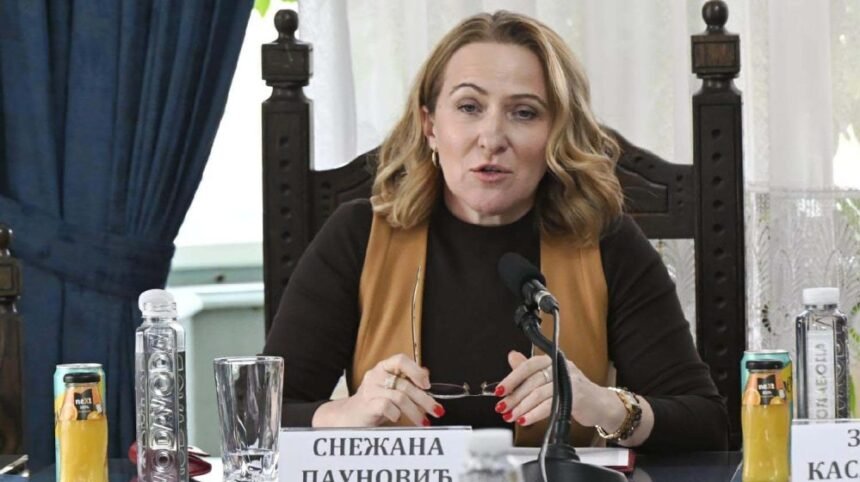
Snežana Paunović, Serbia’s Minister of Public Administration, sparked outrage after publicly stating that had she been in former Yugoslav President Slobodan Milošević’s position in 1998, she “would have ethnically cleansed Kosovo.”
Yet, in the days following this statement, the executive branch of the Serbian government has failed to issue a single formal condemnation, distance itself from her comments, or initiate any disciplinary action against her. Analysts and civil society groups warn that this glaring absence of official reaction functions as a tacit endorsement, severely damaging Serbia’s international standing.
A Wall of Silence from the Serbian Cabinet
While European Union officials, international observers, and opposition parties quickly expressed deep concern, the response from Belgrade has been characterized by a complete lack of official state accountability.
Rather than a unified government censure or a formal demand for her resignation, the public has only seen defensive maneuvers and total silence from the state’s executive offices:
- No Formal Executive Statement: The Government of Serbia, as a collective ruling body, has issued no official press releases, diplomatic clarifications, or apologies to address the scandal.
- A Strategy of Deflection: Instead of a rebuke, high-ranking officials have sought to excuse the rhetoric. Assembly Speaker Ana Brnabić downplayed the incident, arguing that Paunović was speaking “as a victim of ethnic cleansing herself,” rather than condemning the content of the minister’s remarks.
- Active Defense from the Ruling Coalition: Interior Minister and Socialist Party of Serbia (SPS) leader Ivica Dačić openly defended Paunović, deflecting the blame by accusing her critics of “hypocrisy.”
The Cost of Government Inaction
Political analysts warn that this silence is a calculated political choice, but one that carries heavy consequences. By refusing to draw a clear line against calls for ethnic expulsion, the Serbian government has handed a massive geopolitical victory to Pristina.
                  [ The Consequences of Belgrade's Silence ]
                                      |
         +----------------------------+----------------------------+
         |                                                         |
         v                                                         v
 [ International Condemnation ]                           [ Local Vulnerability ]
 Bypassing official channels leaves Serbia                 Kosovo Serbs are left to face the political
 politically compromised in Brussels.                      fallout of a rhetoric they did not support.
Political analyst Ognjen Gogić emphasized that if the government truly prioritized the safety and stability of the Serb minority in Kosovo, it would have moved swiftly to officially censure the minister.
“If they really thought about the position of Serbs, they would have immediately distanced themselves from this statement and condemned it. The fact that no one in power did so shows they are ignoring the actual, long-term safety of our people on the ground.”
— Ognjen Gogić, Political Analyst
By refusing to react to an outrageous endorsement of mass deportation, the Serbian government has allowed extreme, nationalistic rhetoric to be normalized as part of its official political landscape.