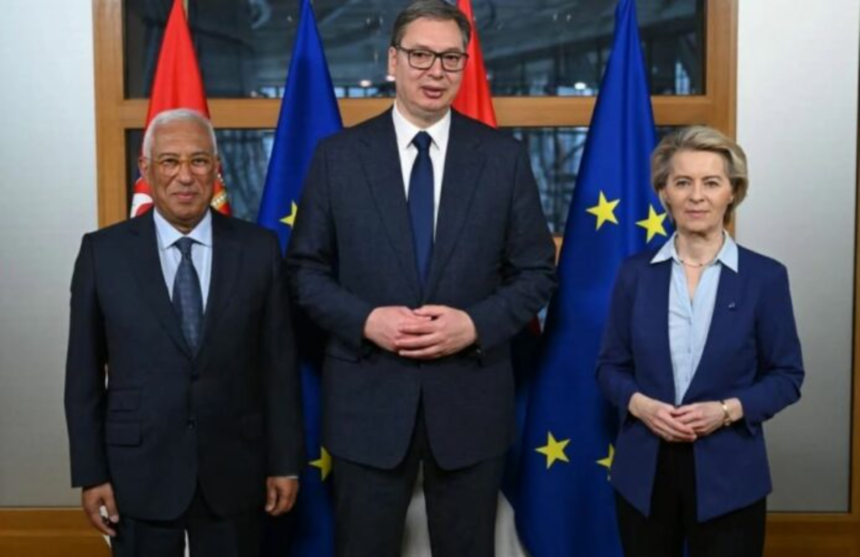
Serbia’s relationship with the European Union remains deeply strained, marked by political contradictions, democratic backsliding, and a growing disconnect between Brussels and Belgrade, argues historian and diplomat Milan St. Protić in a sharp political analysis.
According to Protić, neither the European Union wants today’s Serbia, nor does Serbia truly want Europe. While Serbian authorities continue to speak rhetorically about EU integration, their actions, governance style, and foreign policy choices suggest a fundamentally different orientation.
EU Knows the Reality in Serbia
Protić stresses that European institutions are fully aware of what is happening inside Serbia. He argues that Brussels understands the nature of the current government, including:
- Systemic corruption and abuse of power
- Political pressure, intimidation, and violence
- Media manipulation and democratic erosion
“They know exactly who they are dealing with,” Protić writes, emphasizing that EU diplomacy often masks its real assessment with polite language and formal engagement.
EU Membership Rhetoric vs. Political Reality
While proposals for faster EU enlargement in the Western Balkans may sound appealing, Protić argues that Serbia is structurally unprepared for EU membership. He highlights that other countries in the region, such as Albania and Montenegro, have made significantly more progress due to stronger political will and reform commitment.
A major obstacle remains Serbia’s refusal to align with EU foreign policy, particularly its continued closeness to Russia and its failure to impose sanctions following the invasion of Ukraine.
Kosovo as a Political Tool
The article underlines that Kosovo remains the central political instrument used by Serbian authorities to mobilize nationalism and divert attention from internal problems.
Protić argues that the issue is not genuine concern for territorial integrity, but rather the strategic use of Kosovo as a tool to:
- Justify authoritarian governance
- Silence criticism
- Delay European integration
“Only a European Serbia can become part of the European Union,” Protić concludes.
Public Opinion and Media Influence
Another critical concern raised is the decline in public support for EU membership in Serbia. After years of state-driven media propaganda, skepticism toward Europe has grown, creating a society increasingly distant from European democratic values.
Conclusion: A Choice Yet to Be Made
The analysis concludes that Serbia stands at a civilizational crossroads. Without genuine reforms, democratic accountability, and acceptance of political realities in the region, EU membership will remain an illusion rather than a destination.
As Protić emphasizes, the core issue is not Europe’s unwillingness, but Serbia’s lack of commitment to European values.