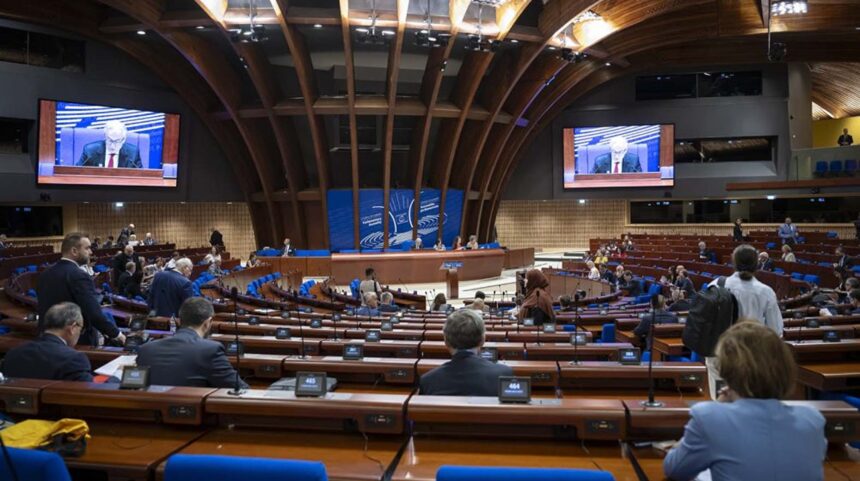
Serbia’s parliamentary delegation has once again taken its campaign against Kosovo to Strasbourg, repeating a series of accusations about Kosovo Serbs, their security, political participation and alleged violations of their rights. But many of these claims are presented by Belgrade as established facts when they are, in reality, political allegations that are disputed by the findings of European observers.
Biljana Pantić Pilja portrayed Kosovo as a place of deep political instability where Serbs are allegedly being denied their rights and where international institutions are supposedly under attack. Yet the Parliamentary Assembly of the Council of Europe’s own observation mission reached a considerably different assessment of the 7 June 2026 elections: it described them as conducted in a calm, orderly and professional manner, without major incidents, and said voters were able to exercise their right to vote freely. PACE did identify genuine problems, including voter intimidation allegations, weaknesses in electoral administration and the use of administrative resources, but its report does not support the sweeping picture presented by Belgrade. (PACE)
There is also an important detail Serbia’s narrative conveniently leaves out. PACE documented complaints from Kosovo Serbs who reported feeling intimidated by representatives of Serbian List in connection with employment in Serbia-funded parallel institutions. The report also noted concerns about interference from Belgrade in Kosovo Serb political participation. In other words, the reality described by European observers is considerably more complicated than the one presented by the Serbian delegation. (PACE)
And then there is Ratko Mladić. Serbian representatives complained about criticism surrounding his funeral and argued that citizens have the right to attend and pay their respects. But the Council of Europe’s Legal Affairs and Human Rights Committee has explicitly said that a convicted war criminal such as Mladić should not be glorified. The committee recalled his ICTY conviction for genocide and other crimes and criticized the participation of senior Serbian officials in his funeral and the honours given to him. (PACE)
So while Belgrade goes to Strasbourg presenting itself as the defender of international law and minority rights, its delegation is simultaneously pushing unsubstantiated or disputed claims about Kosovo while defending the public honouring of a man convicted of genocide. Strasbourg is not obliged to accept Belgrade’s version of events simply because it is repeated from a parliamentary podium.
The European record shows a far more complex reality including documented concerns about pressure and interference originating from Belgrade itself.