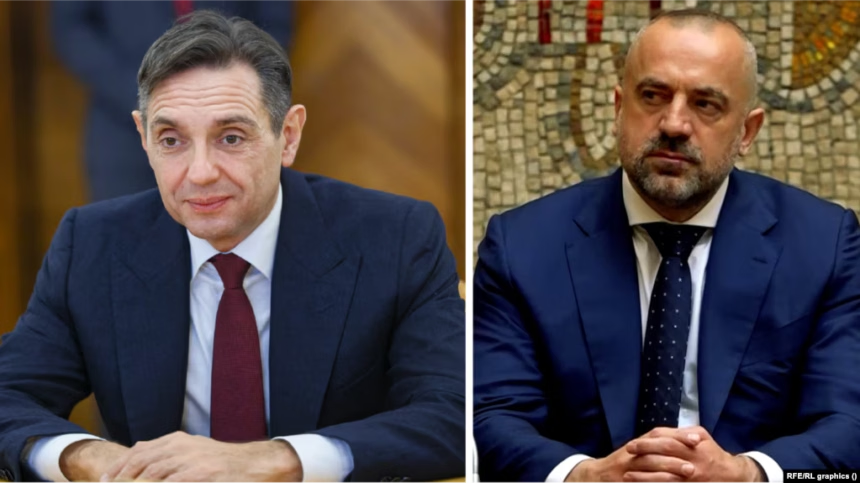
Serbia’s Border Police Directorate has addressed questions surrounding the reported departure from the country of Milan Radoičić, as well as former Serbian official Aleksandar Vulin’s trip to Moscow, saying that border restrictions can only be enforced when imposed by law or a court decision.
In a statement responding to reports that former Kosovo Serb List deputy leader Milan Radoičić had left Serbia, the Border Police said that individuals subject to a travel ban or an active arrest warrant cannot legally cross the border.
Radoičić, who is under investigation over the armed attack in Banjska, Kosovo, failed to report to a police station on November 15, as required under a court-imposed measure.
The Border Police stressed that it does not have the authority to restrict anyone’s freedom of movement unless such restrictions are established by law or ordered by a competent judicial authority.
According to the statement, court decisions requiring action by the Interior Ministry are officially forwarded to the relevant police department based on the individual’s place of residence, so that they can be registered and enforced, including through border controls.
However, the Directorate did not clarify whether it had received a court order concerning Radoičić.
On November 17, the Higher Court in Belgrade ordered Radoičić’s detention and issued an arrest warrant after determining that he had failed to report to the police two days earlier. Reports subsequently emerged suggesting that he had already left Serbia.
In October 2023, the court had rejected the prosecution’s request for his detention, instead imposing measures requiring him to remain at his registered residence, confiscating his passport and prohibiting him from travelling to Kosovo.
Border Police Explains Vulin’s Trip to Moscow
The Border Police also addressed the departure of former Serbian official and pro-Russian politician Aleksandar Vulin, who travelled to Moscow on November 3.
The Directorate said that passengers holding valid travel documents, without registered travel bans or other legal restrictions, are entitled to cross the border freely.
Regarding the Air Serbia flight from Belgrade to Moscow, which was temporarily ordered to return, the Border Police maintained that it had fulfilled its responsibilities in accordance with the law.
“Vulin underwent the mandatory border control, as did the other passengers travelling to Moscow. Other checks, including the inspection of passengers and their luggage before boarding the aircraft, do not fall under the jurisdiction of the Border Police,” the statement said.
The aircraft was ordered back to Belgrade on November 3 for an additional security check involving one passenger. After the inspection was completed, the plane was allowed to depart again.
Besides Vulin, the passengers included Serbian minister without portfolio Nenad Popović, a businessman and pro-Russian politician, and Dušan Bajatović, director of Srbijagas.