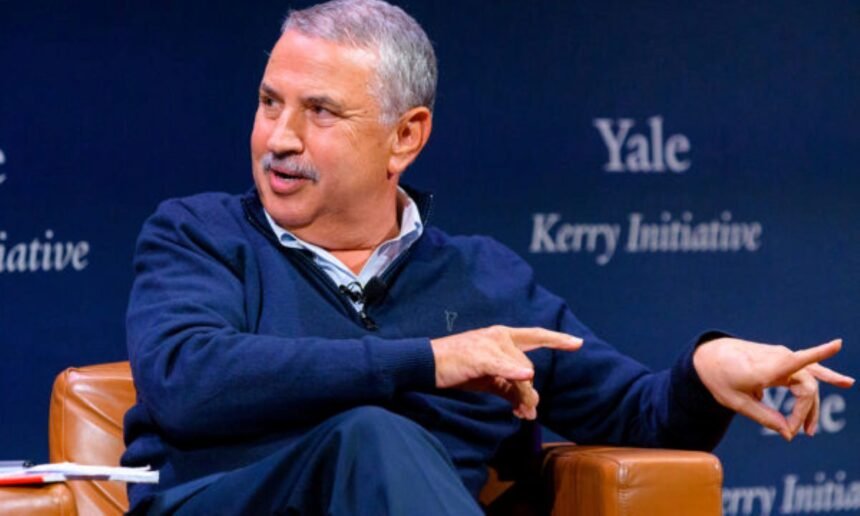
In a scathing op-ed for The New York Times, renowned foreign affairs columnist Thomas L. Friedman argues that President Donald Trump is preparing to sell the conclusion of the U.S.–Iran conflict as a monumental victory. However, Friedman warns that the hidden strategic cost of this exit strategy will be catastrophic for long-term global security, effectively granting the Islamic Republic a dangerous lease on life.
The “Lobster vs. Crow” Dilemma
Friedman frames the impending end of the conflict around a central premise: Trump entered the military confrontation promising absolute regime change and a “perfect deal,” but is now settling for a highly transactional, limited exit.
                  [TRUMP'S COMPROMISED IRAN EXIT]
                                 │
                                 ▼
 ┌─────────────────────────────────────────────────────────────┐
 │ THE PROMISED GOAL: Complete regime change & total surrender │
 ├─────────────────────────────────────────────────────────────┤
 │ THE IMMINENT DEAL: Shipment of highly enriched uranium out │
 │ of Iran in exchange for phased economic sanctions relief    │
 ├─────────────────────────────────────────────────────────────┤
 │ THE STRATEGIC COST: A bloodstained regime left intact,       │
 │ enriched with oil revenues to suppress internal dissent     │
 └─────────────────────────────────────────────────────────────┘
If the administration succeeds in securing the removal of approximately 500 kilograms of near-weapons-grade enriched uranium from Iranian soil, Friedman concedes it will be a genuine, positive step toward temporarily freezing Tehran’s nuclear bomb ambitions.
However, he sharply rejects the narrative that this constitutes a total victory. He notes that the deal forces Trump to swallow a massive dose of political reality—essentially resurrecting a variation of the 2015 Obama Joint Comprehensive Plan of Action (JCPOA) that Trump recklessly tore up in 2018.
Thomas L. Friedman on the Reality of the Nuclear Deal: “Please spare me the nonsense that Trump has secured a perfect, delicious deal. Securing that highly enriched uranium will not only leave the murderous, repulsive regime of the Islamic Republic in power—still holding 10 tons of low-enriched uranium—but it will actually strengthen it in deeply disturbing ways.”
The Weapon of “Mass Disruption” at the Strait of Hormuz
The primary strategic error made by Donald Trump and Israeli Prime Minister Benjamin Netanyahu, according to Friedman, was a profound lack of imagination and failure to adapt to modern, asymmetric warfare. Both leaders operated under the assumption that a few weeks of heavy aerial bombardment would trigger a swift, domestic collapse of the clerical regime.
Instead of buckling, Tehran exposed the extreme vulnerability of the global economy by deploying a weapon not of mass destruction, but of “mass disruption.”
                 [THE HIGH COST OF CHEAP DRONES]
                                │
                                ▼
 ┌───────────────────────────────────────────────────────────┐
 │ COST PER IRANIAN KAMIKAZE DRONE: ~$20,000                 │
 ├───────────────────────────────────────────────────────────┤
 │ CHOKEPOINT CAPACITY: Controls the Strait of Hormuz        │
 │ (Passageway for 20% of global crude oil shipments)        │
 ├───────────────────────────────────────────────────────────┤
 │ ECONOMIC DAMAGED INFLICTED: Sudden spikes in global gas   │
 │ pump prices and multi-billion-dollar regional energy cuts │
 └───────────────────────────────────────────────────────────┘
By utilizing inexpensive, mass-produced drones, fast-attack naval vessels, and cruise missiles, the Islamic Revolutionary Guard Corps (IRGC) successfully held the global energy grid hostage.
- The Qatar Energy Strike: Friedman points to a devastating real-world consequence of this asymmetric capability, citing Reuters reports from March. Iranian drone and missile strikes managed to knock out 17% of Qatar’s liquefied natural gas (LNG) export capacity, inflicting an estimated $20 billion in annualized revenue losses and directly threatening critical energy lifelines to Europe and Asia.
This massive leverage is why America’s oil-producing Arab allies in the Gulf are now aggressively pushing Trump to halt the war. They have realized that their multi-billion-dollar civilian and energy infrastructures are fundamentally undefendable against sustained, low-cost drone swarms.
The Absurdity of the Global Expansion Plan
Friedman targets Trump’s political volatility, characterizing his diplomatic instincts as deeply unstable and detached from geopolitical realities. He points to a bizarre proposition floated by Trump over the weekend, suggesting that all regional actors—including Turkey, Pakistan, Jordan, Egypt, Saudi Arabia, and even Iran itself—should immediately sign onto the Abraham Accords to create an instant, sweeping Middle Eastern peace pact.
Friedman dismisses the notion as childish:
Friedman on Trump’s Abraham Accords Expansion: “On what planet in the Milky Way Galaxy would this regime in Tehran—which was practically founded upon the foundational hatred of Israel—suddenly stand up and make peace with it right after this war? It is a ridiculous proposal formulated without the consultation of a single expert.”
The Unfortunate Strategic Aftermath
Friedman concludes his analysis by stressing that while American and Israeli military strikes successfully degraded Iran’s formal military architecture and nuclear production centers, the impending geopolitical compromise leaves the world in a more precarious position than before.
| The Intended Target | The Actual Outcome | The Future Threat Vector |
| Iranian Economic Isolation | Phased lifting of oil embargoes and sanctions relief. | Massive cash infusions used to fund proxy networks (Hezbollah, Houthis, Iraqi militias). |
| Domestic Regime Collapse | Influx of state funds allows the IRGC to crush internal dissent. | The consolidation of authoritarian power, sealing the regime’s survival. |
| Regional Maritime Security | The West signals it cannot stop low-cost drone swarms. | Iran maintains a permanent chokehold over the Strait of Hormuz, leveraging global oil prices at will. |
Ultimately, Friedman notes that the U.S. will pay a heavy toll for Trump’s transactional exit. The world will be forced to live with an emboldened, cash-flush Iranian regime that has proven it can paralyze global commerce without ever needing to detonate a nuclear warhead.