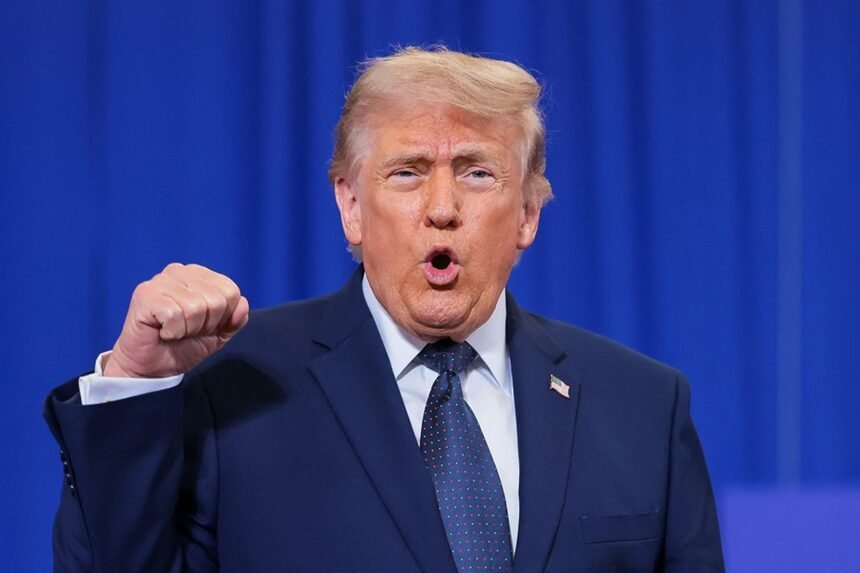
U.S. President Donald Trump said his administration had “very good discussions” with Iran during all-day negotiations on Tuesday, raising hopes that an end to the five-month conflict could be within reach.
Oil prices fell and Asian stock markets rose on Wednesday, after Wall Street reached record highs amid expectations that a deal could soon be reached to restore traffic through the blocked Strait of Hormuz, Reuters reported.
“They had negotiations that lasted all day,” Trump told Fox News’ “Night” program. The Strait of Hormuz “will open very soon,” Trump added. “If they pull back again, they will be hit very hard.”
Trump has repeatedly threatened massive strikes if Tehran fails to reach an agreement, while later pointing to progress in talks that have so far failed to bring an end to hostilities.
Axios, citing two regional sources and a U.S. official, reported that Washington and Tehran are moving closer to a temporary agreement to reopen the strait through a deal involving Oman, which controls part of the strategic waterway. The report said Washington was aiming for an announcement on Wednesday.
However, Iranian state media, citing an informed source, said an agreement with Oman regarding the strait — which normally carries around one-fifth of global oil and liquefied natural gas shipments — would be delayed “as long as the United States continues to threaten Iran.”
Trump has yet to achieve the objectives he set at the beginning of the war: dismantling Iran’s nuclear program, limiting its ability to attack regional rivals, and creating conditions for Iranians to overthrow their clerical leadership.
Iran has halted most traffic through the Strait of Hormuz, while Washington maintains a blockade targeting Iranian-linked ships and ports.
Qatar had previously said mediators were making progress in efforts to end the conflict, even as Tehran denied that negotiations were taking place.
Trump and Qatar’s Emir, Sheikh Tamim bin Hamad Al Thani, discussed efforts to narrow differences between Washington and Tehran and improve prospects for a lasting resolution during a phone call on Tuesday, according to the Emir’s office.
Iranian Foreign Ministry spokesperson Esmaeil Baghaei said talks with Oman regarding transit through the strait were positive and ongoing, focusing on establishing safe maritime routes. He added that the proposed arrangement was intended to protect the sovereign rights and national security interests of both Iran and Oman.
Iran has long sought greater control over the Strait of Hormuz, which it says it shares with Oman on the opposite side of the waterway. Tehran rejected an Omani proposal last week that would have allowed joint monitoring and voluntary collection of fees from vessels passing through the strait.
Yemen’s Iran-aligned Houthi movement has also imposed a naval blockade targeting Saudi Arabia in the Red Sea, further restricting oil export routes. A projectile struck an Indian-flagged vessel near Yemen, causing it to capsize and sink, but all 14 crew members were rescued, Indian officials said. Yemen blamed the Houthis for the attack.
The United Nations’ International Maritime Organization has reported at least 17 sailor deaths from 64 incidents in the Strait of Hormuz since the war began on February 28.
These figures are in addition to the Iranian government’s reported death toll of 50 people killed and 500 wounded in U.S. strikes since hostilities resumed in late June — a figure reported before Iran said a U.S. attack on Qeshm Island in late July killed a man, a woman, and their two-year-old child.
Overall, Iran has reported more than 3,400 deaths since the United States and Israel launched the war on February 28, while the United States has reported 18 military personnel killed.