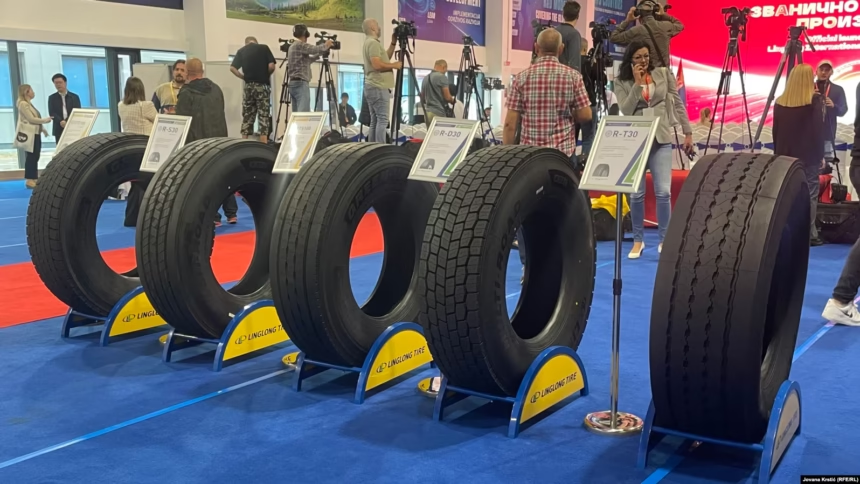
The U.S. Customs and Border Protection (CBP) announced on Thursday that it has banned the import of automobile tires produced at the Chinese-owned Linglong factory in Serbia due to allegations of forced labor.
“CBP officers will detain shipments of these tires at all U.S. ports of entry based on evidence indicating the use of forced labor in their production,” the agency stated.
Details of the Ban
The order specifically targets tires manufactured at Linglong’s factory in northern Serbia. The CBP investigation relied on extensive evidence, including:
- Worker testimonies and employment contracts
- Photographs and field notes from focus groups
- Screenshots of text messages
- NGO and media reports
- Academic research
According to the agency, workers at Linglong were exposed to nine indicators of forced labor, as defined by the International Labour Organization (ILO): retention of identity documents, intimidation and threats, isolation, excessive overtime, withholding of wages, debt bondage, abusive living and working conditions, deception, and abuse of vulnerability.
“The message is clear: the United States will not tolerate forced labor in supply chains,” said CBP Commissioner Rodney S. Scott.
Susan S. Thomas, Acting Executive Assistant Commissioner for Trade at CBP, added:
“Americans should not have to compete with products made through exploitation. By preventing goods produced with forced labor from entering the U.S. market, CBP helps ensure that American workers and businesses can compete on a level playing field.”
Background on Linglong Factory Allegations
- In early 2024, the NGO Astra filed a criminal complaint on behalf of 11 Indian workers, alleging human trafficking and labor exploitation.
- Earlier reports involved the alleged exploitation of several hundred Vietnamese workers during the factory’s construction.
- In 2021, the European Parliament called on Serbia to investigate claims of “modern slavery,” but the case was closed without legal proceedings.
- Linglong denied responsibility, claiming workers were employed by subcontractors.
- The 2024 U.S. Trafficking in Persons Report noted that the Serbian government did not fully investigate credible allegations of forced labor, including confiscation of passports and inhumane working conditions.
Next Steps for Importers
Importers of detained shipments may request:
- Destruction of the goods
- Re-export to another country
- Proof that the products were not manufactured using forced labor
This action underscores the U.S. commitment to preventing forced labor in global supply chains and protecting fair competition for American workers.