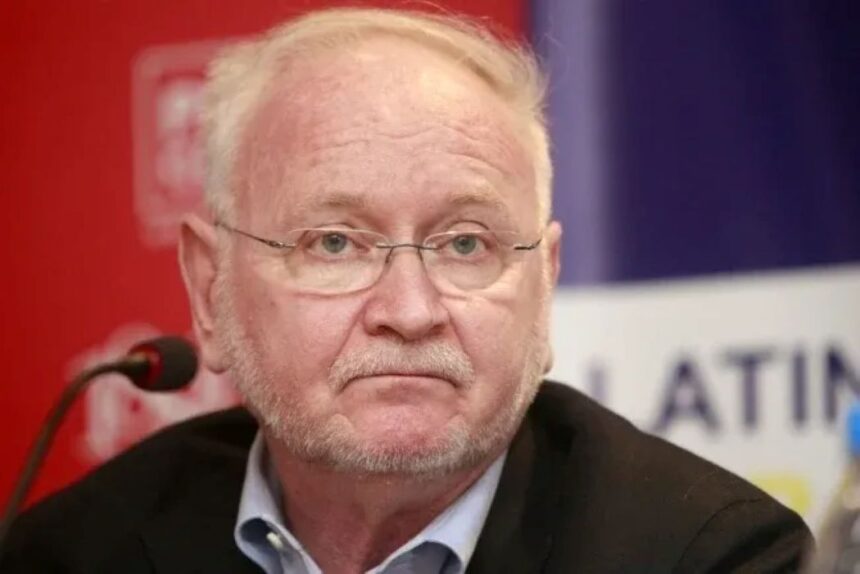
Former Serbian Deputy Prime Minister and university professor Žarko Korać has said that the victory of the student-backed electoral list represents a historic turning point for Serbia, but expects little change in the country’s relations with Kosovo.
In an interview with KDP, Korać addressed Kosovo Prime Minister Albin Kurti’s expressed hope that Serbia’s new political leadership could recognise Kosovo, arguing that such a development is highly unlikely.
“I have seen that Kosovo Prime Minister Albin Kurti has expressed hope that the new government could recognise Kosovo. This will almost certainly not happen,” Korać said.
He explained that one of the main obstacles would be a potential confrontation with the Serbian Orthodox Church, which reacted coldly to the student movement’s electoral victory.
Korać also recalled that during a visit to Moscow nearly a year ago, Serbian Patriarch Porfirije described the student protests in Serbia as a “colour revolution”, comparing them to Ukraine’s political break with Moscow.
According to Korać, Serbia’s position towards Kosovo is therefore unlikely to change significantly despite the political transition in Belgrade.
He also pointed to the political situation among Kosovo’s Serbian representatives, noting that all Serbian members of the Kosovo Assembly belong to the Serbian List, which is associated with outgoing Serbian President Aleksandar Vučić.
“Whether any of them will change their political affiliation remains to be seen,” he said.
Regarding Serbia’s foreign policy, Korać expects relations with the European Union to improve under the new political circumstances, although he said it remains unclear how much the country’s relationship with Russia will change.
His assessment suggests that while Serbia’s political transition could reshape its relations with European partners, a change in its position on Kosovo remains unlikely in the foreseeable future.