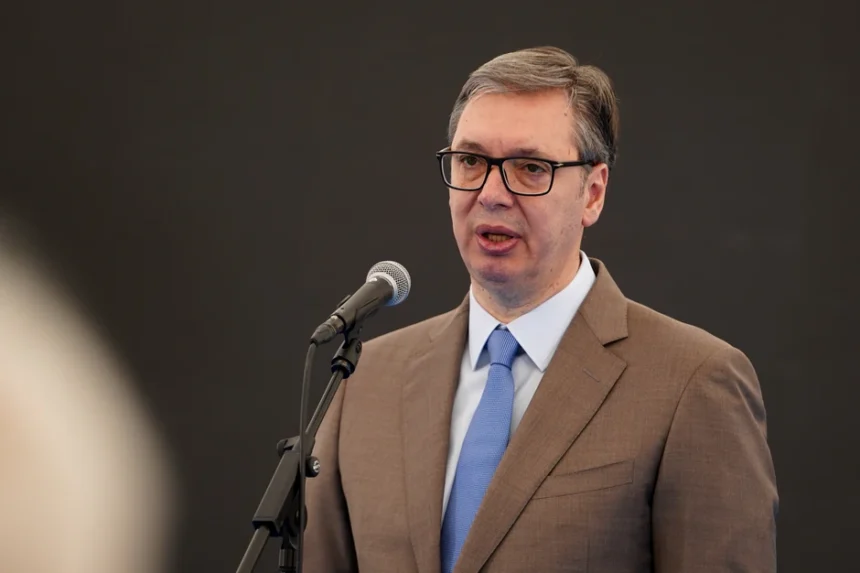
British newspaper The Telegraph has described Aleksandar Vučić as a highly skilled political strategist navigating a complex geopolitical landscape between Russia and the West.
According to the report, Vučić’s primary challenge has been maintaining a delicate balance between Serbia’s historical ties with Vladimir Putin and its ambitions for deeper integration into the European Union. The article emphasizes that Serbia’s position is not driven by loyalty to either side, but by a strategic focus on national interests and sovereignty.
The analysis argues that frustration in Europe stems less from perceived pro-Russian alignment and more from Vučić’s ability to engage simultaneously with multiple global powers, including China and India, while continuing cooperation with Western partners.
Serbia’s growing economic and technological development is also highlighted, with strong foreign investment, infrastructure expansion, and a rapidly developing IT sector contributing to the country’s progress. Despite internal challenges and political divisions, the article notes that Serbia continues to advance.
The report also points out that Serbia has not joined sanctions against Russia, which has fueled skepticism in parts of the West. However, it argues that the country maintains political pluralism and a level of media freedom that contrasts with some external perceptions.
Ultimately, the piece concludes that Vučić’s leadership reflects a broader strategy of geopolitical balancing, positioning Serbia as a state that seeks cooperation across global divides while preserving its independence.