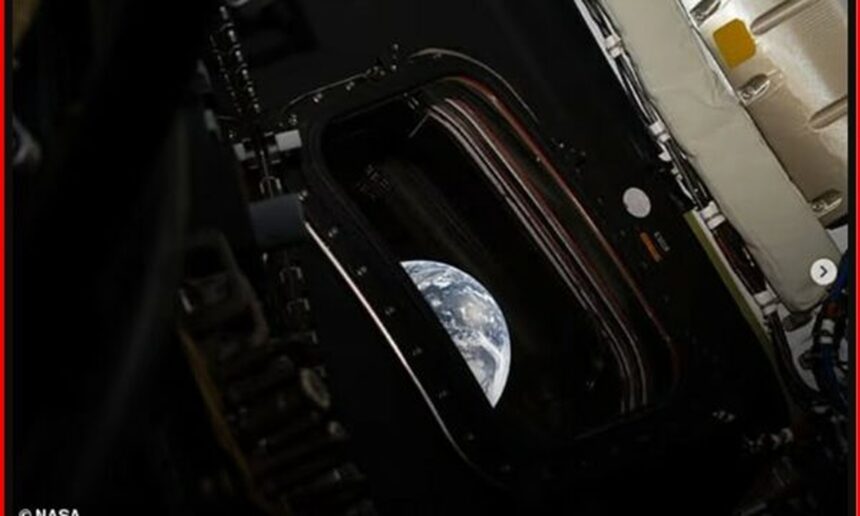
Following the successful completion of the Artemis II mission, the U.S. space agency NASA is preparing for the next major step sending astronauts to the surface of the Moon relying on private companies led by billionaires Elon Musk and Jeff Bezos, according to AP.
Unlike the historic Apollo program, which sent astronauts to the Moon for short stays with limited capacity, the new Artemis program aims for longer and more ambitious missions.
NASA plans to send four astronauts and establish the conditions for a more sustained human presence on the Moon.
For this new phase, NASA has adopted a different technical approach. The spacecraft Orion will transport the crew from Earth, while lunar landing systems will be developed by private companies such as SpaceX and Blue Origin.
This collaborative model aims to increase flexibility and reduce costs, but it also adds operational complexity.
Experts note that the Apollo missions were more like “camping trips,” whereas current plans are far larger in scale and ambition. The new lunar landing vehicles are several times bigger than those used in the 1960s–1970s and are designed to support longer stays.
However, technical challenges remain significant. One of the main issues is in-orbit refueling—a complex process that has not yet been fully tested. Achieving this will require multiple rocket launches to transport the necessary fuel to the lunar vehicle.
Timelines are also challenging. NASA plans to test orbital maneuvers in 2027 and carry out a crewed lunar landing in 2028. These goals require companies to accelerate development and testing within a relatively short timeframe.
Meanwhile, international competition is increasing. China has announced plans to send astronauts to the Moon by 2030, adding pressure on the United States to maintain its edge in the space race.
Although NASA says it has backup plans in case of setbacks, it remains uncertain whether key technologies—especially in-orbit refueling—will be ready in time.