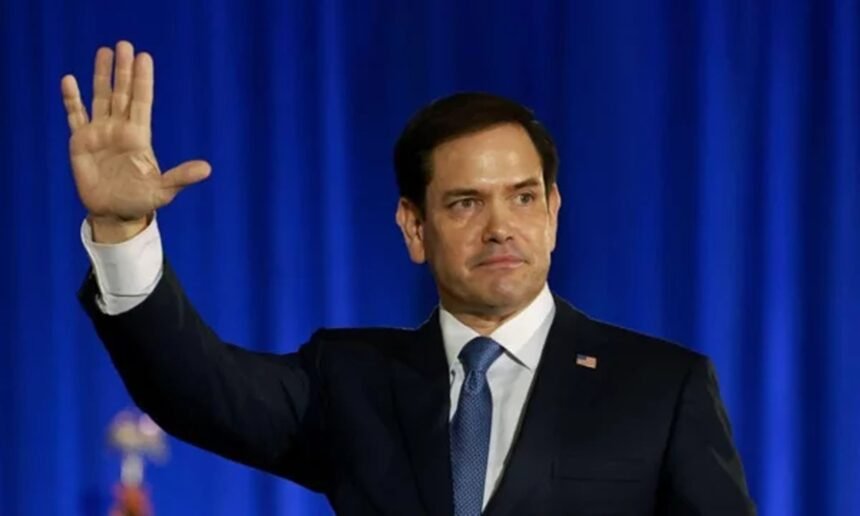
U.S. Secretary of State Marco Rubio has arrived in Rome for a series of critical diplomatic encounters with Pope Leo XIV and Italian Prime Minister Giorgia Meloni. The visit comes at a “delicate moment” for transatlantic relations, as Washington navigates a complex web of military conflict and ideological friction.
Rubio is scheduled to meet with the Pontiff today, May 7, 2026, at the Vatican, followed by a bilateral meeting with Prime Minister Meloni tomorrow.
The Vatican Rift: War in Iran and War of Words
The meeting between Rubio and Pope Leo XIV is expected to be tense. The Holy See has emerged as a vocal critic of the ongoing War in Iran, with the Pope repeatedly calling for an immediate ceasefire and condemning the humanitarian toll of the U.S.-led military campaign.
The diplomatic climate has been further soured by a public exchange between the White House and the Vatican:
- The Pope’s Stance: Leo XIV has characterized the U.S. strategy as an obstacle to global peace.
- Trump’s Retort: President Donald Trump recently escalated the rhetoric by accusing the Pope of “weakness” regarding international security.
Secretary Rubio’s primary mission at the Vatican is believed to be an attempt at “damage control,” aimed at de-escalating the public spat while firmly representing the administration’s strategic objectives in the Middle East.
Meloni’s Balancing Act
Following his Vatican visit, Rubio will turn his attention to the Chigi Palace. While Prime Minister Giorgia Meloni has long been regarded as one of President Trump’s most reliable ideological allies in Europe, the recent attacks on the Papacy have created a rare rift between Rome and Washington.
Meloni has formally distanced herself from Trump’s comments, describing the verbal attacks on the Pope as “unacceptable.” For the Italian Prime Minister, who leads a nation with deep Catholic roots, balancing her alliance with the Trump administration against the defense of the Holy See remains a significant political challenge.
Key Discussion Topics
Beyond the religious-political friction, the meetings are expected to cover:
- The Iran Blockade: Italy’s role in Mediterranean security as the conflict impacts global energy prices.
- NATO Unity: Ensuring a cohesive front as European nations face increasing hybrid threats from Russia.
- Migration and Sabotage: Recent reports of Russian-orchestrated migration and infrastructure sabotage across Europe.
Analysis: A Diplomatic Tightrope
For Secretary Rubio, this trip is a test of his ability to project American strength while offering the nuance required to keep Italy within the U.S. orbit. With the May 9 Victory Day approaching in Russia and the Strait of Hormuz remaining closed, Washington can ill afford a prolonged diplomatic fallout with its closest Mediterranean partner.