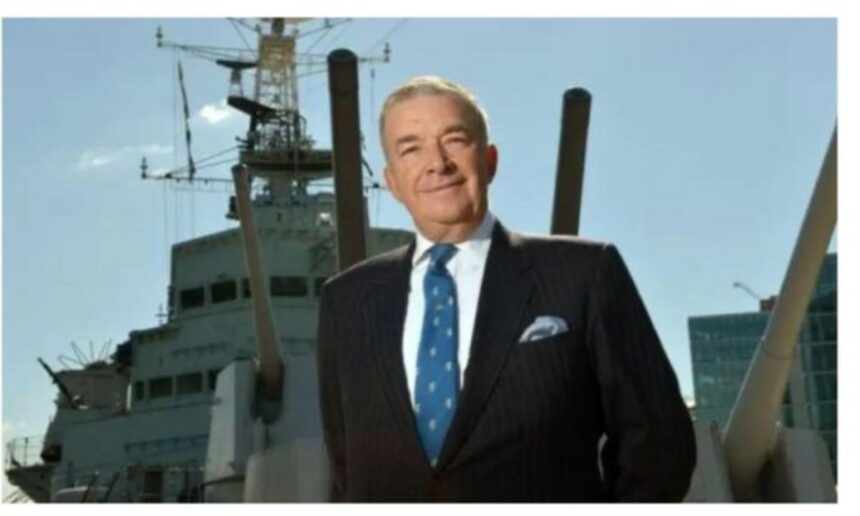
Admiral Alan West, the former head of the British Royal Navy, has issued a stark warning regarding the ongoing maritime standoff in the Middle East, stating that Iran is unlikely to restore access to the Strait of Hormuz until its broader diplomatic and security demands are met.
In an interview with the BBC, the Admiral offered a scathing critique of the current military strategy, describing the escalating tension as a predictable consequence of Western intervention.
“Epic Fury” Labeled a Strategic Failure
Admiral West directed specific criticism toward “Operation Epic Fury,” the military campaign launched by the administration of U.S. President Donald Trump. He suggested that the operation has achieved the opposite of its intended goals.
“Epic Fury has been an epic disaster, if you look at what [the U.S.] aimed to achieve,” West stated. “It was quite clear immediately that as soon as you go to war with Iran, they will close, or try to close, the Strait of Hormuz.”
The Strait as Diplomatic Leverage
The Admiral emphasized that the closure of the world’s most vital oil transit point is Tehran’s primary “bargaining chip.” He argued that military force alone would not secure the waterway, as its reopening depends entirely on whether Iran feels its interests are being addressed at the negotiating table.
Key points from West’s analysis:
- Negotiation Prerequisite: He expects the blockade to persist “until reconciliation is reached on all sorts of other things,” implying that Iran is holding the Strait hostage to force an end to broader economic sanctions and military pressure.
- Safety of Navigation: The Admiral noted that even if Western navies attempt to escort tankers, the route remains effectively closed as long as Iran intends to target shipping. “If the Iranians are not going to attack the shipping, then the Strait can open,” he noted, highlighting that the power to de-escalate rests largely with Tehran.
Current Regional Context
As of May 2026, the global energy market remains in a state of shock. The “dual blockade” dynamic has paralyzed the region:
- Iran maintains a defensive perimeter around the Strait, utilizing sea mines, swarming fast-attack craft, and coastal missile batteries.
- The United States continues to enforce its own naval blockade on Iranian ports as part of “Project Freedom,” aiming to choke the Islamic Republic’s remaining exports.
Analysis: A Protracted Standoff
West’s comments reflect a growing sentiment among European military experts that a “kinetic” solution to the Hormuz crisis is increasingly unfeasible. The Strait’s geography allows Iran to exert significant pressure with relatively low-cost asymmetrical weapons, making a purely military “opening” of the Strait a high-risk endeavor for the U.S. and its allies.
The Admiral’s warning suggests that without a significant shift in diplomatic strategy from the White House, the global economy will continue to suffer the consequences of the closed transit route.