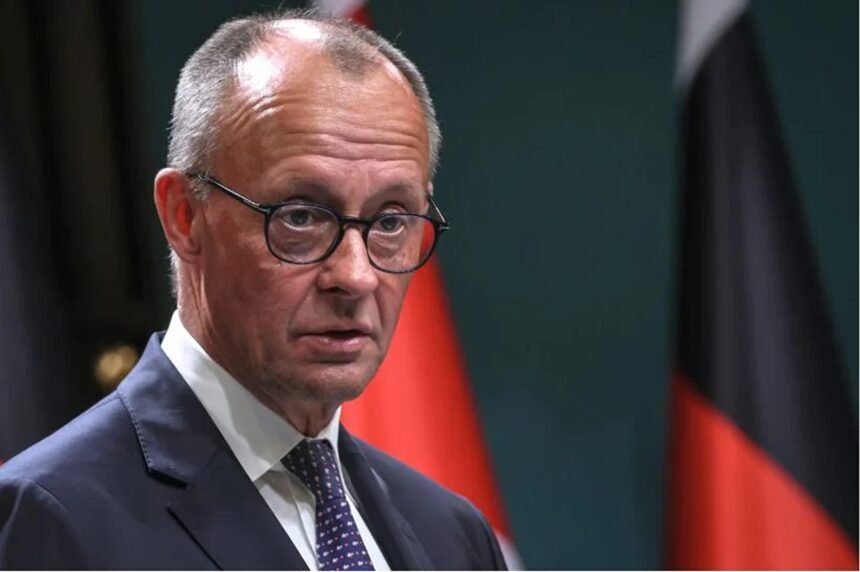
German Foreign Minister Johann Wadephul has unveiled a comprehensive six-point plan aimed at overhauling the European Union’s decision-making framework. Speaking at the Konrad Adenauer Foundation, Wadephul argued that the current geopolitical climate—specifically citing the war in Iran as a symptom of a shifting global order—demands a faster, more effective Brussels.
The proposal marks a significant push by Berlin to strip away bureaucratic hurdles that have historically slowed the EU’s response to international crises.
1. Ending the Unanimity Requirement
The centerpiece of the plan is the replacement of the unanimity rule with Qualified Majority Voting (QMV) in matters of Common Foreign and Security Policy. Wadephul argued that the current system allows single member states to paralyze the entire bloc for extended periods.
2. A “Multi-Speed” Europe
To prevent total gridlock, Germany is proposing a mechanism where a “pioneer group” of states can move forward on specific policies without being blocked by others.
“Countries that do not want to, or perhaps cannot participate, can temporarily stand aside without hindering those who want to move forward,” Wadephul stated.
3. Phased EU Enlargement
As the EU looks toward including more members, Wadephul proposed a gradual, staged accession process. This would allow candidate countries to integrate into specific EU sectors and benefit from “reinforced gradual integration” before reaching full membership status.
4. Downsizing the European Commission
Wadephul questioned the efficiency of having one Commissioner for every member state in an expanding union. He proposed a leaner, more efficient Commission consisting of only two-thirds of the total number of member states, ensuring a more streamlined executive body.
5. Institutional Scalability
The plan emphasizes that the EU cannot function with 33, 34, or 35 members using an architecture designed for a much smaller group. The proposal calls for a structural reform of all EU institutions to ensure they remain operational as the bloc grows.
6. Accelerated Foreign Policy Response
Berlin is calling for “Brussels to increase its speed,” particularly regarding security. The plan envisions a European Union that acts as a singular, more agile geopolitical force capable of reacting to conflicts in real-time rather than weeks or months later.
Strategic Context
This proposal comes at a time of extreme tension. With the conflict in Iran spreading and the U.S. enforcing a strict naval blockade, Germany is positioning itself as the driver for a more autonomous and militarily capable Europe. By suggesting a “two-thirds” Commission and phased membership, Berlin is signaling to both current members and candidates that the era of slow, unanimous consensus must end if the EU is to survive as a global power.