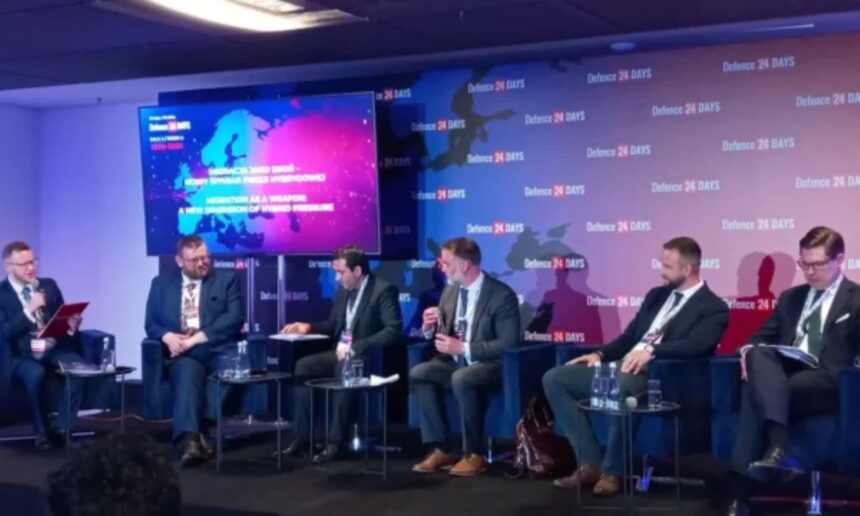
Leading defense and security experts from Finland, Poland, Sweden, and NATO structures have issued a joint warning regarding the intensification of Russian hybrid operations across Europe. The tactics, which range from “weaponized migration” to low-cost online recruitment of saboteurs, aim to destabilize Western societies and undermine support for Ukraine without triggering a direct military confrontation.
1. Weaponized Migration and Border Pressure
Dr. Matti Pesu from the Finnish Institute of International Affairs highlighted that Russia began orchestrating migration flows into Finland in late 2023.
- The Response: Helsinki took the unprecedented step of closing its entire land border with Russia.
- The Strategy: While Pesu notes a direct Russia–NATO conventional war remains unlikely, he emphasized that these border provocations are designed to drain national resources and test the resilience of NATO’s newest member.
2. Infrastructure Sabotage: “Not If, But When”
Dr. Michał Piekarski of the University of Wrocław provided a grim outlook on Poland’s security, stating that the question is no longer if a major sabotage act will occur, but when.
- Prime Target: The Polish railway network is identified as the most critical vulnerability. It serves as the primary artery for Western military aid to Ukraine, the export of Ukrainian grain, and potential civilian evacuations.
- Societal Shift: Piekarski warned that the Polish public must accept that the “30-year era of peace” has effectively ended.
3. Cyber Warfare and the “Shadow Fleet”
In Sweden, Dr. Niklas Nilsson noted an uptick in espionage and cyberattacks since 2022.
- Maritime Threats: The Swedish Coast Guard has already detained four vessels belonging to Russia’s “shadow fleet”—dilapidated tankers used to bypass oil sanctions and potentially conduct maritime provocations.
- Psychological Dimension: Nilsson argued that hybrid threats are most effective when they distort a society’s perception of reality and emotional stability.
4. Evolution of Recruitment: The “Gig Economy” of Espionage
One of the most concerning shifts involves Russia’s new recruitment model. Dr. Filip Bryjka from the Polish Institute of International Affairs explained that the Kremlin is increasingly using the internet to hire “unskilled agents” for low-cost operations.
- The Escalation Path: Recruits often start with simple tasks like painting graffiti or spreading propaganda online for financial gain.
- Sophisticated Tasks: Successful recruits are then graduated to higher-risk operations, such as installing surveillance cameras at critical infrastructure points or conducting physical sabotage.
5. NATO’s Counter-Terrorism Perspective
Major Festim Alimadhi from NATO’s COE DAT emphasized that modern sabotage must be treated as a form of hybrid warfare. He noted that “terrorism does not need high casualty counts to cause massive damage,” citing instances where infrastructure sabotage led to profound economic disruptions that affected national financial systems.
Conclusion: A Call for Proactive Defense
The consensus among the experts is that the West must move beyond a purely reactive stance. They advocate for a “proactive hybrid defense” that includes:
- Enhanced Digital Resilience: Protecting the digital and psychological space from Russian influence.
- Infrastructure Hardening: Securing physical assets like railways and energy grids.
- Counter-Hybrid Measures: Actively disrupting Russian recruitment networks and “shadow” maritime operations.
The experts concluded that the modern battlefield has expanded significantly into the digital, economic, and psychological realms, requiring a total societal approach to security.